

 登录
登录
①Animal behavior is an interesting and attractive study. Scientists research the ways animals use to look for food. They study how animals protect themselves from their predators, and which animals kill other animals for food. All of this helps us understand how useful animals can be.
②Each country or culture raises some animals for food. In the United States, people mainly eat meat from cows, chickens and pigs. In some other countries, people might raise sheep or buffalo for meat. These differences come in part from weather and other environmental conditions. People around the world eat all kinds of fish and shellfish from oceans and rivers. In some countries, people don't always choose some animal groups, such as dogs, for food while in other countries such animals may become people's favorite food.
③In West Africa, animals provide humans with more than food. They have been helping people do daily work for thousands of years. Horses, oxen, and other work animals pull heavy things. Elephants, camels and other animals carry people and things from place to place. Carrier pigeons(信鸽)have been used to send messages.
④People also get health benefits(利益)from animals. For example, dogs and cats can help calm people down. This is helpful for people fighting illnesses. Animals can also reduce stress, helping people to draw their attention to learning new information, such as reading. When people are walking their dogs or horses, it encourages exercise.
⑤Animals and humans share space on Earth, so keeping a healthy relationship with animals around us is in our best interest.
1. What does the underlined word "predators" in Paragraph 1 probably mean?
A. Neighbours.
B. Friends.
C. Children.
D. Enemies.
2. Which activities that animals can do for people are mentioned in Paragraph 3?
a. Pull heavy things.
b. Carry people.
c. Send messages.
d. Look for food.
A. abc
B. abd
C. bcd
D. acd
3. Which of the following is TRUE according to the passage?
A. People around the world eat all kinds of fish.
B. Horses are helpful for people fighting illnesses.
C. Elephants encourage humans to do more exercise.
D. Americans mainly eat meat from buffalo and sheep.
4. What is the passage mainly about?
A. Where animals live and how they look for food.
B. The relationship between animals and humans.
C. The different things animals can do in different countries.
D. What humans should do when communicating with animals.
5. What would be the best structure of the passage?
②Each country or culture raises some animals for food. In the United States, people mainly eat meat from cows, chickens and pigs. In some other countries, people might raise sheep or buffalo for meat. These differences come in part from weather and other environmental conditions. People around the world eat all kinds of fish and shellfish from oceans and rivers. In some countries, people don't always choose some animal groups, such as dogs, for food while in other countries such animals may become people's favorite food.
③In West Africa, animals provide humans with more than food. They have been helping people do daily work for thousands of years. Horses, oxen, and other work animals pull heavy things. Elephants, camels and other animals carry people and things from place to place. Carrier pigeons(信鸽)have been used to send messages.
④People also get health benefits(利益)from animals. For example, dogs and cats can help calm people down. This is helpful for people fighting illnesses. Animals can also reduce stress, helping people to draw their attention to learning new information, such as reading. When people are walking their dogs or horses, it encourages exercise.
⑤Animals and humans share space on Earth, so keeping a healthy relationship with animals around us is in our best interest.
1. What does the underlined word "predators" in Paragraph 1 probably mean?
A. Neighbours.
B. Friends.
C. Children.
D. Enemies.
2. Which activities that animals can do for people are mentioned in Paragraph 3?
a. Pull heavy things.
b. Carry people.
c. Send messages.
d. Look for food.
A. abc
B. abd
C. bcd
D. acd
3. Which of the following is TRUE according to the passage?
A. People around the world eat all kinds of fish.
B. Horses are helpful for people fighting illnesses.
C. Elephants encourage humans to do more exercise.
D. Americans mainly eat meat from buffalo and sheep.
4. What is the passage mainly about?
A. Where animals live and how they look for food.
B. The relationship between animals and humans.
C. The different things animals can do in different countries.
D. What humans should do when communicating with animals.
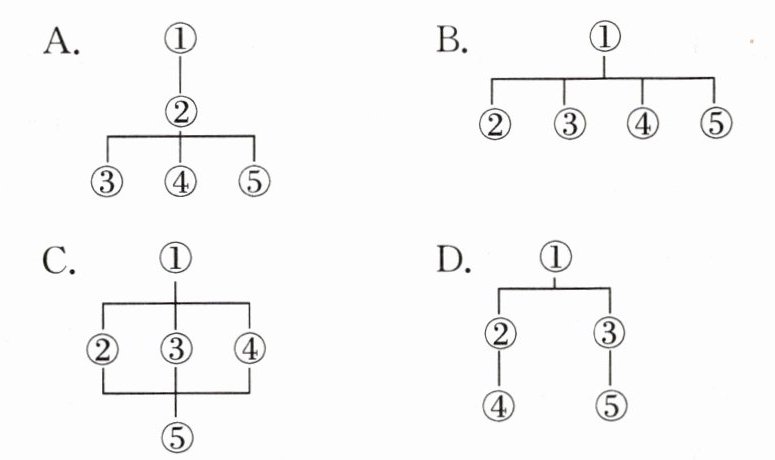
5. What would be the best structure of the passage?
答案
Passage 8
1. D 词义猜测题。根据“They study how animals protect themselves from their predators,and which animals kill other animals for food.”可知,他们研究动物如何保护自己免受敌人——捕食者的伤害,故画线单词和enemies意义相近。故选D。
2. A 细节理解题。根据“Horses,oxen…pull heavy things. Elephants,camels…carry people and things…Carrier pigeons(信鸽)have been used to send messages.”可知,马、牛和其他工作动物拉重物,大象、骆驼和其他动物把人和东西从一个地方带到另一个地方,信鸽被用来传递信息。故选A。
3. A 细节理解题。根据“People around the world eat all kinds of fish and shellfish from oceans and rivers.”可知,全世界的人都吃各种各样的鱼。故选A。
4. B 主旨大意题。通读全文可知,本文主要是关于动物和人类之间的关系。故选B。
5. C 篇章结构题。通读全文,第一段综述动物的行为;第二、三、四段分述动物的用途——为人类提供食物、帮人类干活和从动物的健康关系中受益;第五段综述动物和人类的关系。故文章的结构属于“总—分—总”。故选C。
1. D 词义猜测题。根据“They study how animals protect themselves from their predators,and which animals kill other animals for food.”可知,他们研究动物如何保护自己免受敌人——捕食者的伤害,故画线单词和enemies意义相近。故选D。
2. A 细节理解题。根据“Horses,oxen…pull heavy things. Elephants,camels…carry people and things…Carrier pigeons(信鸽)have been used to send messages.”可知,马、牛和其他工作动物拉重物,大象、骆驼和其他动物把人和东西从一个地方带到另一个地方,信鸽被用来传递信息。故选A。
3. A 细节理解题。根据“People around the world eat all kinds of fish and shellfish from oceans and rivers.”可知,全世界的人都吃各种各样的鱼。故选A。
4. B 主旨大意题。通读全文可知,本文主要是关于动物和人类之间的关系。故选B。
5. C 篇章结构题。通读全文,第一段综述动物的行为;第二、三、四段分述动物的用途——为人类提供食物、帮人类干活和从动物的健康关系中受益;第五段综述动物和人类的关系。故文章的结构属于“总—分—总”。故选C。
解析
【解析】
1. 词义猜测题:根据第一段“They study how animals protect themselves from their predators,and which animals kill other animals for food.”可知,predators指的是会捕杀其他动物的对象,与enemies意义相近,故选D。
2. 细节理解题:根据第三段内容,提到了动物能拉重物、载人及物品、传递消息,对应abc,故选A。
3. 细节理解题:根据第二段“People around the world eat all kinds of fish and shellfish from oceans and rivers.”可知A选项表述正确;B选项中帮助缓解病情的是猫狗而非马;C选项中促进人类锻炼的是遛狗或马的行为而非大象;D选项美国人主要食用牛、鸡、猪肉,并非水牛和羊肉,故选A。
4. 主旨大意题:通读全文,文章介绍了动物为人类提供食物、协助劳作、带来健康益处,最后强调人与动物需维持健康关系,核心是人与动物的关系,故选B。
5. 篇章结构题:①段总述动物行为研究及动物的价值;②③④段分别从提供食物、劳作协助、健康益处三个方面分述动物对人类的作用;⑤段总结人与动物应保持健康关系,属于总-分-总结构,对应选项C。
【答案】
1. D;2. A;3. A;4. B;5. C
【知识点】
词义猜测方法,细节信息抓取,篇章结构分析
【点评】
本文围绕人与动物的关系展开,从多维度介绍动物对人类的作用,题目考查类型全面,要求学生精准提取文本信息、把握篇章逻辑。
【难度系数】
0.6
1. 词义猜测题:根据第一段“They study how animals protect themselves from their predators,and which animals kill other animals for food.”可知,predators指的是会捕杀其他动物的对象,与enemies意义相近,故选D。
2. 细节理解题:根据第三段内容,提到了动物能拉重物、载人及物品、传递消息,对应abc,故选A。
3. 细节理解题:根据第二段“People around the world eat all kinds of fish and shellfish from oceans and rivers.”可知A选项表述正确;B选项中帮助缓解病情的是猫狗而非马;C选项中促进人类锻炼的是遛狗或马的行为而非大象;D选项美国人主要食用牛、鸡、猪肉,并非水牛和羊肉,故选A。
4. 主旨大意题:通读全文,文章介绍了动物为人类提供食物、协助劳作、带来健康益处,最后强调人与动物需维持健康关系,核心是人与动物的关系,故选B。
5. 篇章结构题:①段总述动物行为研究及动物的价值;②③④段分别从提供食物、劳作协助、健康益处三个方面分述动物对人类的作用;⑤段总结人与动物应保持健康关系,属于总-分-总结构,对应选项C。
【答案】
1. D;2. A;3. A;4. B;5. C
【知识点】
词义猜测方法,细节信息抓取,篇章结构分析
【点评】
本文围绕人与动物的关系展开,从多维度介绍动物对人类的作用,题目考查类型全面,要求学生精准提取文本信息、把握篇章逻辑。
【难度系数】
0.6
