

 登录
登录
一、Read and write.
1. It's a kind of sport. People do it on the ice in winter.
i
2. It's an animal. It's black and white. It likes to eat bamboo.
p
3. It's a big room. People can do exercise there.
g
1. It's a kind of sport. People do it on the ice in winter.
i
ice-skating
2. It's an animal. It's black and white. It likes to eat bamboo.
p
panda
3. It's a big room. People can do exercise there.
g
gym
答案
1. ice-skating 2. panda 3. gym
解析
【分析】
解题时需先提取每道题的关键描述信息,再结合给出的首字母提示,联想对应的英语单词。第1题关键信息为“运动、冬季在冰上进行”,首字母为i;第2题关键信息为“黑白动物、爱吃竹子”,首字母为p;第3题关键信息为“大房间、可做运动”,首字母为g,据此匹配正确单词。
【解析】
1. 由“一种运动、冬季在冰上做”及首字母i,确定对应单词为ice-skating;
2. 由“黑白动物、喜欢吃竹子”及首字母p,确定对应单词为panda;
3. 由“大房间、可做运动”及首字母g,确定对应单词为gym。
【答案】
1. ice-skating 2. panda 3. gym
【知识点】
英语词汇运用、词义匹配
【点评】
本题是基础词汇匹配题,通过描述和首字母考查常见名词的掌握,贴近日常学习内容,难度较低。
【难度系数】
0.8
解题时需先提取每道题的关键描述信息,再结合给出的首字母提示,联想对应的英语单词。第1题关键信息为“运动、冬季在冰上进行”,首字母为i;第2题关键信息为“黑白动物、爱吃竹子”,首字母为p;第3题关键信息为“大房间、可做运动”,首字母为g,据此匹配正确单词。
【解析】
1. 由“一种运动、冬季在冰上做”及首字母i,确定对应单词为ice-skating;
2. 由“黑白动物、喜欢吃竹子”及首字母p,确定对应单词为panda;
3. 由“大房间、可做运动”及首字母g,确定对应单词为gym。
【答案】
1. ice-skating 2. panda 3. gym
【知识点】
英语词汇运用、词义匹配
【点评】
本题是基础词汇匹配题,通过描述和首字母考查常见名词的掌握,贴近日常学习内容,难度较低。
【难度系数】
0.8
二、Read and choose A, B or C.
Last night, I 1 an interesting dream. I dreamed of Ma Liang.
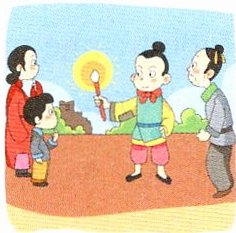
Long long ago, there was a boy called Ma Liang. He 2 poor but he liked 3 . One day he 4 a magic paintbrush. What he drew could become real. In the dream, Ma Liang 5 the paintbrush to me. I could 6 beautiful words with it. I could get 100 points in all the exams. I was very 7 in the dream. Suddenly, I 8 and fell. I 9 find the paintbrush. Then I 10 up. It was all a dream.
(
(
(
(
(
(
(
(
(
(
Last night, I 1 an interesting dream. I dreamed of Ma Liang.
Long long ago, there was a boy called Ma Liang. He 2 poor but he liked 3 . One day he 4 a magic paintbrush. What he drew could become real. In the dream, Ma Liang 5 the paintbrush to me. I could 6 beautiful words with it. I could get 100 points in all the exams. I was very 7 in the dream. Suddenly, I 8 and fell. I 9 find the paintbrush. Then I 10 up. It was all a dream.
(
C
)1. A. have B. has C. had(
A
)2. A. was B. were C. is(
A
)3. A. drawing B. draws C. draw(
A
)4. A. got B. gets C. get(
A
)5. A. gave B. gives C. give(
B
)6. A. wrote B. write C. writes(
A
)7. A. excited B. exciting C. angry(
C
)8. A. trip B. trips C. tripped(
C
)9. A. could B. can't C. couldn't(
A
)10. A. woke B. wakes C. wake答案
1—5 C A A A A 6—10 B A C C A
解析
【分析】这是一篇关于“马良神笔的梦”的英语完形填空题,全文讲述昨晚的梦境,整体时态为一般过去时,需结合时间标志、语法规则(时态、固定搭配、情态动词用法)及词义辨析逐一解题。先通读全文把握语境,再逐个分析每个空的考点:1题考过去时态的动词形式,2题考过去时be动词,3题考like的固定搭配,4题考过去时实义动词,5题考过去时动词,6题考情态动词后接原形,7题考ed/ing形容词辨析,8题考过去时动词,9题考过去时情态动词否定,10题考过去时固定短语wake up。
【解析】1. 时间状语last night(昨晚)是一般过去时的标志,谓语动词需用have的过去式had,故选C;
2. 主语he是第三人称单数,描述过去的状态,be动词用was,故选A;
3. 固定搭配like doing sth表示“喜欢做某事”,此处需用draw的动名词形式drawing,故选A;
4. 描述过去发生的动作“得到”,需用get的过去式got,故选A;
5. 梦中的事件属于过去发生的内容,谓语动词用give的过去式gave,故选A;
6. 情态动词could后需接动词原形,故选B;
7. 修饰人(主语I)的感受需用ed结尾的形容词excited(exciting修饰事物,angry不符合语境),故选A;
8. 描述过去的动作“绊倒”,需用trip的过去式tripped,故选C;
9. 结合语境,此处表达过去的否定含义“不能找到”,需用could的过去式否定形式couldn't,故选C;
10. 固定短语wake up意为“醒来”,描述过去的动作,需用wake的过去式woke,故选A。
【答案】1—5 C A A A A;6—10 B A C C A
【知识点】一般过去时、固定搭配、形容词辨析
【点评】本题围绕经典故事“神笔马良”设置,考查基础语法知识和词义辨析,语境贴近学生,难度适中,适合巩固小学阶段英语语法。
【难度系数】0.6
【解析】1. 时间状语last night(昨晚)是一般过去时的标志,谓语动词需用have的过去式had,故选C;
2. 主语he是第三人称单数,描述过去的状态,be动词用was,故选A;
3. 固定搭配like doing sth表示“喜欢做某事”,此处需用draw的动名词形式drawing,故选A;
4. 描述过去发生的动作“得到”,需用get的过去式got,故选A;
5. 梦中的事件属于过去发生的内容,谓语动词用give的过去式gave,故选A;
6. 情态动词could后需接动词原形,故选B;
7. 修饰人(主语I)的感受需用ed结尾的形容词excited(exciting修饰事物,angry不符合语境),故选A;
8. 描述过去的动作“绊倒”,需用trip的过去式tripped,故选C;
9. 结合语境,此处表达过去的否定含义“不能找到”,需用could的过去式否定形式couldn't,故选C;
10. 固定短语wake up意为“醒来”,描述过去的动作,需用wake的过去式woke,故选A。
【答案】1—5 C A A A A;6—10 B A C C A
【知识点】一般过去时、固定搭配、形容词辨析
【点评】本题围绕经典故事“神笔马良”设置,考查基础语法知识和词义辨析,语境贴近学生,难度适中,适合巩固小学阶段英语语法。
【难度系数】0.6
三、[新情境·地域特色]Read and finish.
Changes in Foshan
We learned some changes of Foshan and made a report.
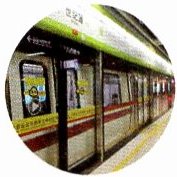
Before, people could only go out by ship, by bike or on foot. Now, they can go to Guangzhou from Foshan by Guangfo Metro. It's fast and convenient. Guangfo Metro is the first intercity subway line in China.
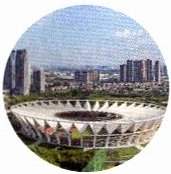
Before, there were not many tall buildings. You could only see small houses. Over these years, there are more and more tall buildings. Some buildings are higher than 200 metres.
Before, there were no forest parks. There were not many wetlands. Now, there are many forest parks like Sanshui Forest Park and Yunyong Forest Park. The environment is getting better and better.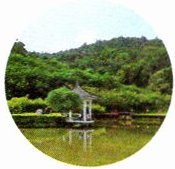
(一)Read and choose T or F.
(
(
(
(
(二)Read and write.
5. How did your hometown change?
Changes in Foshan
We learned some changes of Foshan and made a report.
Before, people could only go out by ship, by bike or on foot. Now, they can go to Guangzhou from Foshan by Guangfo Metro. It's fast and convenient. Guangfo Metro is the first intercity subway line in China.
Before, there were not many tall buildings. You could only see small houses. Over these years, there are more and more tall buildings. Some buildings are higher than 200 metres.
Before, there were no forest parks. There were not many wetlands. Now, there are many forest parks like Sanshui Forest Park and Yunyong Forest Park. The environment is getting better and better.
(一)Read and choose T or F.
(
F
)1. There are four changes in the report.(
F
)2. Before, people in Foshan could only go out on foot.(
T
)3. People can go to Guangzhou from Foshan by subway now.(
F
)4. There are not many tall buildings in Foshan now.(二)Read and write.
5. How did your hometown change?
It was small before. Now It's big and beautiful.(仅供参考)
答案
(一)1—4 F F T F
(二)5. It was small before. Now It's big
and beautiful.(仅供参考)
(二)5. It was small before. Now It's big
and beautiful.(仅供参考)
解析
【分析】本题为英语阅读理解题,分为判断正误和开放性书面表达两部分。做判断时需定位原文对应信息,对比题干描述与原文内容是否一致;开放性问答需结合自身对家乡变化的了解,用正确的英语句式作答。
【解析】(一)判断正误:1. 原文提到的变化有出行方式、建筑、环境共3项,题干称有4项,与原文不符,故填F;2. 原文前出行方式为船、自行车、步行,并非只能步行,与题干不符,故填F;3. 原文提到现在可乘广佛地铁从佛山到广州,地铁对应subway,与题干一致,故填T;4. 原文提到现在有越来越多高楼,并非不多,与题干不符,故填F。(二)开放性问答:结合家乡变化,用一般过去时和一般现在时对比描述即可,示例为参考。
【答案】(一)1—4 F F T F;(二)5. It was small before. Now It's big and beautiful.
【知识点】英语阅读理解、判断正误、书面表达
【点评】本题结合佛山地域特色,考查学生对文本细节的理解能力和语言运用能力,贴近生活实际,难度适中。
【难度系数】0.6
【解析】(一)判断正误:1. 原文提到的变化有出行方式、建筑、环境共3项,题干称有4项,与原文不符,故填F;2. 原文前出行方式为船、自行车、步行,并非只能步行,与题干不符,故填F;3. 原文提到现在可乘广佛地铁从佛山到广州,地铁对应subway,与题干一致,故填T;4. 原文提到现在有越来越多高楼,并非不多,与题干不符,故填F。(二)开放性问答:结合家乡变化,用一般过去时和一般现在时对比描述即可,示例为参考。
【答案】(一)1—4 F F T F;(二)5. It was small before. Now It's big and beautiful.
【知识点】英语阅读理解、判断正误、书面表达
【点评】本题结合佛山地域特色,考查学生对文本细节的理解能力和语言运用能力,贴近生活实际,难度适中。
【难度系数】0.6
四、[新情境·环境保护]Read, choose and write.
I'm a Yangtze finless porpoise. I live in the Yangtze River.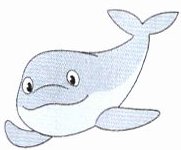
Before: There were so many ships on the Yangtze River. In the river, there were many fishing nets. The river was dirty. There was not enough food to eat. There were no safe living places. In 2017, there were only about one thousand of us, even fewer than pandas. I was worried. We were in danger!
Now: People begin to protect the Yangtze River and the animals in it. Fishermen stop fishing in the river. Factories move away. There is no rubbish in the river. The water is clear and clean again. I have new brothers and sisters. I can see some scientists and visitors now. Thanks!
(
①fishermen caught too many fish
②the river was too dirty
③factories moved away
A. ①③ B. ②③ C. ①②
(
A. 处于危险中 B. 面临挑战
C. 有机会
(
A. The Yangtze River is not a good home for Yangtze finless porpoises now.
B. There were many Yangtze finless porpoises in 2017.
C. We should protect the environment.
4. [新趋势·思维探究]What can you do to protect the environment?
I'm a Yangtze finless porpoise. I live in the Yangtze River.
Before: There were so many ships on the Yangtze River. In the river, there were many fishing nets. The river was dirty. There was not enough food to eat. There were no safe living places. In 2017, there were only about one thousand of us, even fewer than pandas. I was worried. We were in danger!
Now: People begin to protect the Yangtze River and the animals in it. Fishermen stop fishing in the river. Factories move away. There is no rubbish in the river. The water is clear and clean again. I have new brothers and sisters. I can see some scientists and visitors now. Thanks!
(
C
)1. The Yangtze finless porpoises didn't have enough food because ①②
.①fishermen caught too many fish
②the river was too dirty
③factories moved away
A. ①③ B. ②③ C. ①②
(
A
)2. The phrase "in danger" means "处于危险中
".A. 处于危险中 B. 面临挑战
C. 有机会
(
C
)3. What can you learn from this passage?A. The Yangtze River is not a good home for Yangtze finless porpoises now.
B. There were many Yangtze finless porpoises in 2017.
C. We should protect the environment.
4. [新趋势·思维探究]What can you do to protect the environment?
I can use cloth bags.(仅供参考)
答案
1—3 C A C
4. I can use cloth bags.(仅供参考)
4. I can use cloth bags.(仅供参考)
解析
【分析】本题是结合长江江豚保护新情境的英语阅读理解题,解题思路为:先通读全文,明确江豚过去的生存困境和现在的保护成果;第1题需定位原文“Before”部分,查找江豚食物不足的原因;第2题结合江豚数量稀少的处境猜测短语含义;第3题需梳理文章主旨,判断选项正误;第4题是开放性问题,结合日常环保行为作答。
【解析】1. 第1题:根据原文“Before”部分,江豚面临的问题有“many fishing nets(渔民过度捕鱼)”和“The river was dirty(河水脏)”,对应①②,故选C。
2. 第2题:2017年江豚数量仅约一千,比熊猫还少,处境危急,“in danger”意为“处于危险中”,故选A。
3. 第3题:A项与原文“Now”部分江豚有新兄弟姐妹、河水变清矛盾;B项与原文2017年江豚数量少矛盾;C项符合文章呼吁保护的主旨,故选C。
4. 第4题:开放性问题,结合日常环保行为作答,如使用布袋、减少一次性用品等,参考答案示例为“I can use cloth bags.”。
【答案】1. C 2. A 3. C 4. I can use cloth bags.
【知识点】英语阅读理解、词义猜测、主旨大意
【点评】本题以长江江豚保护为情境,考查英语阅读的核心能力,同时渗透环保意识,符合新趋势要求,难度适中。
【难度系数】0.6
【解析】1. 第1题:根据原文“Before”部分,江豚面临的问题有“many fishing nets(渔民过度捕鱼)”和“The river was dirty(河水脏)”,对应①②,故选C。
2. 第2题:2017年江豚数量仅约一千,比熊猫还少,处境危急,“in danger”意为“处于危险中”,故选A。
3. 第3题:A项与原文“Now”部分江豚有新兄弟姐妹、河水变清矛盾;B项与原文2017年江豚数量少矛盾;C项符合文章呼吁保护的主旨,故选C。
4. 第4题:开放性问题,结合日常环保行为作答,如使用布袋、减少一次性用品等,参考答案示例为“I can use cloth bags.”。
【答案】1. C 2. A 3. C 4. I can use cloth bags.
【知识点】英语阅读理解、词义猜测、主旨大意
【点评】本题以长江江豚保护为情境,考查英语阅读的核心能力,同时渗透环保意识,符合新趋势要求,难度适中。
【难度系数】0.6
