

 登录
B
① Everyone likes to be treated fairly (公平地). When things are going their way, people think life is really great. Otherwise, they will complain that life is unfair. Some people can only feel happy if they think they are treated fairly. But I don’t agree. The understanding of fairness depends on one’s mindset (思维倾向).
② Let’s consider the example of two students working on a school project. Student A spends much time doing his report. In his mind, he deserves nothing less than a high mark. He ties a certain expectation to the project. In his opinion, this grade is what he should achieve for his effort and the time he has put in. However, his grade falls short of his expectation. He complains that he is unfairly treated and has a weaker sense of happiness.
③ Student B has a completely different mindset. He enjoys the process of working on the project, including the challenges he meets. He also has a certain expectation of the grade he wants to get, but he doesn’t connect fairness to his grade. Though student B’s actual grade fails to live up to his expectation, he doesn’t feel he is unfairly treated, and he is still happy.
④ Another situation happens in which two students are asked to work on the same project. One finishes a larger amount of work than the other but both receive the same praise. The student who has done more may feel he is unfairly treated and become unhappy. However, if the student believes that happiness is his own business, he will get satisfaction during the process of working on the project.
⑤ Happiness is a journey, not a destination (终点). If one realizes what his or her own happiness is, it will not matter whether he or she is treated fairly, for he or she will have other ways of achieving happiness.
(
A. The sense of happiness depends on others’ thoughts.
B. The sense of happiness depends on one’s knowledge.
C. We should have some purposes that we must achieve.
D. We should care more about the process than the result.
(
A. lives up to
B. achieves
C. is lower than
D. is close to
(
A. By giving examples.
B. By listing numbers.
C. By asking questions.
D. By describing details.
(
C
① Everyone likes to be treated fairly (公平地). When things are going their way, people think life is really great. Otherwise, they will complain that life is unfair. Some people can only feel happy if they think they are treated fairly. But I don’t agree. The understanding of fairness depends on one’s mindset (思维倾向).
② Let’s consider the example of two students working on a school project. Student A spends much time doing his report. In his mind, he deserves nothing less than a high mark. He ties a certain expectation to the project. In his opinion, this grade is what he should achieve for his effort and the time he has put in. However, his grade falls short of his expectation. He complains that he is unfairly treated and has a weaker sense of happiness.
③ Student B has a completely different mindset. He enjoys the process of working on the project, including the challenges he meets. He also has a certain expectation of the grade he wants to get, but he doesn’t connect fairness to his grade. Though student B’s actual grade fails to live up to his expectation, he doesn’t feel he is unfairly treated, and he is still happy.
④ Another situation happens in which two students are asked to work on the same project. One finishes a larger amount of work than the other but both receive the same praise. The student who has done more may feel he is unfairly treated and become unhappy. However, if the student believes that happiness is his own business, he will get satisfaction during the process of working on the project.
⑤ Happiness is a journey, not a destination (终点). If one realizes what his or her own happiness is, it will not matter whether he or she is treated fairly, for he or she will have other ways of achieving happiness.
(
D
) 4. Which is the writer’s opinion according to the article?A. The sense of happiness depends on others’ thoughts.
B. The sense of happiness depends on one’s knowledge.
C. We should have some purposes that we must achieve.
D. We should care more about the process than the result.
(
C
) 5. In Paragraph 2, the underlined phrase “falls short of” means “”.A. lives up to
B. achieves
C. is lower than
D. is close to
(
A
) 6. How does the writer support his opinion?A. By giving examples.
B. By listing numbers.
C. By asking questions.
D. By describing details.
(
D
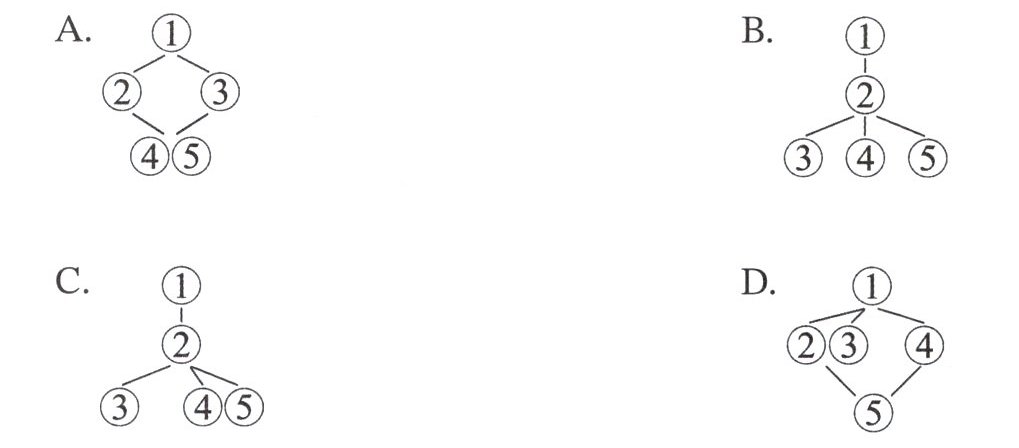
) 7. What is the structure of this passage?C
答案
4. D
5. C
6. A
7. D
解析
【分析】
第7题要求判断文章结构,解题思路为:先通读全文梳理行文逻辑,明确各段落的作用。文章第①段提出“幸福的感知取决于思维倾向,不必在意是否被公平对待”的核心观点;第②-④段通过两组学生做项目的不同表现(学生A因结果未达预期抱怨,学生B享受过程仍快乐;另一学生做更多工作却获相同表扬的不同反应)的具体事例支撑观点;第⑤段总结升华,强调幸福是过程而非终点。据此判断文章结构为总-分-总,对应选项D的图示结构。
【解析】
第7题:结合全文脉络,首段提出观点,中间用具体事例论证,末段总结,属于总-分-总结构,对应选项D的图示。
【答案】
D
【知识点】
文章结构分析,英语阅读理解
【点评】
本题考查阅读理解中的文章结构分析,需梳理行文逻辑,结合事例支撑的特点判断结构,难度中等。
【难度系数】
0.5
