

 登录
四、补全对话:根据下面对话中的情境,在每个空白处填入一个适当的语句,使对话恢复完整。
[Jack(A) is talking with his classmate Li Ming(B) about how to improve memory in daily study. ]
A:Hi, Li Ming. I always forget things easily in study. 1.
B:Sure. I have a few good ways to help with it.
A:2.
B:I often link new knowledge with old knowledge and pay attention to small details.
A:3.
B:Yes, a short break every 30 minutes can help your brain remember better. Also, getting enough sleep every day can keep your brain in a good state.
A:4.
B:At least 8 hours. It’s really important for better memory.
A:5.
B:You’re welcome. I hope they work for you.
[Jack(A) is talking with his classmate Li Ming(B) about how to improve memory in daily study. ]
A:Hi, Li Ming. I always forget things easily in study. 1.
Could you give me some advice/Can you tell me some good ways
?B:Sure. I have a few good ways to help with it.
A:2.
What do you do to remember things well/What useful methods do you use
?B:I often link new knowledge with old knowledge and pay attention to small details.
A:3.
Sounds great/Those are really good methods
. Do you think taking breaks while studying is useful?B:Yes, a short break every 30 minutes can help your brain remember better. Also, getting enough sleep every day can keep your brain in a good state.
A:4.
How long do I need to sleep every day/How many hours of sleep do I need a day
?B:At least 8 hours. It’s really important for better memory.
A:5.
Your advice helps me a lot/These ways are exactly what I need
. Thank you so much for sharing these with me!B:You’re welcome. I hope they work for you.
答案
1. Could you give me some advice/Can you tell me some good ways 2. What do you do to remember things well/What useful methods do you use 3. Sounds great/Those are really good methods 4. How long do I need to sleep every day/How many hours of sleep do I need a day 5. Your advice helps me a lot/These ways are exactly what I need
解析
【分析】
本题为补全对话题型,需结合上下文语境及答句内容,推断空白处应填的符合逻辑的英语日常交际用语。每空的推导逻辑为:1. 根据B的回应(同意提供方法),反推A是请求建议;2. 根据B的具体方法,反推A是询问所用方法;3. 此处是A对B提到的方法的认可回应;4. 根据B回答的睡眠时长,反推A是询问每日睡眠时长;5. 此处是A听完建议后表达认可的感谢类语句。
【解析】
1. 由下文B说“Sure. I have a few good ways to help with it.”可知,A在请求对方提供提升记忆的建议,故填请求建议的语句:Could you give me some advice/Can you tell me some good ways;
2. 由下文B回答具体的记忆方法(关联新旧知识、关注细节)可知,A在询问对方用来记忆的方法,故填问方法的语句:What do you do to remember things well/What useful methods do you use;
3. 此处是A对B提到的记忆方法的认可,故填表示赞同的语句:Sounds great/Those are really good methods;
4. 由下文B回答“At least 8 hours.”可知,A在询问每日需要的睡眠时长,故填问睡眠时长的语句:How long do I need to sleep every day/How many hours of sleep do I need a day;
5. 此处是A听完建议后表达对建议的认可,故填符合感谢语境的语句:Your advice helps me a lot/These ways are exactly what I need。
【答案】
1. Could you give me some advice/Can you tell me some good ways
2. What do you do to remember things well/What useful methods do you use
3. Sounds great/Those are really good methods
4. How long do I need to sleep every day/How many hours of sleep do I need a day
5. Your advice helps me a lot/These ways are exactly what I need
【知识点】
补全对话、日常交际用语
【点评】
本题围绕“提升记忆的方法”展开日常对话,考查学生在特定语境下运用英语交际用语的能力,需结合上下文逻辑推导,难度适中,适合练习日常口语表达。
【难度系数】
0.6
五、根据短文内容,从短文后的选项中选出能填入空白处的最佳选项。选项中有两项为多余选项。
Many of us learn how to ride a bike at a young age. 1.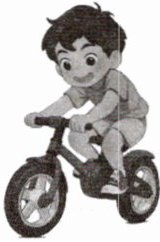
This is strange. In many other cases, we often find it hard to remember the name of a person or a place, don't we? 2.
The answer is that certain skills, such as how to drive or play an instrument, are part of our procedural(程序性的) memory. It is a kind of long-term memory that performs different procedures. 3.
This happens because procedural memory and declarative(陈述性的) memory are stored in different parts of the brain. 4.
5.
A. These procedures may be difficult to learn.
B. Here are some useful tips on riding a bike.
C. As we grow older, we may stop riding bikes.
D. So how can we improve our skills by practising?
E. Now you know why we don't forget how to ride a bike.
F. Declarative memory mainly deals with the task of remembering information.
G. So why can we still ride a bike after we stopped riding a long time ago?
Many of us learn how to ride a bike at a young age. 1.
C
But whenever we get on a bike, it's like we've never stopped biking. This is strange. In many other cases, we often find it hard to remember the name of a person or a place, don't we? 2.
G
The answer is that certain skills, such as how to drive or play an instrument, are part of our procedural(程序性的) memory. It is a kind of long-term memory that performs different procedures. 3.
A
But once you learn them completely, you never forget them.This happens because procedural memory and declarative(陈述性的) memory are stored in different parts of the brain. 4.
F
It will help you remember some things like names, dates, and events from your life. Studies say that the cells(细胞) in the part storing procedural memory can not easily lose or get hurt. So procedural memories can't be forgotten very often.5.
E
Can you name other skills that you're also unlikely to ever forget?A. These procedures may be difficult to learn.
B. Here are some useful tips on riding a bike.
C. As we grow older, we may stop riding bikes.
D. So how can we improve our skills by practising?
E. Now you know why we don't forget how to ride a bike.
F. Declarative memory mainly deals with the task of remembering information.
G. So why can we still ride a bike after we stopped riding a long time ago?
答案
1. C 2. G 3. A 4. F 5. E
解析
【分析】
本题为英语七选五补全短文题,解题思路为:先通读全文把握主旨(解释学会骑车后久不骑仍不会忘的原因,涉及程序性记忆),再逐个分析每个空格前后的语境逻辑,匹配对应选项:1. 第1空需衔接“小时候学骑车”与“长大后可能停止骑车”的转折;2. 第2空需引出后文关于“为何不会忘骑车”的答案;3. 第3空需承接“程序性记忆的步骤”与“学会后不会忘”的逻辑;4. 第4空需对应“陈述性记忆的功能”;5. 第5空需总结前文原因并引出后续问题。
【解析】
1. 第1空:前文提到“小时候学骑车”,后文转折“但每次上车就像没停过”,说明中间是长大后可能停止骑车,故选C(As we grow older, we may stop riding bikes.);
2. 第2空:前文说其他事难记,后文给出答案,此处需提出疑问“为何久不骑仍会骑车”,故选G(So why can we still ride a bike after we stopped riding a long time ago?);
3. 第3空:前文介绍程序性记忆是执行不同步骤的长期记忆,后文说一旦学会就不会忘,此处需说明这些步骤难学,故选A(These procedures may be difficult to learn.);
4. 第4空:前文提到两种记忆存于不同脑区,后文说陈述性记忆记名字等,此处需介绍陈述性记忆的作用,故选F(Declarative memory mainly deals with the task of remembering information.);
5. 第5空:前文解释了不会忘骑车的原因,后文问其他技能,此处需总结“知道为何不会忘骑车”,故选E(Now you know why we don't forget how to ride a bike.)。
【答案】1.C 2.G 3.A 4.F 5.E
【知识点】英语七选五、语境推理类阅读
【点评】本题结合生活实例(骑车)考查学生对上下文语境的逻辑推理能力,需把握句子间的衔接关系,难度适中。
【难度系数】0.5
