

 登录
五、根据首字母提示写单词补全短文
What would our world be like if there were no insects? It might sound nice in the 1. b.
There would be no bugs or flies in your room. But in fact, this could cause really serious 2. p.
The bad news is that the number of insects keeps 3. d these years. Scientists say it's 4. m because of the use of pesticides (农药). They destroy the places that insects live in.
What would happen if all insects died out? It's almost impossible to predict (预测), but the 5. r would be terrible. We need insects to pollinate (授粉) crops. They also break down dead plants and animals and turn them into new 6. u things. We need them to keep the soil (土壤) healthy. 7. W insects, many animals would have nothing to eat. They would go hungry and 8. d.
The first thing we need to do is to let more people understand the 9. i of the natural world, both for what it does for us and for 10. i. The best place to start is with our children. We should teach them environmental awareness (环保意识) at an early age.
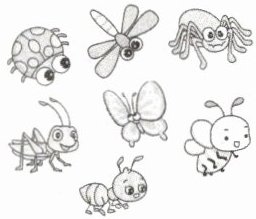
What would our world be like if there were no insects? It might sound nice in the 1. b.
There would be no bugs or flies in your room. But in fact, this could cause really serious 2. p.
The bad news is that the number of insects keeps 3. d these years. Scientists say it's 4. m because of the use of pesticides (农药). They destroy the places that insects live in.
What would happen if all insects died out? It's almost impossible to predict (预测), but the 5. r would be terrible. We need insects to pollinate (授粉) crops. They also break down dead plants and animals and turn them into new 6. u things. We need them to keep the soil (土壤) healthy. 7. W insects, many animals would have nothing to eat. They would go hungry and 8. d.
The first thing we need to do is to let more people understand the 9. i of the natural world, both for what it does for us and for 10. i. The best place to start is with our children. We should teach them environmental awareness (环保意识) at an early age.
答案
【主旨大意】本文介绍了这些年来昆虫的数量一直在下降以及强调了昆虫的重要性。
1. beginning 2. problems 3. dropping 4. mainly 5. result(s) 6. useful 7. Without 8. die 9. importance 10. itself
1. beginning 2. problems 3. dropping 4. mainly 5. result(s) 6. useful 7. Without 8. die 9. importance 10. itself
解析
【分析】
这是一道英语首字母填空题,需先通读短文理解主旨:短文围绕“昆虫的重要性及昆虫数量下降的问题”展开,结合每个空格的首字母提示,联系上下文语境、固定搭配及词性要求来确定单词。具体思路:1. 结合固定搭配“in the beginning”填首字母为b的单词;2. 由“serious”后接名词,结合语境“严重的问题”填p开头的名词;3. 由“keep doing”结构及“数量下降”填d开头的动名词;4. 修饰原因用副词,结合“主要因为”填m开头的副词;5. 结合“预测的结果”填r开头的名词;6. 修饰名词用形容词,结合“有用的东西”填u开头的形容词;7. 结合“没有昆虫”的语境填W开头的介词;8. 由“go hungry and”并列动词填d开头的动词;9. 由“the...of”结构用名词,结合“重要性”填i开头的名词;10. 结合“自然本身”填i开头的反身代词。
【解析】
1. 固定搭配“in the beginning”意为“起初,开始”,符合语境,故填beginning。
2. “serious”后接名词,结合上下文“没有昆虫看似好但实际有严重问题”,填problems(复数表泛指)。
3. “keep doing sth”表示“持续做某事”,结合“昆虫数量下降”,填dropping。
4. 此处修饰原因状语,用副词,“mainly”意为“主要地”,符合“主要因为农药”的语境,故填mainly。
5. 结合“预测的结果会很糟糕”,填result(或results,均可)。
6. 修饰名词“things”用形容词,“useful”意为“有用的”,符合“变成新的有用的东西”,故填useful。
7. 结合“没有昆虫,很多动物没东西吃”,填介词Without。
8. 与“go hungry”并列,用动词原形,“die”意为“死亡”,符合语境,故填die。
9. “the importance of”表示“……的重要性”,填名词importance。
10. 结合“自然世界本身”,用反身代词itself。
【答案】
1. beginning 2. problems 3. dropping 4. mainly 5. result/results 6. useful 7. Without 8. die 9. importance 10. itself
【知识点】
英语首字母填空、词汇运用、固定搭配
【点评】
本题考查学生对短文的理解能力及基础词汇的掌握,需结合上下文语境、固定搭配和词性要求填写单词,是初中英语常见题型,难度适中,能有效考查学生的综合语言运用能力。
【难度系数】
0.6
六、阅读还原(有两项多余)
We throw away rubbish almost every day. Do you know where it goes? 1.
The patch is in the Pacific Ocean between California and Hawaii. It is quite large. According to Live Science, it has an area of 1.6 million square kilometers. 2.
Most of the rubbish is plastic, including bottles, bags and fishing nets. According to Fox News, there are about 79,000 tons (吨) of plastic in the patch. That’s about 250 pieces of plastic for every person on Earth. 3.
Where is sea rubbish from? People throw their rubbish directly (直接地) into the ocean. Wind can also blow rubbish into the ocean. 5.
A. Rain can wash the rubbish into rivers.
B. Is one of those pieces from you?
C. Every person should throw rubbish into rubbish bins.
D. Most of it goes into the sea.
E. We should take action to protect animals in the wild.
F. That is about 100 times bigger than Beijing.
G. Scientists are trying different ways to clean up rubbish in the sea.
We throw away rubbish almost every day. Do you know where it goes? 1.
D
There are five large rubbish patches (垃圾带) in the sea. The largest one is the Great Pacific Rubbish Patch. Scientists are saying that the patch is getting even bigger than before.The patch is in the Pacific Ocean between California and Hawaii. It is quite large. According to Live Science, it has an area of 1.6 million square kilometers. 2.
F
Most of the rubbish is plastic, including bottles, bags and fishing nets. According to Fox News, there are about 79,000 tons (吨) of plastic in the patch. That’s about 250 pieces of plastic for every person on Earth. 3.
B
The plastic can harm sea animals and pollute the water. 4. G
But the most important thing is to stop rubbish from going into the sea in the first place.Where is sea rubbish from? People throw their rubbish directly (直接地) into the ocean. Wind can also blow rubbish into the ocean. 5.
A
Then, the rivers carry the rubbish to the ocean.A. Rain can wash the rubbish into rivers.
B. Is one of those pieces from you?
C. Every person should throw rubbish into rubbish bins.
D. Most of it goes into the sea.
E. We should take action to protect animals in the wild.
F. That is about 100 times bigger than Beijing.
G. Scientists are trying different ways to clean up rubbish in the sea.
答案
【主旨大意】本文主要介绍了海洋垃圾的问题及其危害。
1.D 2.F 3.B 4.G 5.A
1.D 2.F 3.B 4.G 5.A
解析
【分析】
做阅读还原题需紧扣上下文的话题与逻辑衔接:第1空上文询问垃圾去向,下文介绍海洋垃圾带,需选对应垃圾去向的选项;第2空上文给出垃圾带面积数据,需选承接面积的选项;第3空上文提到每人对应塑料数量,需选衔接该数量的问句;第4空下文强调阻止垃圾入海,需选与海洋垃圾清理相关的选项;第5空下文说河流带垃圾入海,需选解释垃圾入河途径的选项。
【解析】
1. 第1空:上文询问垃圾去向,下文介绍海洋垃圾带,D选项“Most of it goes into the sea.”(大部分垃圾进入海洋)符合话题衔接,故选D。
2. 第2空:上文提到垃圾带面积为1.6百万平方公里,F选项“That is about 100 times bigger than Beijing.”(那大约是北京的100倍大)承接面积数据,故选F。
3. 第3空:上文提到每人约有250块塑料,B选项“Is one of those pieces from you?”(其中一块是你的吗?)衔接塑料数量的话题,故选B。
4. 第4空:下文强调阻止垃圾入海,G选项“Scientists are trying different ways to clean up rubbish in the sea.”(科学家正尝试不同方法清理海洋垃圾)是相关措施,衔接下文,故选G。
5. 第5空:下文说河流将垃圾带入海洋,A选项“Rain can wash the rubbish into rivers.”(雨水能把垃圾冲进河里)解释垃圾进入河流的途径,故选A。
【答案】
1.D 2.F 3.B 4.G 5.A
【知识点】
阅读还原题、语境推理
【点评】
本题考查学生对上下文逻辑关系的理解能力,需结合话题一致性与语句衔接性选择答案,是初中英语常见题型,难度适中。
【难度系数】
0.5
