

 登录
登录
阅读理解
情境素材 拯救粤语「2026广东珠海文园中学教育集团期中」
拍照批改
Many students in Guangdong find learning English difficult, but they often overlook a special skill they already have: being bilingual (双语的) in Cantonese and Putonghua.
Zhang Tingting, a 14-year-old from Guangzhou, is a perfect example. "I've spoken Cantonese at home ever since I was little, but I use Putonghua at school," she explained. "We are now encouraged to use Putonghua in classrooms, and it's natural for students to speak Putonghua even during class breaks."
This is common for many local students. However, with more students from other parts of China moving to Guangzhou, the use of Cantonese is declining. A report shows that now only about 40 percent of students in Guangzhou can fully understand their local dialect (方言). As a result, Putonghua is often heard even during school breaks.
This situation has raised concerns. Many people are worried that the local culture is dying as the dialect is no longer popular. "The most vivid words and expressions are born of dialects," noted a language expert. Zhang Tingting fully agrees with his idea. She sometimes finds it strange and difficult to express certain Cantonese phrases in Putonghua, feeling that something of the local culture may be lost.
Fortunately, officials in Guangdong have found this problem. ▲ As we all know, some primary schools in Shanghai have asked students to speak the Shanghai dialect four days a month. Inspired by Shanghai, starting from this year, there are almost 30 Guangzhou kindergartens encouraging children to speak their local dialect during breaks.
Of course, promoting Cantonese doesn't mean rejecting Putonghua. Instead, it helps create a multicultural environment where local expressions make our communication richer and more lively.
1. What special skill do many students in Guangdong have?
A. They can speak English very well.
B. They are able to speak both Cantonese and Putonghua.
C. They find it easy to learn Cantonese and Putonghua.
D. They can understand many different Chinese dialects.
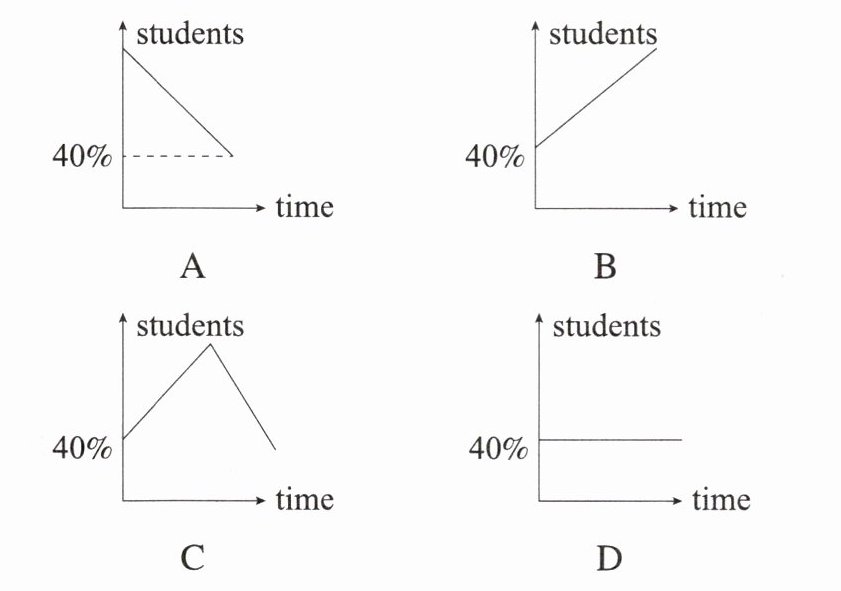
2. 特色考法 图文转换题 What's the main trend (趋势) of the Cantonese usage among students in Guangzhou according to the passage?
3. What does the underlined word "vivid" mean in English?
A. Common.
B. Lively.
C. Complex.
D. Difficult.
4. 特色考法 信息还原题 Which of the following can be put in " ▲ " in Paragraph 5?
A. They are still looking for a good solution.
B. Many students can't speak their local dialect.
C. Children all want to learn different dialects.
D. They have taken action to save their dialects.
5. Which can be the best title for this passage?
A. We Are Bilingual Talents
B. Dialects Are Popular
C. Save Dialects
D. A Problem of Zhang Tingting
情境素材 拯救粤语「2026广东珠海文园中学教育集团期中」
拍照批改
Many students in Guangdong find learning English difficult, but they often overlook a special skill they already have: being bilingual (双语的) in Cantonese and Putonghua.
Zhang Tingting, a 14-year-old from Guangzhou, is a perfect example. "I've spoken Cantonese at home ever since I was little, but I use Putonghua at school," she explained. "We are now encouraged to use Putonghua in classrooms, and it's natural for students to speak Putonghua even during class breaks."
This is common for many local students. However, with more students from other parts of China moving to Guangzhou, the use of Cantonese is declining. A report shows that now only about 40 percent of students in Guangzhou can fully understand their local dialect (方言). As a result, Putonghua is often heard even during school breaks.
This situation has raised concerns. Many people are worried that the local culture is dying as the dialect is no longer popular. "The most vivid words and expressions are born of dialects," noted a language expert. Zhang Tingting fully agrees with his idea. She sometimes finds it strange and difficult to express certain Cantonese phrases in Putonghua, feeling that something of the local culture may be lost.
Fortunately, officials in Guangdong have found this problem. ▲ As we all know, some primary schools in Shanghai have asked students to speak the Shanghai dialect four days a month. Inspired by Shanghai, starting from this year, there are almost 30 Guangzhou kindergartens encouraging children to speak their local dialect during breaks.
Of course, promoting Cantonese doesn't mean rejecting Putonghua. Instead, it helps create a multicultural environment where local expressions make our communication richer and more lively.
1. What special skill do many students in Guangdong have?
A. They can speak English very well.
B. They are able to speak both Cantonese and Putonghua.
C. They find it easy to learn Cantonese and Putonghua.
D. They can understand many different Chinese dialects.
2. 特色考法 图文转换题 What's the main trend (趋势) of the Cantonese usage among students in Guangzhou according to the passage?
3. What does the underlined word "vivid" mean in English?
A. Common.
B. Lively.
C. Complex.
D. Difficult.
4. 特色考法 信息还原题 Which of the following can be put in " ▲ " in Paragraph 5?
A. They are still looking for a good solution.
B. Many students can't speak their local dialect.
C. Children all want to learn different dialects.
D. They have taken action to save their dialects.
5. Which can be the best title for this passage?
A. We Are Bilingual Talents
B. Dialects Are Popular
C. Save Dialects
D. A Problem of Zhang Tingting
答案
 Reading Plus 主题时文阅读
[语篇解读] 本文指出许多广东的学生具备粤语与普通话的双语能力,但随着外来学生增多,粤语使用逐渐衰退,引发了大众对本土文化消亡的担忧,于是政府部门采取了应对措施。
1.B 细节理解题。根据第一段中的“being bilingual in Cantonese and Putonghua”可知,广东的许多学生具备的特殊技能是能说粤语和普通话。故选B。
2.A 图文转换题。根据第三段中的“However, with more students from other parts of China moving to Guangzhou, the use of Cantonese is declining.”可知,广州学生中使用粤语的主要趋势是使用量在下降,图片A符合语境。故选A。
3.B 词义猜测题。根据第四段中的“She sometimes finds it strange and difficult to express certain Cantonese phrases in Putonghua, feeling that something of the local culture may be lost.”可推知,最生动的词汇和表达源于方言,vivid意为“生动的”,与lively意思相近。故选B。
4.D 信息还原题。上文提到了“广东的政府部门发现了这个问题”,下文提到了拯救粤语的行动。由此推知,选项D“他们已经采取行动拯救他们的方言了”符合语境。故选D。
5.C 标题归纳题。本文围绕粤语使用减少、当地文化面临消亡,以及政府为拯救方言所采取的行动展开,所以最佳标题是选项C“拯救方言”。
