

 登录
登录
C 核心素养 语言能力
Whether it's a happy face, a little heart or a thumbs-up, emojis(表情符号) are an important part of how people all over the world communicate in messages online. In fact, 10 billion of them are sent every day!
The first emojis were created in 1999 by a Japanese designer named Shigetaka Kurita. His first set had 176 simple symbols, but these days we have more than 3,500 different emojis to choose from!
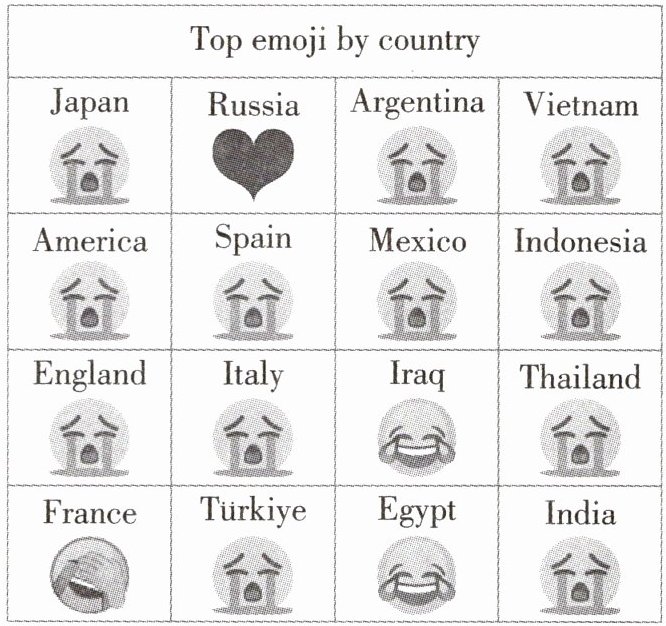
A company found that the crying face was the most-used emoji overall during the first half of 2025. People use it to show many strong feelings—not just sadness, but also pride, happiness and even laughter. And according to
the data(数据), the crying face was the most popular emoji in 12 out of the 16 countries it looked at.
In fact, the top emojis tend to be quite similar in most countries, with crying faces and laughing faces appearing again and again.
In many countries, people use hearts to show love for family or friends. However, cultural differences affect emoji use. In Japan, hearts are mostly used for romantic love, so people choose other emojis to show how they feel.
So while we might all use emojis, the way we use them can be quite different!
11.(创新考法·图片理解)According to the research in the first half of 2025, which emoji was the most-used overall?
A. B. C. D.
12. How many symbols were there in the first set of emojis?
A. 12. B. 176.
C. 3,500. D. 10 billion.
13.(创新考法·组合选择)What kinds of feelings do people use the crying face to show?
① anger ② sadness ③ fear
④ surprise ⑤ joy ⑥ pride
A. ②③④ B. ②⑤⑥
C. ①④⑤ D. ②③⑥
14. Why do people in Japan use other emojis instead of red hearts for some emotions?
A. Red hearts are not beautiful enough.
B. Red hearts are used to show love for someone special.
C. Japanese like colourful emojis better.
D. Red hearts are not popular with young people.
15. What can we learn from the passage about emoji use in different countries?
A. The top emojis are different in each country.
B. People in different countries use emojis in the same way.
C. Cultural differences don't have an effect on emoji use.
D. There are similarities in the top emojis used in most countries.
Whether it's a happy face, a little heart or a thumbs-up, emojis(表情符号) are an important part of how people all over the world communicate in messages online. In fact, 10 billion of them are sent every day!
The first emojis were created in 1999 by a Japanese designer named Shigetaka Kurita. His first set had 176 simple symbols, but these days we have more than 3,500 different emojis to choose from!
A company found that the crying face was the most-used emoji overall during the first half of 2025. People use it to show many strong feelings—not just sadness, but also pride, happiness and even laughter. And according to
the data(数据), the crying face was the most popular emoji in 12 out of the 16 countries it looked at.
In fact, the top emojis tend to be quite similar in most countries, with crying faces and laughing faces appearing again and again.
In many countries, people use hearts to show love for family or friends. However, cultural differences affect emoji use. In Japan, hearts are mostly used for romantic love, so people choose other emojis to show how they feel.
So while we might all use emojis, the way we use them can be quite different!
11.(创新考法·图片理解)According to the research in the first half of 2025, which emoji was the most-used overall?
A.
B. C. D.12. How many symbols were there in the first set of emojis?
A. 12. B. 176.
C. 3,500. D. 10 billion.
13.(创新考法·组合选择)What kinds of feelings do people use the crying face to show?
① anger ② sadness ③ fear
④ surprise ⑤ joy ⑥ pride
A. ②③④ B. ②⑤⑥
C. ①④⑤ D. ②③⑥
14. Why do people in Japan use other emojis instead of red hearts for some emotions?
A. Red hearts are not beautiful enough.
B. Red hearts are used to show love for someone special.
C. Japanese like colourful emojis better.
D. Red hearts are not popular with young people.
15. What can we learn from the passage about emoji use in different countries?
A. The top emojis are different in each country.
B. People in different countries use emojis in the same way.
C. Cultural differences don't have an effect on emoji use.
D. There are similarities in the top emojis used in most countries.
答案
11. C 图片理解题。根据“A company found that the crying face was the most-used emoji overall during the first half of 2025.”可知,哭泣脸是总体使用最多的表情符号。
12. B 细节理解题。根据 His first set had 176 simple symbols 可知,第一套表情符号有 176 个符号。
13. B 组合选择题。根据“People use it to show many strong feelings—not just sadness, but also pride, happiness and even laughter.”可知,人们用哭泣脸表达悲伤、骄傲、快乐等情绪,对应②⑤⑥。
14. B 细节理解题。根据“In Japan, hearts are mostly used for romantic love, so people choose other emojis to show how they feel.”可知,日本人不用红心表达某些情绪是因为红心多用于浪漫爱情(即对特定人的爱)。
15. D 推理判断题。根据“In fact, the top emojis tend to be quite similar in most countries”可知,大多数国家使用的热门表情符号存在相似性。
12. B 细节理解题。根据 His first set had 176 simple symbols 可知,第一套表情符号有 176 个符号。
13. B 组合选择题。根据“People use it to show many strong feelings—not just sadness, but also pride, happiness and even laughter.”可知,人们用哭泣脸表达悲伤、骄傲、快乐等情绪,对应②⑤⑥。
14. B 细节理解题。根据“In Japan, hearts are mostly used for romantic love, so people choose other emojis to show how they feel.”可知,日本人不用红心表达某些情绪是因为红心多用于浪漫爱情(即对特定人的爱)。
15. D 推理判断题。根据“In fact, the top emojis tend to be quite similar in most countries”可知,大多数国家使用的热门表情符号存在相似性。
解析
【分析】
本题为英语阅读理解题,共5道小题,围绕文章细节信息考查。解题思路为:先通读全文理解大意(介绍表情符号的起源、使用情况及文化差异);再针对每道小题,根据题干关键词定位原文对应段落,找到关键语句后匹配选项,选出正确答案。
【解析】
11. 题干关键词为“the first half of 2025”,定位至第三段第一句“A company found that the crying face was the most-used emoji overall during the first half of 2025.”,可知哭泣脸是总体使用最多的表情,对应选项C。
12. 题干关键词为“first set of emojis”,定位至第二段“His first set had 176 simple symbols”,可知第一套表情符号有176个,对应选项B。
13. 题干关键词为“crying face”“feelings”,定位至第三段“People use it to show many strong feelings—not just sadness, but also pride, happiness and even laughter.”,其中sadness对应②,happiness对应⑤,pride对应⑥,对应选项B。
14. 题干关键词为“Japan”“red hearts”,定位至第五段“In Japan, hearts are mostly used for romantic love, so people choose other emojis to show how they feel.”,可知日本人不用红心是因为红心多用于浪漫爱情(对特定人的爱),对应选项B。
15. 题干关键词为“different countries”“emoji use”,定位至第四段“In fact, the top emojis tend to be quite similar in most countries”,可知大多数国家使用的热门表情符号存在相似性,对应选项D。
【答案】
11.C 12.B 13.B 14.B 15.D
【知识点】
英语阅读理解、细节理解、推理判断
【点评】
本文围绕表情符号展开,考查学生快速定位原文细节信息的能力,题目设置贴合原文内容,难度适中,学生仔细阅读原文找准对应语句即可解答。
【难度系数】
0.8
本题为英语阅读理解题,共5道小题,围绕文章细节信息考查。解题思路为:先通读全文理解大意(介绍表情符号的起源、使用情况及文化差异);再针对每道小题,根据题干关键词定位原文对应段落,找到关键语句后匹配选项,选出正确答案。
【解析】
11. 题干关键词为“the first half of 2025”,定位至第三段第一句“A company found that the crying face was the most-used emoji overall during the first half of 2025.”,可知哭泣脸是总体使用最多的表情,对应选项C。
12. 题干关键词为“first set of emojis”,定位至第二段“His first set had 176 simple symbols”,可知第一套表情符号有176个,对应选项B。
13. 题干关键词为“crying face”“feelings”,定位至第三段“People use it to show many strong feelings—not just sadness, but also pride, happiness and even laughter.”,其中sadness对应②,happiness对应⑤,pride对应⑥,对应选项B。
14. 题干关键词为“Japan”“red hearts”,定位至第五段“In Japan, hearts are mostly used for romantic love, so people choose other emojis to show how they feel.”,可知日本人不用红心是因为红心多用于浪漫爱情(对特定人的爱),对应选项B。
15. 题干关键词为“different countries”“emoji use”,定位至第四段“In fact, the top emojis tend to be quite similar in most countries”,可知大多数国家使用的热门表情符号存在相似性,对应选项D。
【答案】
11.C 12.B 13.B 14.B 15.D
【知识点】
英语阅读理解、细节理解、推理判断
【点评】
本文围绕表情符号展开,考查学生快速定位原文细节信息的能力,题目设置贴合原文内容,难度适中,学生仔细阅读原文找准对应语句即可解答。
【难度系数】
0.8
