

 登录
登录
五、阅读理解。
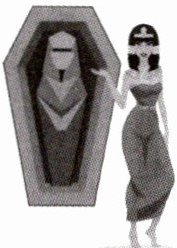
For thousands of years, no country has been as mysterious(神秘的)to the world as this one. It makes you wonder what's inside the pyramids(金字塔), how mummies(木乃伊)were made and what their lives were like back then. This is Egypt, one of the oldest civilizations in the world.
Sitting beside the Nile River, the longest river in the world, Egypt is famous for its pyramids. According to National Geographic, there are over 130 pyramids in Egypt. The biggest is the Great Pyramid of Khufu in Giza. It is about 146.6 metres tall, almost as tall as a 40-storey building. Before the Eiffel Tower was built, the Great Pyramid of Khufu was the tallest building in the world.
Egyptians also left us with mummies, which show us how they used science. Through studying mummies, we have discovered how they kept dead bodies for such a long time. Egyptians used a special salt called natron(碱)to cover the bodies, which dried them out and kept them looking lifelike. Some mummies are over 2,000 years old.
The ancient Egyptians also had their own way of timekeeping. Do you know that the solar calendar(阳历)we use today actually came from ancient Egypt? Back around 4000 BC, Egyptians had a 365-day calendar with 12 months, each lasting 30 days, along with a special five-day festival.
Egypt is full of amazing history and culture. Today people from all over the world visit Egypt, trying to get an up-close look at its mysteries and learn about its ancient past.
(
A. Pyramids.
B. The Nile River.
C. Modern cities.
D. New inventions.
(
A. It protected mummies from being stolen.
B. It made the mummies look more beautiful.
C. It helped keep dead bodies dry and lifelike.
D. It allowed mummies to last for only 1,000 years.
(
A. How to visit Egypt's famous places.
B. The history and culture of ancient Egypt.
C. Why mummies are well-preserved in Egypt.
D. The differences between ancient and modern Egypt.
(
A. Mummies were made only for important people in ancient Egypt.
B. The ancient Egyptians had knowledge in science and timekeeping.
C. The Eiffel Tower is older than the Great Pyramid of Khufu.
D. The ancient Egyptian calendar is exactly the same as today's solar calendar.
(
A. ①/②③/④⑤
B. ①②/③④/⑤
C. ①②/③/④⑤
D. ①/②③④/⑤
For thousands of years, no country has been as mysterious(神秘的)to the world as this one. It makes you wonder what's inside the pyramids(金字塔), how mummies(木乃伊)were made and what their lives were like back then. This is Egypt, one of the oldest civilizations in the world.
Sitting beside the Nile River, the longest river in the world, Egypt is famous for its pyramids. According to National Geographic, there are over 130 pyramids in Egypt. The biggest is the Great Pyramid of Khufu in Giza. It is about 146.6 metres tall, almost as tall as a 40-storey building. Before the Eiffel Tower was built, the Great Pyramid of Khufu was the tallest building in the world.
Egyptians also left us with mummies, which show us how they used science. Through studying mummies, we have discovered how they kept dead bodies for such a long time. Egyptians used a special salt called natron(碱)to cover the bodies, which dried them out and kept them looking lifelike. Some mummies are over 2,000 years old.
The ancient Egyptians also had their own way of timekeeping. Do you know that the solar calendar(阳历)we use today actually came from ancient Egypt? Back around 4000 BC, Egyptians had a 365-day calendar with 12 months, each lasting 30 days, along with a special five-day festival.
Egypt is full of amazing history and culture. Today people from all over the world visit Egypt, trying to get an up-close look at its mysteries and learn about its ancient past.
(
A
)1. What is Egypt famous for according to the passage?A. Pyramids.
B. The Nile River.
C. Modern cities.
D. New inventions.
(
C
)2. What role did “natron” play in making mummies?A. It protected mummies from being stolen.
B. It made the mummies look more beautiful.
C. It helped keep dead bodies dry and lifelike.
D. It allowed mummies to last for only 1,000 years.
(
B
)3. What is the main idea of the passage?A. How to visit Egypt's famous places.
B. The history and culture of ancient Egypt.
C. Why mummies are well-preserved in Egypt.
D. The differences between ancient and modern Egypt.
(
B
)4. What can we infer(推断)from the passage?A. Mummies were made only for important people in ancient Egypt.
B. The ancient Egyptians had knowledge in science and timekeeping.
C. The Eiffel Tower is older than the Great Pyramid of Khufu.
D. The ancient Egyptian calendar is exactly the same as today's solar calendar.
(
D
)5. What would be the best structure of the passage?A. ①/②③/④⑤
B. ①②/③④/⑤
C. ①②/③/④⑤
D. ①/②③④/⑤
答案
1. A
2. C
3. B
4. B
5. D
2. C
3. B
4. B
5. D
