

 登录
登录
一、根据句意及音标、汉语或首字母提示写出单词
1. (2024·苏州昆山期末) This painting is one of these
2. (2025·徐州铜山区期中) Please tell me some
3. British eating habits are quite different from
4. Look! There is a red house a
5. People put up some paper - cuts on the windows to bring h
1. (2024·苏州昆山期末) This painting is one of these
artists'
/'ɑːtɪsts/.2. (2025·徐州铜山区期中) Please tell me some
basic
/'beɪsɪk/ information about the Huizhou inkstick.3. British eating habits are quite different from
ours
(我们的).4. Look! There is a red house a
mong
the trees.5. People put up some paper - cuts on the windows to bring h
appiness
and good wishes.答案
一、1. artists' 2. basic 3. ours 4. among 5. happiness
解析
【分析】
本题为英语单词拼写题,需结合音标、汉语提示、首字母及语境完成填空,解题思路如下:
1. 第1题:根据音标/'ɑːtɪsts/确定单词为artist的复数形式artists,结合句中“one of these”表示所属关系,需用名词所有格形式artists';
2. 第2题:直接根据音标/'beɪsɪk/,对应形容词basic,修饰后面的名词information,符合语境;
3. 第3题:汉语提示“我们的”,此处指代“我们的饮食习惯”,且空格后无名词,需使用名词性物主代词ours;
4. 第4题:首字母为a,结合语境“在树之间有一座红房子”,介词among用于三者及以上的“在……之间”,符合搭配;
5. 第5题:首字母为h,与并列成分good wishes(美好祝愿)对应,需填名词happiness(幸福),构成“带来幸福和美好祝愿”的语义。
【解析】
1. 由音标/'ɑːtɪsts/得artists,结合所属关系用名词所有格artists';
2. 音标/'beɪsɪk/对应形容词basic,修饰information,正确;
3. 汉语“我们的”后无名词,用名词性物主代词ours;
4. 首字母a,“在树之间”用介词among;
5. 首字母h,与good wishes并列,填名词happiness。
【答案】
1. artists' 2. basic 3. ours 4. among 5. happiness
【知识点】
名词所有格、代词、介词
【点评】
本题考查基础词汇的运用,涵盖音标识别、名词所有格、代词、介词及名词的用法,是初中英语常见的基础题型,侧重学生对核心词汇的掌握。
【难度系数】
0.6
本题为英语单词拼写题,需结合音标、汉语提示、首字母及语境完成填空,解题思路如下:
1. 第1题:根据音标/'ɑːtɪsts/确定单词为artist的复数形式artists,结合句中“one of these”表示所属关系,需用名词所有格形式artists';
2. 第2题:直接根据音标/'beɪsɪk/,对应形容词basic,修饰后面的名词information,符合语境;
3. 第3题:汉语提示“我们的”,此处指代“我们的饮食习惯”,且空格后无名词,需使用名词性物主代词ours;
4. 第4题:首字母为a,结合语境“在树之间有一座红房子”,介词among用于三者及以上的“在……之间”,符合搭配;
5. 第5题:首字母为h,与并列成分good wishes(美好祝愿)对应,需填名词happiness(幸福),构成“带来幸福和美好祝愿”的语义。
【解析】
1. 由音标/'ɑːtɪsts/得artists,结合所属关系用名词所有格artists';
2. 音标/'beɪsɪk/对应形容词basic,修饰information,正确;
3. 汉语“我们的”后无名词,用名词性物主代词ours;
4. 首字母a,“在树之间”用介词among;
5. 首字母h,与good wishes并列,填名词happiness。
【答案】
1. artists' 2. basic 3. ours 4. among 5. happiness
【知识点】
名词所有格、代词、介词
【点评】
本题考查基础词汇的运用,涵盖音标识别、名词所有格、代词、介词及名词的用法,是初中英语常见的基础题型,侧重学生对核心词汇的掌握。
【难度系数】
0.6
1. —Mike, would you like to go to the park with me now?
—Sorry. I
A.do
B.am doing
C.did
D.will do
—Sorry. I
B
my homework at the moment.A.do
B.am doing
C.did
D.will do
答案
1. B [解析]考查现在进行时。句意:——迈克,你想现在和我一起去公园吗?——很抱歉。我此刻正在做我的作业。根据"at the moment"可知,此处应用现在进行时。故选B。
解析
【分析】
首先抓住句中的时间标志词“at the moment”(此刻),结合对话语境:对方邀请现在去公园,回答“抱歉”说明此刻正在做某事,需判断对应的时态,再分析选项得出答案。
【解析】
根据时间状语“at the moment”可知,句子应用现在进行时,其结构为“am/is/are + 动词现在分词”;主语为I,be动词用am,动词do的现在分词是doing,因此此处应填am doing,对应选项B。
【答案】
B
【知识点】
现在进行时
【点评】
本题考查现在进行时的基本用法,核心是识别时间标志词“at the moment”,属于初中英语基础时态题,难度较低,适合巩固时态知识点。
【难度系数】
0.8
首先抓住句中的时间标志词“at the moment”(此刻),结合对话语境:对方邀请现在去公园,回答“抱歉”说明此刻正在做某事,需判断对应的时态,再分析选项得出答案。
【解析】
根据时间状语“at the moment”可知,句子应用现在进行时,其结构为“am/is/are + 动词现在分词”;主语为I,be动词用am,动词do的现在分词是doing,因此此处应填am doing,对应选项B。
【答案】
B
【知识点】
现在进行时
【点评】
本题考查现在进行时的基本用法,核心是识别时间标志词“at the moment”,属于初中英语基础时态题,难度较低,适合巩固时态知识点。
【难度系数】
0.8
2. (2025·南京玄武区期末)—Tom, where are you going this weekend?
—Mount Tai. We can
A.pick up
B.grow up
C.look up
D.put up
—Mount Tai. We can
D
tents, have a picnic and enjoy the beautiful view on its top.A.pick up
B.grow up
C.look up
D.put up
答案
2. D [解析]考查动词短语辨析。句意:——汤姆,这周末你要去哪里?——泰山。我们可以在山顶搭帐篷、享受野餐并欣赏美景。pick up捡起;grow up长大;look up查阅;put up搭建,张贴。根据语境和"tents"可知,此处表示"搭帐篷"。故选D。
解析
【分析】本题考查动词短语辨析,解题思路为:先理解对话语境,再逐一分析各选项动词短语的含义,最后结合与“tents(帐篷)”的搭配要求,选出符合语境的短语。
【解析】对话翻译:——汤姆,这周末你要去哪里?——泰山。我们可以在山顶搭帐篷、野餐并欣赏美景。逐一分析选项:A.pick up意为“捡起;接载”;B.grow up意为“长大”;C.look up意为“查阅;向上看”;D.put up意为“搭建;张贴”。结合语境中“tents(帐篷)”,此处需表达“搭建帐篷”,故put up符合要求,因此选D。
【答案】D
【知识点】动词短语辨析
【点评】本题考查常见动词短语在具体语境中的运用,需准确掌握各短语含义并结合语境匹配,属于基础题型。
【难度系数】0.8
【解析】对话翻译:——汤姆,这周末你要去哪里?——泰山。我们可以在山顶搭帐篷、野餐并欣赏美景。逐一分析选项:A.pick up意为“捡起;接载”;B.grow up意为“长大”;C.look up意为“查阅;向上看”;D.put up意为“搭建;张贴”。结合语境中“tents(帐篷)”,此处需表达“搭建帐篷”,故put up符合要求,因此选D。
【答案】D
【知识点】动词短语辨析
【点评】本题考查常见动词短语在具体语境中的运用,需准确掌握各短语含义并结合语境匹配,属于基础题型。
【难度系数】0.8
3. Why not
A.to ask; write
B.to ask; writing
C.ask; writing
D.asking; to write
C
your teacher for help when you can't finish C
the story by yourself?A.to ask; write
B.to ask; writing
C.ask; writing
D.asking; to write
答案
3. C [解析]考查固定句型和非谓语动词辨析。句意:当你自己不能写好故事时,为什么不向你的老师求助呢?Why not do sth?是固定句型,意为"为什么不做某事呢",通常表示建议;finish后跟动词-ing形式作宾语。故选C。
解析
【分析】本题考查英语语法中的固定句型和非谓语动词搭配,解题思路分两步:1. 识别固定句型“Why not”的用法,它后接动词原形用于提建议,据此排除不符合的选项;2. 回忆动词“finish”的固定搭配“finish doing sth.”,确定第二个空的形式,最终选出正确答案。
【解析】“Why not do sth.”是固定句型,意为“为什么不做某事”,用于提出建议,因此第一个空应填动词原形ask;“finish”后需接动名词(doing形式)作宾语,构成“finish doing sth.”(完成做某事)的固定搭配,因此第二个空应填writing,综上选C。
【答案】C
【知识点】固定句型;非谓语动词
【点评】本题为英语基础语法题,考查常见的固定句型和动词搭配,是初中英语的高频考点,需牢记相关结构。
【难度系数】0.6
【解析】“Why not do sth.”是固定句型,意为“为什么不做某事”,用于提出建议,因此第一个空应填动词原形ask;“finish”后需接动名词(doing形式)作宾语,构成“finish doing sth.”(完成做某事)的固定搭配,因此第二个空应填writing,综上选C。
【答案】C
【知识点】固定句型;非谓语动词
【点评】本题为英语基础语法题,考查常见的固定句型和动词搭配,是初中英语的高频考点,需牢记相关结构。
【难度系数】0.6
4. (2025·连云港赣榆区期中)—Excuse me. Is this
—Yes. It's
A.Lily and Lucy's; theirs
B.Lily's and Lucy's; them
C.Lily and Lucy's; them
D.Lily's and Lucy's; their
A
new house?—Yes. It's
A
. Their parents bought it last week.A.Lily and Lucy's; theirs
B.Lily's and Lucy's; them
C.Lily and Lucy's; them
D.Lily's and Lucy's; their
答案
4. A [解析]考查名词所有格和名词性物主代词。句意:——打扰一下。这是莉莉和露西的新房子吗?——是的。这是她们的(新房子)。她们的父母上周买的。根据"new house"可知,第一空表示莉莉和露西共同拥有的房子,在第二个人名后加's,用Lily and Lucy's;第二空指代"她们的房子",空后无名词,用名词性物主代词theirs。故选A。
解析
【分析】
先分析第一空:根据句中单数名词“new house”,可判断是莉莉和露西共同拥有的房子,共同拥有的名词所有格需在最后一个人名后加's;再分析第二空:空后无名词,需指代“她们的房子”,应使用名词性物主代词,结合选项选出正确答案。
【解析】
1. 第一空:表示两人共同拥有某物时,名词所有格形式为“人名1 and 人名2's”,此处“new house”是单数,说明是莉莉和露西共同的房子,故用Lily and Lucy's;
2. 第二空:此处需指代“她们的房子”,且空后无名词,需用名词性物主代词,theirs是名词性物主代词,相当于“their + 名词”,符合语境;them是人称代词宾格,their是形容词性物主代词(后需接名词),均不符合。综上选A。
【答案】
A
【知识点】
名词所有格、名词性物主代词
【点评】
本题考查名词所有格和物主代词的基础用法,需准确区分共同所有的所有格形式,以及形容词性与名词性物主代词的用法差异,属于英语基础考点题。
【难度系数】
0.6
先分析第一空:根据句中单数名词“new house”,可判断是莉莉和露西共同拥有的房子,共同拥有的名词所有格需在最后一个人名后加's;再分析第二空:空后无名词,需指代“她们的房子”,应使用名词性物主代词,结合选项选出正确答案。
【解析】
1. 第一空:表示两人共同拥有某物时,名词所有格形式为“人名1 and 人名2's”,此处“new house”是单数,说明是莉莉和露西共同的房子,故用Lily and Lucy's;
2. 第二空:此处需指代“她们的房子”,且空后无名词,需用名词性物主代词,theirs是名词性物主代词,相当于“their + 名词”,符合语境;them是人称代词宾格,their是形容词性物主代词(后需接名词),均不符合。综上选A。
【答案】
A
【知识点】
名词所有格、名词性物主代词
【点评】
本题考查名词所有格和物主代词的基础用法,需准确区分共同所有的所有格形式,以及形容词性与名词性物主代词的用法差异,属于英语基础考点题。
【难度系数】
0.6
5. (南京秦淮区期末)—Shall we go swimming tomorrow afternoon, Amy?
—
A.Here we are
B.Enjoy yourself
C.I'm afraid not
D.You are welcome
—
C
. I have to stay at home to look after my sick cousin Shirley.A.Here we are
B.Enjoy yourself
C.I'm afraid not
D.You are welcome
答案
5. C [解析]考查情景交际。句意:——我们明天下午去游泳好吗,艾米?——恐怕不行。我不得不待在家里照顾生病的表姐雪莉。Here we are我们到了;Enjoy yourself祝你玩得开心;I'm afraid not恐怕不行;You are welcome不客气。根据"I have to stay at home to look after my sick cousin Shirley."可知,此处表示明天下午不能去游泳。故选C。
解析
【分析】本题是情景交际题,解题思路为:先理解对话语境——对方发出明天下午去游泳的邀请,答语表明要留家照顾生病的表姐,即不能接受邀请;再逐一分析选项含义,筛选出符合“委婉拒绝邀请”语境的选项;最后确定正确答案。
【解析】对话翻译:——艾米,我们明天下午去游泳好吗?——______。我不得不待在家里照顾生病的表姐雪莉。选项A“Here we are”意为“我们到了”,不符合应答邀请的语境;选项B“Enjoy yourself”意为“祝你玩得开心”,用于祝福他人,不适合回应邀请;选项C“I'm afraid not”意为“恐怕不行”,用于委婉拒绝邀请,契合答语中不能赴约的情况;选项D“You are welcome”意为“不客气”,用于回应感谢,与语境不符。因此选C。
【答案】C
【知识点】情景交际用语
【点评】本题考查日常情景交际的应答,需结合上下文语境准确辨析各选项含义,属于基础题型,难度较低。
【难度系数】0.8
【解析】对话翻译:——艾米,我们明天下午去游泳好吗?——______。我不得不待在家里照顾生病的表姐雪莉。选项A“Here we are”意为“我们到了”,不符合应答邀请的语境;选项B“Enjoy yourself”意为“祝你玩得开心”,用于祝福他人,不适合回应邀请;选项C“I'm afraid not”意为“恐怕不行”,用于委婉拒绝邀请,契合答语中不能赴约的情况;选项D“You are welcome”意为“不客气”,用于回应感谢,与语境不符。因此选C。
【答案】C
【知识点】情景交际用语
【点评】本题考查日常情景交际的应答,需结合上下文语境准确辨析各选项含义,属于基础题型,难度较低。
【难度系数】0.8
三、新素材 中国传统扇子的历史 (2025·连云港新海初级中学期中)阅读理解
词数: 308 体裁: 说明文 核心素养: 文化意识
话题: 中国传统扇子的历史 难度: 难 建议用时: 8分钟
①In China, it's usual to see people on the streets using their fans in summer. However, the traditional Chinese fan is not just a tool for cooling down.
②The history of Chinese fans goes back to the Shang Dynasty (about 1600 BC—1046 BC). One of the earliest fans was known as Shanhan. It was a bit like today's umbrella. It was one part of a carriage (马车) to keep people away from the strong sunshine and rainfall. Later, Shanhan developed into a long - handled fan called Zhangshan (障扇).
③In fact, the fan was not used to help people cool down until the Zhou Dynasty. At that time, fans were usually made of birds' feathers and mainly used by the emperors (皇帝). Later, bamboo fans were invented in the Han Dynasty. They were very popular among the common people in the Song Dynasty.
④Years later, the folding fan was introduced. As this kind of fan could be easily folded and carried, it soon became popular. However, the best thing of a folding fan was the pictures on it. If a famous person painted the fan, it could cost a lot of money. For example, a folding fan painted by Zhang Daqian was sold for 252,000. Qi Baishi and Xu Beihong were also well known.
⑤Throughout the history, Chinese fans have become the great treasure. Today, there are more than 500 kinds of fans in China, attracting a great number of fan lovers all over the world. However, it's difficult to carry on our traditional skills of making fans among young people now for many reasons. Luckily, Tag Design made a meaningful try. It had an app "Folding Fan" which introduces the skills for making traditional fans. With the help of technology, these fan - making skills are surely able to stay alive forever.
1. According to the passage, when did people first use fans to cool down?
A. In the Shang Dynasty.
B. In the Zhou Dynasty.
C. In the Han Dynasty.
D. In the Song Dynasty.
2. Why did the folding fan become popular quickly?
A. Because it could help people feel cooler.
B. Because it was invented by famous artists.
C. Because it was made of expensive materials.
D. Because it could be easily folded and carried.
3. What can we know about the app "Folding Fan" by Tag Design?
A. It sells expensive folding fans online.
B. It introduces the skills for making traditional folding fans.
C. It tells people about the history of Chinese fans.
D. It teaches people how to use folding fans.
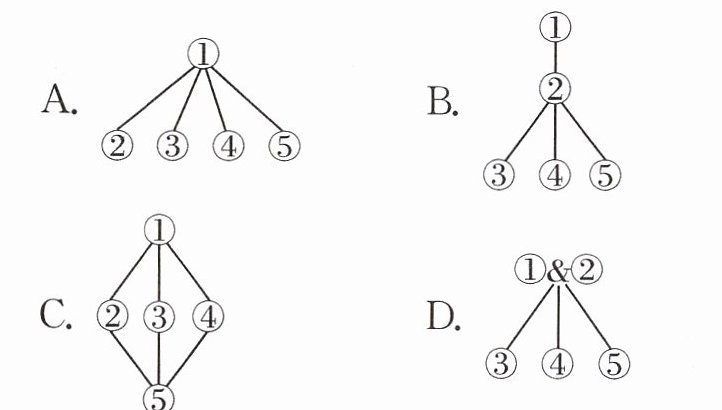
4. 中考新考法 推断篇章结构 How does the writer organize the whole passage?
词数: 308 体裁: 说明文 核心素养: 文化意识
话题: 中国传统扇子的历史 难度: 难 建议用时: 8分钟
①In China, it's usual to see people on the streets using their fans in summer. However, the traditional Chinese fan is not just a tool for cooling down.
②The history of Chinese fans goes back to the Shang Dynasty (about 1600 BC—1046 BC). One of the earliest fans was known as Shanhan. It was a bit like today's umbrella. It was one part of a carriage (马车) to keep people away from the strong sunshine and rainfall. Later, Shanhan developed into a long - handled fan called Zhangshan (障扇).
③In fact, the fan was not used to help people cool down until the Zhou Dynasty. At that time, fans were usually made of birds' feathers and mainly used by the emperors (皇帝). Later, bamboo fans were invented in the Han Dynasty. They were very popular among the common people in the Song Dynasty.
④Years later, the folding fan was introduced. As this kind of fan could be easily folded and carried, it soon became popular. However, the best thing of a folding fan was the pictures on it. If a famous person painted the fan, it could cost a lot of money. For example, a folding fan painted by Zhang Daqian was sold for 252,000. Qi Baishi and Xu Beihong were also well known.
⑤Throughout the history, Chinese fans have become the great treasure. Today, there are more than 500 kinds of fans in China, attracting a great number of fan lovers all over the world. However, it's difficult to carry on our traditional skills of making fans among young people now for many reasons. Luckily, Tag Design made a meaningful try. It had an app "Folding Fan" which introduces the skills for making traditional fans. With the help of technology, these fan - making skills are surely able to stay alive forever.
1. According to the passage, when did people first use fans to cool down?
A. In the Shang Dynasty.
B. In the Zhou Dynasty.
C. In the Han Dynasty.
D. In the Song Dynasty.
2. Why did the folding fan become popular quickly?
A. Because it could help people feel cooler.
B. Because it was invented by famous artists.
C. Because it was made of expensive materials.
D. Because it could be easily folded and carried.
3. What can we know about the app "Folding Fan" by Tag Design?
A. It sells expensive folding fans online.
B. It introduces the skills for making traditional folding fans.
C. It tells people about the history of Chinese fans.
D. It teaches people how to use folding fans.
4. 中考新考法 推断篇章结构 How does the writer organize the whole passage?
答案
三、[文章大意]本文是一篇说明文。文章主要介绍了中国的扇子的发展历史。
1. B [解析]细节理解题。根据"In fact, the fan was not used to help people cool down until the Zhou Dynasty."可知,直到周朝,扇子才被用来帮助人们降温。故选B。
2. D [解析]细节理解题。根据"As this kind of fan could be easily folded and carried, it soon became popular."可知,因为这种扇子易于折叠和携带。故选D。
3. B [解析]细节理解题。根据"Luckily, Tag Design made a meaningful try. It had an app 'Folding Fan' which introduces the skills for making traditional fans."可知,这个应用程序介绍了制作传统折扇的技巧。故选B。
4. C [解析]篇章结构题。通读全文可知,第一段总起全文介绍扇子;第二段至第四段介绍了扇子历史演变;最后一段总结扇子是伟大的财富,并与现代技术相融合,因此文章是"总—分—总"结构。故选C。
1. B [解析]细节理解题。根据"In fact, the fan was not used to help people cool down until the Zhou Dynasty."可知,直到周朝,扇子才被用来帮助人们降温。故选B。
2. D [解析]细节理解题。根据"As this kind of fan could be easily folded and carried, it soon became popular."可知,因为这种扇子易于折叠和携带。故选D。
3. B [解析]细节理解题。根据"Luckily, Tag Design made a meaningful try. It had an app 'Folding Fan' which introduces the skills for making traditional fans."可知,这个应用程序介绍了制作传统折扇的技巧。故选B。
4. C [解析]篇章结构题。通读全文可知,第一段总起全文介绍扇子;第二段至第四段介绍了扇子历史演变;最后一段总结扇子是伟大的财富,并与现代技术相融合,因此文章是"总—分—总"结构。故选C。
解析
【分析】本题是篇章结构推断题,解题思路为:先通读全文,梳理每段的核心内容,再据此判断文章的结构类型。首先明确各段大意:第①段总起,引出中国传统扇子的话题;第②-④段分别介绍扇子的发展历程,属于分述部分;第⑤段总结扇子的价值及传承方式,属于总结部分,因此文章为总-分-总结构,对应选项C的结构示意图。
【解析】要推断文章结构,需先概括各段内容:1. 第①段总起,点明中国传统扇子不只是降温工具,引出话题;2. 第②-④段分述扇子从商代到周代、汉代、宋代再到折扇的发展历史;3. 第⑤段总结扇子是伟大财富,提到用科技传承制扇技艺,是总结部分。由此可知文章是“总—分—总”结构,对应选项C的结构示意图,故选C。
【答案】C
【知识点】阅读理解(篇章结构)、细节理解
【点评】本题考查对文章篇章结构的理解,需要学生具备梳理段落逻辑的能力,结合各段内容判断结构,属于中等难度的阅读理解题。
【难度系数】0.5
【解析】要推断文章结构,需先概括各段内容:1. 第①段总起,点明中国传统扇子不只是降温工具,引出话题;2. 第②-④段分述扇子从商代到周代、汉代、宋代再到折扇的发展历史;3. 第⑤段总结扇子是伟大财富,提到用科技传承制扇技艺,是总结部分。由此可知文章是“总—分—总”结构,对应选项C的结构示意图,故选C。
【答案】C
【知识点】阅读理解(篇章结构)、细节理解
【点评】本题考查对文章篇章结构的理解,需要学生具备梳理段落逻辑的能力,结合各段内容判断结构,属于中等难度的阅读理解题。
【难度系数】0.5
