

 登录
登录
五 新素养 行为导向 根据图片和上下文提示补全对话。
A: Look around. 1.
B: No, it's messy and dirty.
A: 2.
B: The students threw rubbish on the floor.
A: 3.
B: Yes, we can. The rubbish bin is over there.
A: Great! What else can you do?
B: 4.
A: That's right. You should keep your classroom clean and neat.
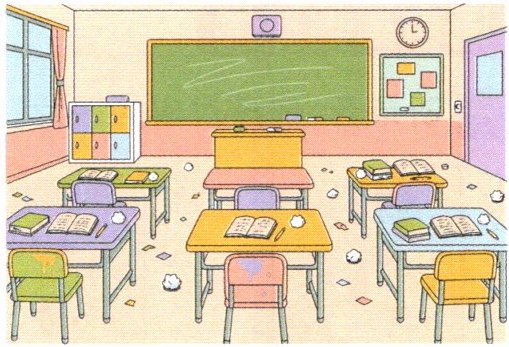
A: Look around. 1.
Is our classroom clean
?B: No, it's messy and dirty.
A: 2.
What happened
?B: The students threw rubbish on the floor.
A: 3.
Can you put rubbish in the bin
?B: Yes, we can. The rubbish bin is over there.
A: Great! What else can you do?
B: 4.
We can clean the desks, chairs and the blackboard too
.A: That's right. You should keep your classroom clean and neat.
答案
1. Is our classroom clean 2. What happened 3. Can you put rubbish in the bin 4. We can clean the desks, chairs and the blackboard too
解析
【分析】
要补全对话,需结合答句内容和上下文逻辑推导:1. 根据B的答句“No, it's messy and dirty.”,可知A的问句是询问教室是否干净的一般疑问句;2. 根据B的答句说明学生扔垃圾的情况,可知A的问句是询问发生了什么事;3. 根据B用“Yes, we can”回答,结合提到垃圾桶,可知A的问句是Can开头的一般疑问句,询问是否能把垃圾放进垃圾桶;4. 根据A问“还能做什么”,结合教室脏乱的场景,可知B要回答具体的其他打扫事项。
【解析】
1. 由答句描述教室脏乱,推导出问句为“Is our classroom clean”;
2. 由答句说明扔垃圾的事件,推导出问句为“What happened”;
3. 由答句用“Yes, we can”回应,结合垃圾桶的提示,推导出问句为“Can you put rubbish in the bin”;
4. 由问句询问其他能做的事,结合教室场景,推导出答句为“We can clean the desks, chairs and the blackboard too”。
【答案】
1. Is our classroom clean 2. What happened 3. Can you put rubbish in the bin 4. We can clean the desks, chairs and the blackboard too
【知识点】
补全对话、日常交际用语、一般疑问句
【点评】
本题结合教室场景考查日常情景对话补全,需理解上下文问答逻辑,难度适中,能帮助学生掌握日常交际用语的运用。
【难度系数】
0.6
要补全对话,需结合答句内容和上下文逻辑推导:1. 根据B的答句“No, it's messy and dirty.”,可知A的问句是询问教室是否干净的一般疑问句;2. 根据B的答句说明学生扔垃圾的情况,可知A的问句是询问发生了什么事;3. 根据B用“Yes, we can”回答,结合提到垃圾桶,可知A的问句是Can开头的一般疑问句,询问是否能把垃圾放进垃圾桶;4. 根据A问“还能做什么”,结合教室脏乱的场景,可知B要回答具体的其他打扫事项。
【解析】
1. 由答句描述教室脏乱,推导出问句为“Is our classroom clean”;
2. 由答句说明扔垃圾的事件,推导出问句为“What happened”;
3. 由答句用“Yes, we can”回应,结合垃圾桶的提示,推导出问句为“Can you put rubbish in the bin”;
4. 由问句询问其他能做的事,结合教室场景,推导出答句为“We can clean the desks, chairs and the blackboard too”。
【答案】
1. Is our classroom clean 2. What happened 3. Can you put rubbish in the bin 4. We can clean the desks, chairs and the blackboard too
【知识点】
补全对话、日常交际用语、一般疑问句
【点评】
本题结合教室场景考查日常情景对话补全,需理解上下文问答逻辑,难度适中,能帮助学生掌握日常交际用语的运用。
【难度系数】
0.6
六 新语篇 便签信件 阅读信件内容,判断句子正误,正确的写“T”,错误的写“F”。
Dear Helen,
How's everything going with you? Don't worry. Let me share my healthy living ideas and habits with you, then you will know how to be full of energy like me.
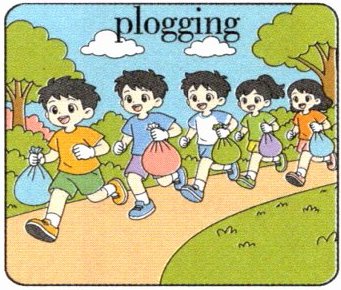
First, exercise is the key! I find a good way to make exercise exciting—“plogging”. The name of plogging comes from the words “pick up” and “jogging”. When one goes plogging, he or she picks up litter at the same time. You can enjoy exercising and doing great things for the world together.
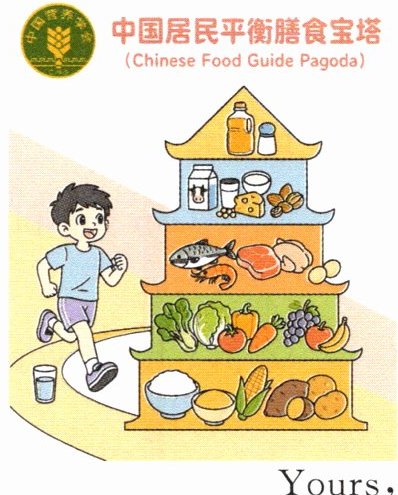
Second, have a balanced diet. The Chinese Food Guide Pagoda says we need vegetables, grains, protein(蛋白质)and so on. Also, traditional Chinese doctors advise us not to have iced food or drinks. They can bring too much cold to our body, and then we may feel unwell(不舒服的).
Make small changes: try plogging and eat a balanced diet each day. I believe you will feel much better.
Yours,
Fu Xing
(
(
(
(
(
Dear Helen,
How's everything going with you? Don't worry. Let me share my healthy living ideas and habits with you, then you will know how to be full of energy like me.
First, exercise is the key! I find a good way to make exercise exciting—“plogging”. The name of plogging comes from the words “pick up” and “jogging”. When one goes plogging, he or she picks up litter at the same time. You can enjoy exercising and doing great things for the world together.
Second, have a balanced diet. The Chinese Food Guide Pagoda says we need vegetables, grains, protein(蛋白质)and so on. Also, traditional Chinese doctors advise us not to have iced food or drinks. They can bring too much cold to our body, and then we may feel unwell(不舒服的).
Make small changes: try plogging and eat a balanced diet each day. I believe you will feel much better.
Yours,
Fu Xing
(
T
)1. The word “plogging” is from “pick up” and “jogging”.(
T
)2. From the letter, we know Fu Xing is a student full of energy.(
F
)3. Helen wrote the letter to tell Fu Xing to eat a balanced diet.(
F
)4. The Chinese Food Guide Pagoda advises us not to have iced food or drinks.(
T
)5. The letter mainly talks about two ways of living a healthy life.答案
1. T 2. T 3. F 4. F 5. T
解析
【分析】做此类阅读判断正误题,需先通读信件把握大意;再针对每道题的题干关键词,回到原文定位对应内容,将题干表述与原文信息逐一比对,一致则选T,不一致则选F。
【解析】1. 题干提到“plogging”来自“pick up”和“jogging”,原文第二段明确说明“The name of plogging comes from the words “pick up” and “jogging””,表述一致,故为T。2. 题干称Fu Xing是充满活力的人,原文第一段“you will know how to be full of energy like me”中“me”指写信人Fu Xing,表述一致,故为T。3. 题干说Helen写信给Fu Xing让其均衡饮食,但信件是Fu Xing写给Helen的,内容是分享健康生活想法,表述错误,故为F。4. 题干称中国膳食指南建议不要吃冰食,原文第三段是“traditional Chinese doctors advise us not to have iced food or drinks”,并非膳食指南,表述错误,故为F。5. 题干说信件主要讲两种健康生活方式,原文提到plogging(锻炼)和均衡饮食,共两种,表述一致,故为T。
【答案】1.T 2.T 3.F 4.F 5.T
【知识点】英语阅读理解;细节判断
【点评】本题为英语阅读细节理解题,考查学生定位原文信息并比对判断的能力,难度适中,只要仔细查找原文对应内容即可完成解答。
【难度系数】0.6
【解析】1. 题干提到“plogging”来自“pick up”和“jogging”,原文第二段明确说明“The name of plogging comes from the words “pick up” and “jogging””,表述一致,故为T。2. 题干称Fu Xing是充满活力的人,原文第一段“you will know how to be full of energy like me”中“me”指写信人Fu Xing,表述一致,故为T。3. 题干说Helen写信给Fu Xing让其均衡饮食,但信件是Fu Xing写给Helen的,内容是分享健康生活想法,表述错误,故为F。4. 题干称中国膳食指南建议不要吃冰食,原文第三段是“traditional Chinese doctors advise us not to have iced food or drinks”,并非膳食指南,表述错误,故为F。5. 题干说信件主要讲两种健康生活方式,原文提到plogging(锻炼)和均衡饮食,共两种,表述一致,故为T。
【答案】1.T 2.T 3.F 4.F 5.T
【知识点】英语阅读理解;细节判断
【点评】本题为英语阅读细节理解题,考查学生定位原文信息并比对判断的能力,难度适中,只要仔细查找原文对应内容即可完成解答。
【难度系数】0.6
