

 登录
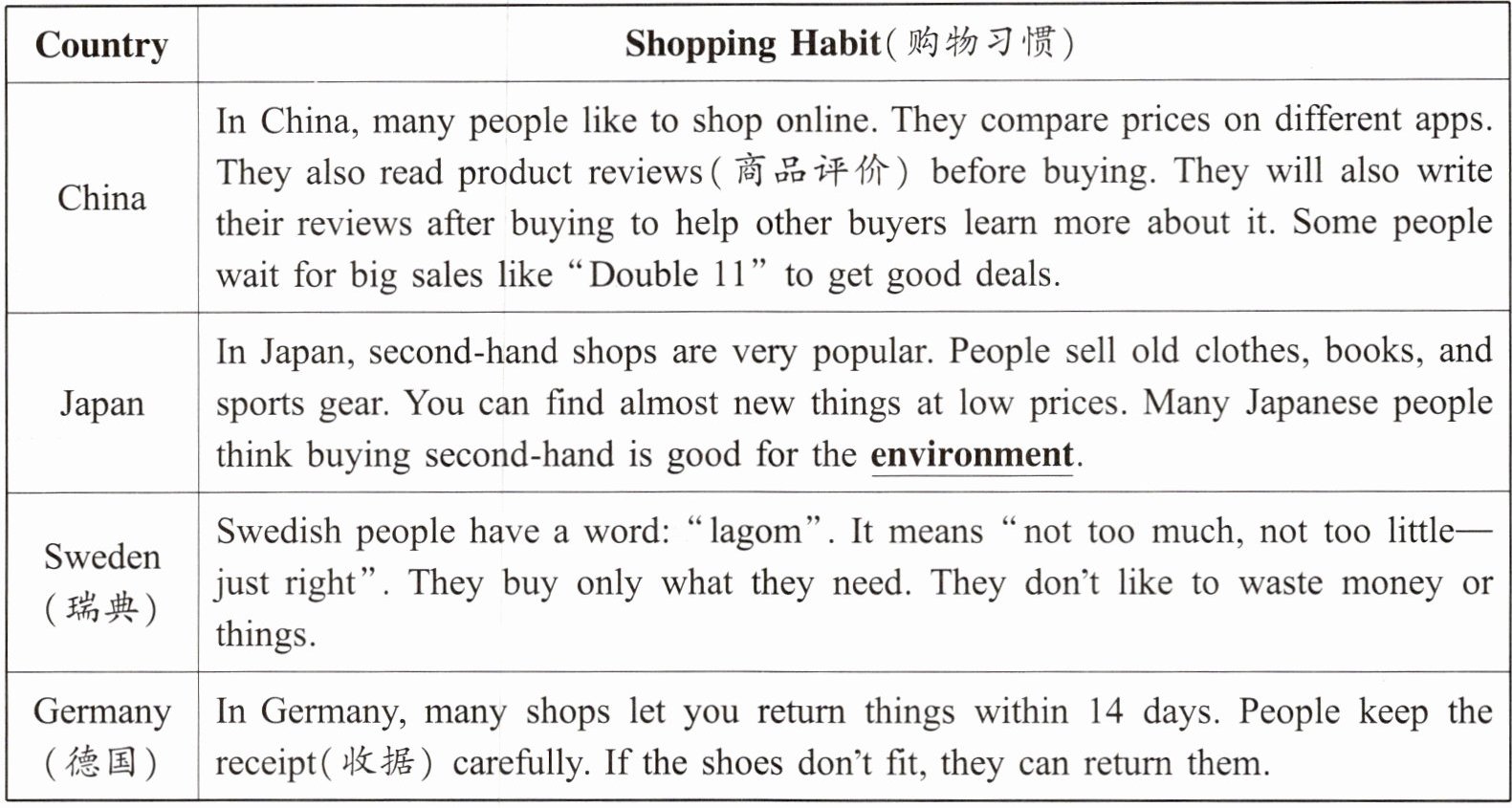
二、【国际视野】不同国家的人们有不同的购物习惯。阅读材料,完成下列任务。
How people shop in different countries?
任务一:根据材料内容,给下列国家与其相应的人们的购物习惯连线。
1. China A. People only buy what they need, “just right”.
2. Japan B. People shop online, compare prices and wait for sales.
3. Sweden C. People return things if they don’t fit.
4. Germany D. People buy second-hand things at low prices.
任务二:判断下列句子是否符合材料内容,如符合,在括号内写“T”,否则写“F”。
(
(
(
(
任务三:思考并回答下列问题。
(
A. 经济 B. 环境 C. 价格
2. Why do Swedish people only buy things they need?
3. Which country’s shopping habit do you like best? Why? Write 1 or 2 sentences.
I like
本单元学习即将结束,一起来“More to Know”了解本单元的补充知识吧!
How people shop in different countries?
任务一:根据材料内容,给下列国家与其相应的人们的购物习惯连线。
1. China A. People only buy what they need, “just right”.
2. Japan B. People shop online, compare prices and wait for sales.
3. Sweden C. People return things if they don’t fit.
4. Germany D. People buy second-hand things at low prices.
任务二:判断下列句子是否符合材料内容,如符合,在括号内写“T”,否则写“F”。
(
T
)1. In China, some people wait for “Double 11” to get good deals.(
T
)2. Japanese people like to buy second-hand things because it helps the environment.(
F
)3. “Lagom” means “buy as much as you can”.(
F
)4. In Germany, you cannot return things after you buy them.任务三:思考并回答下列问题。
(
B
)1. What does the underlined word “environment” mean in Chinese?A. 经济 B. 环境 C. 价格
2. Why do Swedish people only buy things they need?
Because they don't like to waste money or things.
3. Which country’s shopping habit do you like best? Why? Write 1 or 2 sentences.
I like
China's
’s shopping habit because people will also write their reviews after buying to help other buyers learn more about it
.本单元学习即将结束,一起来“More to Know”了解本单元的补充知识吧!
答案
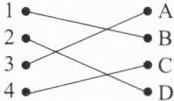
任务一:
任务二:
1. T
【解析】考查细节理解。根据“Some people wait for big sales like “Double 11” to get good deals.”可知,中国人会等“双十一”大促销,句子与材料内容相符,故答案为 T。
2. T
【解析】考查细节理解。日本人认为买二手物品对环境友好,句子与材料内容相符,故答案为 T。
3. F
【解析】考查推理判断。根据“It means ‘not too much, not too little—just right’.”可以推测 lagom 意为“不多不少,刚刚好”,句子与材料内容不符,故答案为 F。
4. F
【解析】考查细节理解。根据“In Germany, many shops let you return things within 14 days.”可知,在德国,14 天内可以退货,句子与材料内容不符,故答案为 F。
任务三:1. B
【解析】考查推理判断。根据“In Japan, second-hand shops are very popular. People sell old clothes, books, and sports gear. You can find almost new things at low prices.”可以推测买二手物品有优点,结合生活常识可以推测购买二手商品可以使被闲置的东西运转起来,减少浪费和丢弃,从而保护环境,因此可以推测 environment 意为“环境”。
2. Because they don't like to waste money or things.
3.【示例】I like China's shopping habit because people will also write their reviews after buying to help other buyers learn more about it.
解析
【分析】
本题是关于不同国家购物习惯的英语阅读理解题,分为三个任务。解题思路为:先通读材料明确各国购物习惯;任务一需定位每个国家的描述,匹配对应习惯;任务二需将句子与原文细节对比判断正误;任务三需结合原文信息解答词义、原因及开放问题,确保答案符合材料内容。
【解析】
任务一:根据材料,中国(China)的习惯是网购、比价、等促销,对应B;日本(Japan)流行二手店,低价购买二手物品,对应D;瑞典(Sweden)的“lagom”意为“不多不少刚刚好”,只买需要的,对应A;德国(Germany)允许14天内退货,对应C。
任务二:1. 原文提到中国人会等“Double 11”获取优惠,句子与材料相符,故为T;2. 原文指出日本人认为买二手物品对环境友好,句子与材料相符,故为T;3. “lagom”意为“不多不少刚刚好”,并非“尽可能多”,句子与材料不符,故为F;4. 德国允许14天内退货,句子与材料不符,故为F。
任务三:1. 结合日本二手购物的描述,可推测“environment”意为“环境”,选B;2. 原文明确瑞典人不喜欢浪费钱或东西,故答案为此;3. 开放题,示例符合要求即可。
【答案】
任务一:
任务二:1. T 2. T 3. F 4. F
任务三:1. B 2. Because they don't like to waste money or things. 3. I like China's shopping habit because people will also write their reviews after buying to help other buyers learn more about it.
【知识点】
英语阅读理解、细节理解、词义猜测
【点评】
本题以不同国家购物习惯为载体,考查学生的信息定位、细节判断、词义推理及语言表达能力,结合跨文化知识,题型全面,难度适中,能有效巩固学生的阅读理解技能。
【难度系数】
0.6
