

 登录
登录
C 热考内容 科学精神 KEY→P23
范畴:人与自然 主题:航天事业 体裁:新闻报道 难度:★★★★ 建议用时:6分钟 评价:/4
During their first public appearance since their return from space two months ago, Shenzhou ⅩⅧ team members discussed some of the experiments they conducted aboard the Tiangong space station, including "space-based fish feeding".
"The experiments had something to do with different subjects, including life sciences, space medicine and materials science, as well as some cutting-edge(前沿的) technologies," Li Guangsu, one of the team members, said during a news meeting on Wednesday at the Astronaut Center in northwestern Beijing. "Through these experiments, scientists got a lot of valuable information. We are proud to have been a part of those science efforts."
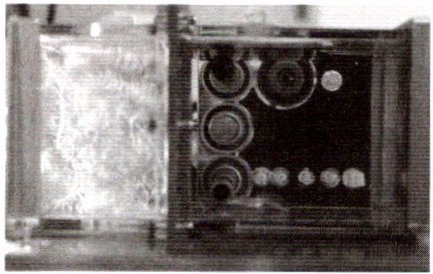
Besides Li, the Shenzhou ⅩⅧ team also included Ye Guangfu and Li Cong. The most impressive experiment, according to Li Guangsu, was the space-based fish feeding. On April 25, two male and two female zebrafish(斑马鱼), along with someaquatic plants, were taken on the Shenzhou ⅩⅧ task to Tiangong. The astronaut said that seeing the fish trying to adapt to the space environment reminded him of the way he learned to get used to the weightlessness in the space station.
"The lovely zebrafish not only finished their tasks, but also became our friends and won our hearts," Li explained. "The first time we saw them was the day we arrived at the space station. They seemed not to be moving and stayed where they were in the water for a long time. After several days, we found them more active, and they seemed to be in good control of their movements. We thought, 'Well, the fish also need some time to get used to the space environment.'"
Onboard the spaceship, astronauts collected examples of water and made sure that the zebrafish were fed. They also watched strange actions such as the fish swimming upside down, turning around in the microgravity environment, according to Sun Yonghua, a famous scientist in China. He said that it was the first time that zebrafish had continued to live for a long period—43 days—in such a closed aquatic ecosystem, adding that it was easy for scientists to watch the fish in the completely enclosed aquarium.
素材来源: China Daily
英语嗨吧
(
A. Deal with. B. Care for. C. Be ready for. D. Get used to.
(
A. It was difficult to do the experiment.
B. Sun Yonghua did the experiment himself.
C. No more experiments like this are needed.
D. The experiment showed changes in the fish's action.
(

P1
|
P3
\
P5
P2
|
P4
/
P1
/ | \
P2 P3 P4
\ | /
P5
P1
|
P2
\
P5
P3
|
P4
/
P1
/ / | \ \
P2 P3 P4 P5
(
A. To show China's space program. B. To report space-based fish feeding.
C. To describe life on the space station. D. To introduce the Shenzhou ⅩⅧ team.
范畴:人与自然 主题:航天事业 体裁:新闻报道 难度:★★★★ 建议用时:6分钟 评价:/4
During their first public appearance since their return from space two months ago, Shenzhou ⅩⅧ team members discussed some of the experiments they conducted aboard the Tiangong space station, including "space-based fish feeding".
"The experiments had something to do with different subjects, including life sciences, space medicine and materials science, as well as some cutting-edge(前沿的) technologies," Li Guangsu, one of the team members, said during a news meeting on Wednesday at the Astronaut Center in northwestern Beijing. "Through these experiments, scientists got a lot of valuable information. We are proud to have been a part of those science efforts."
Besides Li, the Shenzhou ⅩⅧ team also included Ye Guangfu and Li Cong. The most impressive experiment, according to Li Guangsu, was the space-based fish feeding. On April 25, two male and two female zebrafish(斑马鱼), along with some
"The lovely zebrafish not only finished their tasks, but also became our friends and won our hearts," Li explained. "The first time we saw them was the day we arrived at the space station. They seemed not to be moving and stayed where they were in the water for a long time. After several days, we found them more active, and they seemed to be in good control of their movements. We thought, 'Well, the fish also need some time to get used to the space environment.'"
Onboard the spaceship, astronauts collected examples of water and made sure that the zebrafish were fed. They also watched strange actions such as the fish swimming upside down, turning around in the microgravity environment, according to Sun Yonghua, a famous scientist in China. He said that it was the first time that zebrafish had continued to live for a long period—43 days—in such a closed aquatic ecosystem, adding that it was easy for scientists to watch the fish in the completely enclosed aquarium.
素材来源: China Daily
英语嗨吧
(
D
)1. What do the underlined words "adapt to" mean?A. Deal with. B. Care for. C. Be ready for. D. Get used to.
(
D
)2. What can we learn from the last paragraph?A. It was difficult to do the experiment.
B. Sun Yonghua did the experiment himself.
C. No more experiments like this are needed.
D. The experiment showed changes in the fish's action.
(
B
)3. 新考法·篇章结构 What is the structure of the passage?P1
|
P3
\
P5
P2
|
P4
/
P1
/ | \
P2 P3 P4
\ | /
P5
P1
|
P2
\
P5
P3
|
P4
/
P1
/ / | \ \
P2 P3 P4 P5
(
B
)4. What is the writer's main purpose in writing this passage?A. To show China's space program. B. To report space-based fish feeding.
C. To describe life on the space station. D. To introduce the Shenzhou ⅩⅧ team.
答案
两个月前,在从太空返回后的首次公开露面中,神舟十八号团队成员讨论了他们在天宫空间站进行的一些实验,包括“空间站喂鱼”,他们观察到斑马鱼在微重力环境下倒立游泳、转身等奇怪动作。
1. D 词义猜测题。由下文“这让他想起了他如何学会适应空间站的失重状态”可知,上文对应表示:这位宇航员说,看到这条鱼试图适应太空环境……
2. D 推理判断题。由“They also watched strange actions such as the fish swimming upside down, turning around in the microgravity environment ...”可知,实验显示出斑马鱼行为的变化。
3. B 篇章结构题。第一段给出全文话题“空间站喂鱼”;第二、三、四段李广苏介绍实验的过程;第五段著名科学家孙永华对实验作出评价,故本文结构为①/②③④/⑤。
4. B 推理判断题。本文重点报道神舟十八号团队成员在天宫空间站进行“空间站喂鱼”实验的经历,由此可知,本文的目的在于报告空间站喂鱼情况。
1. D 词义猜测题。由下文“这让他想起了他如何学会适应空间站的失重状态”可知,上文对应表示:这位宇航员说,看到这条鱼试图适应太空环境……
2. D 推理判断题。由“They also watched strange actions such as the fish swimming upside down, turning around in the microgravity environment ...”可知,实验显示出斑马鱼行为的变化。
3. B 篇章结构题。第一段给出全文话题“空间站喂鱼”;第二、三、四段李广苏介绍实验的过程;第五段著名科学家孙永华对实验作出评价,故本文结构为①/②③④/⑤。
4. B 推理判断题。本文重点报道神舟十八号团队成员在天宫空间站进行“空间站喂鱼”实验的经历,由此可知,本文的目的在于报告空间站喂鱼情况。
解析
【分析】
本题为航天主题的新闻报道类阅读理解,共4道题,分别考查词义猜测、推理判断、篇章结构分析、主旨大意概括。解题时需结合语境定位关键信息,梳理段落逻辑,抓住核心话题:第1题通过上下文同义对应猜测词义;第2题定位最后一段提取信息判断选项;第3题梳理各段落大意划分结构;第4题围绕全文核心内容明确写作目的。
【解析】
1. 词义猜测题:定位到第三段划线词所在句“The astronaut said that seeing the fish trying to adapt to the space environment reminded him of the way he learned to get used to the weightlessness in the space station.”,由“reminded him of the way he learned to get used to”可知,adapt to与get used to含义相近,故选D。
2. 推理判断题:定位最后一段,关键信息“They also watched strange actions such as the fish swimming upside down, turning around in the microgravity environment”表明实验中观察到斑马鱼的行为变化,对应选项D;A未提及实验难度,B孙永华是评价实验的科学家而非实验者,C无相关依据,均排除。
3. 篇章结构题:梳理段落大意:P1引出“空间站喂鱼”实验话题;P2-P4为李广苏介绍实验过程;P5是孙永华对实验的评价,结构为①/②③④/⑤,对应选项B。
4. 主旨大意题:全文围绕神舟十八号团队在天宫空间站开展的“空间站喂鱼”实验展开报道,核心是报告该实验情况,故选B。
【答案】
1.D 2.D 3.B 4.B
【知识点】
词义猜测题、推理判断题、篇章结构题、主旨大意题
【点评】
本文以航天事业为主题,属于新闻报道类阅读,考查多种阅读核心技能,贴近科技热点,符合新考法要求,能引导学生关注前沿科技。
【难度系数】
0.6
本题为航天主题的新闻报道类阅读理解,共4道题,分别考查词义猜测、推理判断、篇章结构分析、主旨大意概括。解题时需结合语境定位关键信息,梳理段落逻辑,抓住核心话题:第1题通过上下文同义对应猜测词义;第2题定位最后一段提取信息判断选项;第3题梳理各段落大意划分结构;第4题围绕全文核心内容明确写作目的。
【解析】
1. 词义猜测题:定位到第三段划线词所在句“The astronaut said that seeing the fish trying to adapt to the space environment reminded him of the way he learned to get used to the weightlessness in the space station.”,由“reminded him of the way he learned to get used to”可知,adapt to与get used to含义相近,故选D。
2. 推理判断题:定位最后一段,关键信息“They also watched strange actions such as the fish swimming upside down, turning around in the microgravity environment”表明实验中观察到斑马鱼的行为变化,对应选项D;A未提及实验难度,B孙永华是评价实验的科学家而非实验者,C无相关依据,均排除。
3. 篇章结构题:梳理段落大意:P1引出“空间站喂鱼”实验话题;P2-P4为李广苏介绍实验过程;P5是孙永华对实验的评价,结构为①/②③④/⑤,对应选项B。
4. 主旨大意题:全文围绕神舟十八号团队在天宫空间站开展的“空间站喂鱼”实验展开报道,核心是报告该实验情况,故选B。
【答案】
1.D 2.D 3.B 4.B
【知识点】
词义猜测题、推理判断题、篇章结构题、主旨大意题
【点评】
本文以航天事业为主题,属于新闻报道类阅读,考查多种阅读核心技能,贴近科技热点,符合新考法要求,能引导学生关注前沿科技。
【难度系数】
0.6
