

 登录
登录
快捷英语 英语时文阅读理解 七年级 Wednesday/Week 9
inosaur footprints (足迹) found in Canada suggest that different kinds of dinosaurs lived together in groups. *Modern animals, like zebras and wildebeest that travel together across the African savanna, do the same thing. Larger groups are safer from predators (捕食者).

The footprints are 76 million years old and were found in Alberta, Canada, in an area of about 312 square feet. Paleontologists (古生物学家) said 13 of the tracks belonged to ceratopsians (角龙), a group of horned dinosaurs including Triceratops. They think five or more dinosaurs were walking together.
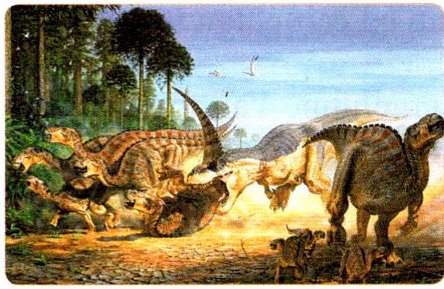
Next to these tracks was a set of footprints thought to belong to ankylosaurs (食草恐龙), a group that includes Ankylosaurus. The prints weren't crowded, and the space between them was almost the same, so researchers believe the dinosaurs were walking together side by side.
Nearby, the team found two sets of Tyrannosaurus rex tracks, which could have belonged to predators following the group. The different species might stay together to protect themselves from the larger T. rexes.
"It was exciting to be walking in the footsteps of dinosaurs 76 million years after they laid them down," said Brian Pickles, an author of the study. But other scientists disagree with the findings. Future digs may help us learn more about how different dinosaurs lived together.
▶题型: 阅读理解
▶主题: 动物研究
▶语篇类型: 说明文
▶词数: 218
▶难度: ■■■■■
▶建议用时: 7分钟
1 Paleontologists found these dinosaur footprints in
A. North America
B. North Africa
C. South America
D. South Africa
2 What type of dinosaurs made the 13 footprints?
A. Ankylosaurus.
B. Ceratopsians.
C. Pterodactyls.
D. Brachiosaurus.
3 What can we infer about the T. rex?
A. It often walked alone.
B. It belonged to ceratopsians.
C. It might kill other dinosaurs.
D. It was smaller than the Triceratops.
4 What might future digs help us learn?
A. Dinosaurs' diet.
B. Dinosaurs' size.
C. Dinosaurs' number.
D. Dinosaurs' behavior (习性).
5 Which part of a magazine may this passage be from?
A. Science fiction.
B. Nature and humans.
C. History and discovery.
D. Science and Technology.
inosaur footprints (足迹) found in Canada suggest that different kinds of dinosaurs lived together in groups. *Modern animals, like zebras and wildebeest that travel together across the African savanna, do the same thing. Larger groups are safer from predators (捕食者).
The footprints are 76 million years old and were found in Alberta, Canada, in an area of about 312 square feet. Paleontologists (古生物学家) said 13 of the tracks belonged to ceratopsians (角龙), a group of horned dinosaurs including Triceratops. They think five or more dinosaurs were walking together.
Next to these tracks was a set of footprints thought to belong to ankylosaurs (食草恐龙), a group that includes Ankylosaurus. The prints weren't crowded, and the space between them was almost the same, so researchers believe the dinosaurs were walking together side by side.
Nearby, the team found two sets of Tyrannosaurus rex tracks, which could have belonged to predators following the group. The different species might stay together to protect themselves from the larger T. rexes.
"It was exciting to be walking in the footsteps of dinosaurs 76 million years after they laid them down," said Brian Pickles, an author of the study. But other scientists disagree with the findings. Future digs may help us learn more about how different dinosaurs lived together.
▶题型: 阅读理解
▶主题: 动物研究
▶语篇类型: 说明文
▶词数: 218
▶难度: ■■■■■
▶建议用时: 7分钟
1 Paleontologists found these dinosaur footprints in
A
.A. North America
B. North Africa
C. South America
D. South Africa
2 What type of dinosaurs made the 13 footprints?
A. Ankylosaurus.
B. Ceratopsians.
C. Pterodactyls.
D. Brachiosaurus.
3 What can we infer about the T. rex?
A. It often walked alone.
B. It belonged to ceratopsians.
C. It might kill other dinosaurs.
D. It was smaller than the Triceratops.
4 What might future digs help us learn?
A. Dinosaurs' diet.
B. Dinosaurs' size.
C. Dinosaurs' number.
D. Dinosaurs' behavior (习性).
5 Which part of a magazine may this passage be from?
A. Science fiction.
B. Nature and humans.
C. History and discovery.
D. Science and Technology.
答案
Wednesday
本文介绍了在加拿大发现的7600万年前的恐龙足迹。这些足迹表明不同种类的恐龙可能曾成群结队地一起生活。
1. A 细节理解题。由第一段第一句可知,这些恐龙足迹是在加拿大被发现的,即在北美洲。
2. B 细节理解题。由第二段第二句可知,被发现的足迹中有13个属于角龙类。
3. C 推理判断题。由倒数第二段最后一句可知,不同种类的恐龙可能待在一起以保护它们免受更大的霸王龙的伤害。由此可推知,霸王龙是捕食者,有可能捕食其他恐龙。
4. D 推理判断题。由最后一段最后一句可知,未来的挖掘可能帮助我们了解更多关于不同恐龙如何一起生活的信息。由此可推知,未来的挖掘有可能帮助我们了解恐龙更多的习性。
5. C 推理判断题。通读全文可知,本文介绍了古生物学家对在加拿大发现的恐龙足迹的研究,研究发现不同种类的恐龙可能曾成群结队地一起生活以更好地对抗捕食者。由此可推知,本文属于“历史与发现”范畴。
本文介绍了在加拿大发现的7600万年前的恐龙足迹。这些足迹表明不同种类的恐龙可能曾成群结队地一起生活。
1. A 细节理解题。由第一段第一句可知,这些恐龙足迹是在加拿大被发现的,即在北美洲。
2. B 细节理解题。由第二段第二句可知,被发现的足迹中有13个属于角龙类。
3. C 推理判断题。由倒数第二段最后一句可知,不同种类的恐龙可能待在一起以保护它们免受更大的霸王龙的伤害。由此可推知,霸王龙是捕食者,有可能捕食其他恐龙。
4. D 推理判断题。由最后一段最后一句可知,未来的挖掘可能帮助我们了解更多关于不同恐龙如何一起生活的信息。由此可推知,未来的挖掘有可能帮助我们了解恐龙更多的习性。
5. C 推理判断题。通读全文可知,本文介绍了古生物学家对在加拿大发现的恐龙足迹的研究,研究发现不同种类的恐龙可能曾成群结队地一起生活以更好地对抗捕食者。由此可推知,本文属于“历史与发现”范畴。
