

 登录
登录
第一部分 听对话回答问题
本部分共有10道小题,每小题你将听到一段对话,每段对话听两遍。
1. How will Linda get to Guilin?
A. (飞机图) B. C. (汽车图)
2. What does the man want to do?
A. (山的图) B. C. (钓鱼的图)
3. What is Kitty's problem?
A. (打篮球的图) B. C. (学习的图)
4. What is David looking for?
A. (相机图) B. C. (尺子图)
5. What is the lantern made of?
A. Coco cans. B. Balloons.
C. Wasted CDs.
6. Where do you think the dialogue(对话) may happen(发生)?
A. In the police station. B. In the museum.
C. In the cinema.
7. How long will the man stay in Shanghai?
A. For two months.
B. For more than two months.
C. For less than two months.
8. What's Millie's school life like?
A. It's interesting. B. It's busy.
C. It's boring.
9. What time does Gina usually go home?
A. At 7:00 p. m. B. At 7:30 p. m.
C. At 6:30 p. m.
10. Who has a small nose?
A. Jim. B. Jack.
C. Both Jim and Jack.
本部分共有10道小题,每小题你将听到一段对话,每段对话听两遍。
1. How will Linda get to Guilin?
A. (飞机图) B.
C. (汽车图)2. What does the man want to do?
A. (山的图) B.
C. (钓鱼的图)3. What is Kitty's problem?
A. (打篮球的图) B.
C. (学习的图)4. What is David looking for?
A. (相机图) B.
C. (尺子图)5. What is the lantern made of?
A. Coco cans. B. Balloons.
C. Wasted CDs.
6. Where do you think the dialogue(对话) may happen(发生)?
A. In the police station. B. In the museum.
C. In the cinema.
7. How long will the man stay in Shanghai?
A. For two months.
B. For more than two months.
C. For less than two months.
8. What's Millie's school life like?
A. It's interesting. B. It's busy.
C. It's boring.
9. What time does Gina usually go home?
A. At 7:00 p. m. B. At 7:30 p. m.
C. At 6:30 p. m.
10. Who has a small nose?
A. Jim. B. Jack.
C. Both Jim and Jack.
答案
1.B 2.C 3.C 4.B 5.C 6.A 7.C 8.A 9.A 10.B
听一段对话,回答第11~12小题。
11. Why did the girl come to China?
A. To see her parents.
B. To go travelling.
C. To go to university(大学).
12. Why do her parents stay in Shanghai now?
A. Because they are here travelling.
B. Because they are working here.
C. Because they come here to learn English.
11. Why did the girl come to China?
A. To see her parents.
B. To go travelling.
C. To go to university(大学).
12. Why do her parents stay in Shanghai now?
A. Because they are here travelling.
B. Because they are working here.
C. Because they come here to learn English.
答案
11.A 12.B
听第一篇短文,完成第13~15小题。
Andy’s visit
On the fourth day He went to the top of 13.
On the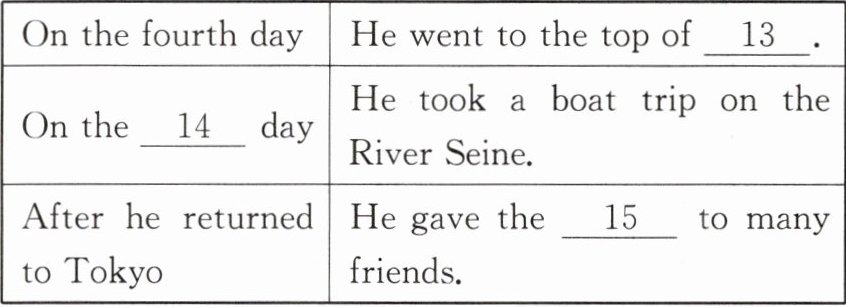 Seine.
After he returned to Tokyo He gave the 15 to many friends.
13. A. the Eiffel Tower B. the White House
C. the Opera House
14. A. first B. fifth C. fourth
15. A. gifts B. photos C. books
Andy’s visit
On the fourth day He went to the top of 13.
On the
B
14 day He took a boat trip on the RivSeine.After he returned to Tokyo He gave the 15 to many friends.
13. A. the Eiffel Tower B. the White House
C. the Opera House
14. A. first B. fifth C. fourth
15. A. gifts B. photos C. books
答案
13.A 14.B 15.A
听第二篇短文,回答第16~20小题。
16. What did Mrs Brown have behind her house?
A. A small hill. B. A small house.
C. A small garden.
17. When did she plant some vegetables in the garden?
A. In spring. B. In summer.
C. In autumn.
18. Who ran into the kitchen and shouted?
A. Her son. B. Her neighbour.
C. Her ducks.
19. Who ate the vegetables in the garden one morning?
A. Chickens. B. Ducks. C. Pigs.
20. What did the neighbour give Mrs Brown a bag with?
A. A lot of vegetables.
B. Only a piece of paper.
C. A fat duck inside and a piece of paper on it.
16. What did Mrs Brown have behind her house?
A. A small hill. B. A small house.
C. A small garden.
17. When did she plant some vegetables in the garden?
A. In spring. B. In summer.
C. In autumn.
18. Who ran into the kitchen and shouted?
A. Her son. B. Her neighbour.
C. Her ducks.
19. Who ate the vegetables in the garden one morning?
A. Chickens. B. Ducks. C. Pigs.
20. What did the neighbour give Mrs Brown a bag with?
A. A lot of vegetables.
B. Only a piece of paper.
C. A fat duck inside and a piece of paper on it.
答案
16.C 17.A 18.A 19.B 20.C
