

 登录
登录
五、信息还原。
There are lots of natural disasters every year. (1)
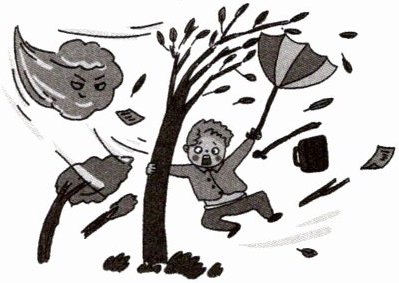
Typhoons(台风) are some of the worst storms, usually around the Pacific Ocean(太平洋) and the South China Sea. Most happen in July, August and September.
How does a typhoon happen? When lots of sea water gets hot in the summer sun, it evaporates(蒸发) into the air. This makes the air hotter. (2) ______ Then cooler air around it rushes in. It fills the space that is left. After the air gets warmer, it starts to move quickly, making wind. The wind goes in circles and it keeps moving higher in the sky. The warmer the air gets, the quicker the wind moves. And when wind moves faster than 30 metres a second, a typhoon begins.
A typhoon has two parts. One is called the “eye”. (3) The other part is the wall of clouds around the eye. Here are the strongest winds and hardest rains.
Typhoons are very dangerous. In November in 2013, Typhoon Haiyan killed 6,000 people in Philippines. (4)
What should we do when a typhoon hits?
• Stay inside. (5)
• Try to bring all of your things inside. Strong winds could even blow away your bikes!
• Listen to the radio or TV or search on the internet for important information.
• If you're told to go to a safer place, do it right now.
A. More people were hurt and some others were missing.
B. Close all the windows and stay away from them.
C. Typhoons are among them.
D. For example, strong winds cause many problems.
E. In the eye, the wind does not move so fast.
F. When the air gets warm enough, it starts to move high up into the sky.
G. It will be cold quickly.
There are lots of natural disasters every year. (1)
Typhoons(台风) are some of the worst storms, usually around the Pacific Ocean(太平洋) and the South China Sea. Most happen in July, August and September.
How does a typhoon happen? When lots of sea water gets hot in the summer sun, it evaporates(蒸发) into the air. This makes the air hotter. (2) ______ Then cooler air around it rushes in. It fills the space that is left. After the air gets warmer, it starts to move quickly, making wind. The wind goes in circles and it keeps moving higher in the sky. The warmer the air gets, the quicker the wind moves. And when wind moves faster than 30 metres a second, a typhoon begins.
A typhoon has two parts. One is called the “eye”. (3) The other part is the wall of clouds around the eye. Here are the strongest winds and hardest rains.
Typhoons are very dangerous. In November in 2013, Typhoon Haiyan killed 6,000 people in Philippines. (4)
What should we do when a typhoon hits?
• Stay inside. (5)
• Try to bring all of your things inside. Strong winds could even blow away your bikes!
• Listen to the radio or TV or search on the internet for important information.
• If you're told to go to a safer place, do it right now.
A. More people were hurt and some others were missing.
B. Close all the windows and stay away from them.
C. Typhoons are among them.
D. For example, strong winds cause
many problems.E. In the eye, the wind does not move so fast.
F. When the air gets warm enough, it starts to move high up into the sky.
G. It will be cold quickly.
答案
1. C 2. F 3. E 4. A 5. B
解析
【分析】
本题为英语信息还原题,需结合上下文语境、逻辑关系(如引出话题、承接描述、补充信息等)逐一分析每个空缺处的需求,匹配对应选项:
1. 第1空前提到“每年有很多自然灾害”,后文开始介绍台风,需引出台风相关内容;
2. 第2空前文讲海水蒸发使空气变热,后文提到冷空气涌入,需衔接空气足够暖后的动作;
3. 第3空前文介绍台风的两部分(台风眼、云墙),需补充台风眼的特征;
4. 第4空前文提到台风造成死亡人数,需补充伤亡相关信息;
5. 第5空前文讲台风来袭时待在室内,需补充室内的应对措施。
【解析】
1. 第1空:前文列举“很多自然灾害”,后文聚焦台风,选项C“Typhoons are among them.”(台风是其中之一)起到引出话题的作用,符合语境,故选C;
2. 第2空:前文说明海水蒸发使空气变热,后文提到周围冷空气涌入,选项F“When the air gets warm enough, it starts to move high up into the sky.”(当空气足够暖时,它开始升到高空)衔接了空气变热后的动作,符合台风形成的逻辑,故选F;
3. 第3空:前文提到台风的两个部分(“eye”和云墙),选项E“In the eye, the wind does not move so fast.”(在台风眼里,风移动得没那么快)介绍了台风眼的特征,与后文云墙的描述衔接,故选E;
4. 第4空:前文提到海燕台风造成6000人死亡,选项A“More people were hurt and some others were missing.”(更多人受伤,还有一些人失踪)补充了台风的伤亡情况,符合语境,故选A;
5. 第5空:前文讲台风来袭时要待在室内,选项B“Close all the windows and stay away from them.”(关上所有窗户,远离它们)是室内的具体应对措施,符合要求,故选B。
【答案】
1.C 2.F 3.E 4.A 5.B
【知识点】
信息还原(补全短文)、语篇逻辑推理
【点评】
本题考查英语语篇理解与信息还原能力,要求学生结合上下文语境、逻辑关系选择合适句子,难度适中,是常见的英语题型,能有效考查学生的语篇分析能力。
【难度系数】
0.5
本题为英语信息还原题,需结合上下文语境、逻辑关系(如引出话题、承接描述、补充信息等)逐一分析每个空缺处的需求,匹配对应选项:
1. 第1空前提到“每年有很多自然灾害”,后文开始介绍台风,需引出台风相关内容;
2. 第2空前文讲海水蒸发使空气变热,后文提到冷空气涌入,需衔接空气足够暖后的动作;
3. 第3空前文介绍台风的两部分(台风眼、云墙),需补充台风眼的特征;
4. 第4空前文提到台风造成死亡人数,需补充伤亡相关信息;
5. 第5空前文讲台风来袭时待在室内,需补充室内的应对措施。
【解析】
1. 第1空:前文列举“很多自然灾害”,后文聚焦台风,选项C“Typhoons are among them.”(台风是其中之一)起到引出话题的作用,符合语境,故选C;
2. 第2空:前文说明海水蒸发使空气变热,后文提到周围冷空气涌入,选项F“When the air gets warm enough, it starts to move high up into the sky.”(当空气足够暖时,它开始升到高空)衔接了空气变热后的动作,符合台风形成的逻辑,故选F;
3. 第3空:前文提到台风的两个部分(“eye”和云墙),选项E“In the eye, the wind does not move so fast.”(在台风眼里,风移动得没那么快)介绍了台风眼的特征,与后文云墙的描述衔接,故选E;
4. 第4空:前文提到海燕台风造成6000人死亡,选项A“More people were hurt and some others were missing.”(更多人受伤,还有一些人失踪)补充了台风的伤亡情况,符合语境,故选A;
5. 第5空:前文讲台风来袭时要待在室内,选项B“Close all the windows and stay away from them.”(关上所有窗户,远离它们)是室内的具体应对措施,符合要求,故选B。
【答案】
1.C 2.F 3.E 4.A 5.B
【知识点】
信息还原(补全短文)、语篇逻辑推理
【点评】
本题考查英语语篇理解与信息还原能力,要求学生结合上下文语境、逻辑关系选择合适句子,难度适中,是常见的英语题型,能有效考查学生的语篇分析能力。
【难度系数】
0.5
