

 登录
登录
B
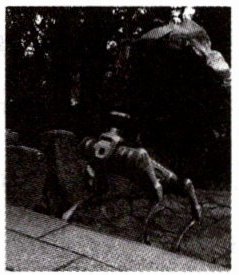
In the Mount Taishan, Shandong, a robotic dog was tested. Its main job was to carry heavy things, such as waste, acting as a “porter(脚夫)” on the mountain and reducing the need for human workers.
Every year, there are millions of visitors to Mount Taishan. These tourists produce nearly 24,000 tons of waste every year. The complex terrain(复杂的地形) in the Mount Taishan made it harder to clean and transport the waste as large machines couldn’t be used and the waste had to be collected by hand.
To solve this problem, the scenic area tested robotic dogs for waste collection. They could cross obstacles easily, keep good balance, and carry heavy things for a long time.
Tests were carried out over three days at the base, middle and top of the mountain. The robotic dogs carried a cargo(货物) box that could carry 30 to 40 kilograms. They were tested for climbing ability and load-bearing capacity(承载能力) on the challenging terrain.
Results showed that they could reach the top of the mountain from the base within two hours, while the average time for adult tourists not carrying heavy things was around four hours. The robots could work for four to six hours on a full charge. During the tests, the robotic dogs fit over 80 percent of the mountain's terrain.
Many tourists were attracted by these robotic dogs. Wang Yang, a tourist from Heilongjiang Province, said, “I saw it climbing and took a photo with it. It's truly amazing.”
()29.Why were robotic dogs chosen for waste collection in Mount Taishan?
A. Because they can attract more tourists.
B. Because they are cheaper than human workers.
C. Because they can work in complex terrain.
D. Because they produce no waste themselves.
()30.What does the underlined word “obstacles” mean in the passage?
A. Something that helps you move forward.
暑假作业 八年级·下册
B. Something that blocks your way.
C. A type of machine.
D. A kind of animal.
()31.What can we know from the passage?
A. Robotic dogs fit only 20% of the terrain of Mount Taishan.
B. Robotic dogs can carry 30—40 kilograms of waste at a time.
C. It takes adult tourists 2 hours to climb Mount Taishan without carrying things.
D. Tourists in Mount Taishan produce over 24,000 tons of waste monthly.
()32.What is the best title for the passage?
A. Robotic Dogs: New Porters in Mount Taishan
B. How to Collect Waste in Mountain Areas
C. Tourists’ Love for Robotic Dogs in Mount Taishan
D. The Terrible Waste Problem in Mount Taishan
In the Mount Taishan, Shandong, a robotic dog was tested. Its main job was to carry heavy things, such as waste, acting as a “porter(脚夫)” on the mountain and reducing the need for human workers.
Every year, there are millions of visitors to Mount Taishan. These tourists produce nearly 24,000 tons of waste every year. The complex terrain(复杂的地形) in the Mount Taishan made it harder to clean and transport the waste as large machines couldn’t be used and the waste had to be collected by hand.
To solve this problem, the scenic area tested robotic dogs for waste collection. They could cross obstacles easily, keep good balance, and carry heavy things for a long time.
Tests were carried out over three days at the base, middle and top of the mountain. The robotic dogs carried a cargo(货物) box that could carry 30 to 40 kilograms. They were tested for climbing ability and load-bearing capacity(承载能力) on the challenging terrain.
Results showed that they could reach the top of the mountain from the base within two hours, while the average time for adult tourists not carrying heavy things was around four hours. The robots could work for four to six hours on a full charge. During the tests, the robotic dogs fit over 80 percent of the mountain's terrain.
Many tourists were attracted by these robotic dogs. Wang Yang, a tourist from Heilongjiang Province, said, “I saw it climbing and took a photo with it. It's truly amazing.”
()29.Why were robotic dogs chosen for waste collection in Mount Taishan?
A. Because they can attract more tourists.
B. Because they are cheaper than human workers.
C. Because they can work in complex terrain.
D. Because they produce no waste themselves.
()30.What does the underlined word “obstacles” mean in the passage?
A. Something that helps you move forward.
暑假作业 八年级·下册
B. Something that blocks your way.
C. A type of machine.
D. A kind of animal.
()31.What can we know from the passage?
A. Robotic dogs fit only 20% of the terrain of Mount Taishan.
B. Robotic dogs can carry 30—40 kilograms of waste at a time.
C. It takes adult tourists 2 hours to climb Mount Taishan without carrying things.
D. Tourists in Mount Taishan produce over 24,000 tons of waste monthly.
()32.What is the best title for the passage?
A. Robotic Dogs: New Porters in Mount Taishan
B. How to Collect Waste in Mountain Areas
C. Tourists’ Love for Robotic Dogs in Mount Taishan
D. The Terrible Waste Problem in Mount Taishan
答案
29.C 30.B 31.B 32.A
