

 登录
登录
阅读理解 克服失败情绪,迈向成功
素养:思维品质 难度:中 用时:7分钟
①Many of us were told from an early age that we can learn from mistakes. But is it actually true?
②The short answer is “yes”. But learning from our mistakes is, in fact, very hard because we don’t like to fail. So we face failure in emotional (情绪激动的) ways, like giving up on a task easily, telling ourselves we don’t care whether we succeed, or finding fault with the task itself. It is self-protective, according to Hallgeir Sjástad from the Norwegian School of Economics. “Most of us want to think of ourselves as talented,” he says, “so when we fail, it is a danger to our self-image.”
③Luckily, there is research to suggest that there are some methods to help us overcome the emotional barriers(障碍) around failure. One of them is to use a third-person perspective(视角). Instead of asking “Why did I fail?”, we could ask “Why did Sam fail?”. Many studies by scientist Ethan Kross at the University of Michigan show that using a third-person perspective allows us to look at failure less emotionally.
④The second method is to offer advice to others who may be in the same position as us. This led to better levels of motivation and success in the test groups—including both adults and children—that were asked to give advice according to their own failures. University teachers—Eskreis-Winkler, Fishbach and Duckworth—found that the satisfaction of helping others forces people to examine their own failures. They were asked to give advice according to their own failures.
⑤ The writer Samuel Beckett once said, “Fail again, fail better.” But it now seems that we should be saying, “Fail again, fail smarter.” Failure is an unavoidable part of life, but by learning to overcome the emotional barriers around it, we may find the road to success is a little easier.
1. What does Hallgeir think of facing failure in emotional ways?
A. It’s a way to protect ourselves.
B. It is bad for our self-image.
C. It makes us feel worse.
D. It might bring danger.
2. Which of the following would Duckworth probably agree with?
A. It’s hard to overcome the emotional barriers around failure.
B. A third-person perspective helps people be less emotional.
C. Helping others can help people face their own failures.
D. Many people don’t know themselves very well.
3. ▶新考法·写作手法题 How does the writer explain his ideas about failure in Paragraph 5?
A. By giving a fact.
B. By using some numbers.
C. By telling a story.
D. By using a writer’s words.
4. What does the passage mainly talk about?
A. Useful advice from teachers.
B. How people deal with failure.
C. Smarter ways to learn from failure.
D. Why failure is important to success.
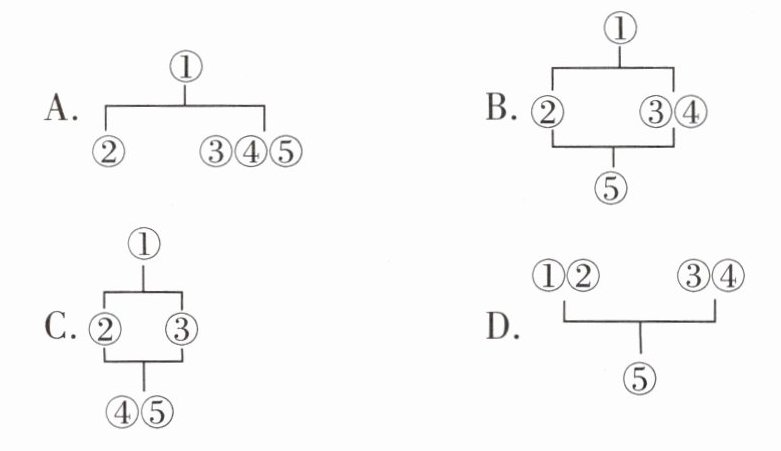
5. ▶新考法·篇章结构题 Which of the following best shows the structure of the passage?
素养:思维品质 难度:中 用时:7分钟
①Many of us were told from an early age that we can learn from mistakes. But is it actually true?
②The short answer is “yes”. But learning from our mistakes is, in fact, very hard because we don’t like to fail. So we face failure in emotional (情绪激动的) ways, like giving up on a task easily, telling ourselves we don’t care whether we succeed, or finding fault with the task itself. It is self-protective, according to Hallgeir Sjástad from the Norwegian School of Economics. “Most of us want to think of ourselves as talented,” he says, “so when we fail, it is a danger to our self-image.”
③Luckily, there is research to suggest that there are some methods to help us overcome the emotional barriers(障碍) around failure. One of them is to use a third-person perspective(视角). Instead of asking “Why did I fail?”, we could ask “Why did Sam fail?”. Many studies by scientist Ethan Kross at the University of Michigan show that using a third-person perspective allows us to look at failure less emotionally.
④The second method is to offer advice to others who may be in the same position as us. This led to better levels of motivation and success in the test groups—including both adults and children—that were asked to give advice according to their own failures. University teachers—Eskreis-Winkler, Fishbach and Duckworth—found that the satisfaction of helping others forces people to examine their own failures. They were asked to give advice according to their own failures.
⑤ The writer Samuel Beckett once said, “Fail again, fail better.” But it now seems that we should be saying, “Fail again, fail smarter.” Failure is an unavoidable part of life, but by learning to overcome the emotional barriers around it, we may find the road to success is a little easier.
1. What does Hallgeir think of facing failure in emotional ways?
A. It’s a way to protect ourselves.
B. It is bad for our self-image.
C. It makes us feel worse.
D. It might bring danger.
2. Which of the following would Duckworth probably agree with?
A. It’s hard to overcome the emotional barriers around failure.
B. A third-person perspective helps people be less emotional.
C. Helping others can help people face their own failures.
D. Many people don’t know themselves very well.
3. ▶新考法·写作手法题 How does the writer explain his ideas about failure in Paragraph 5?
A. By giving a fact.
B. By using some numbers.
C. By telling a story.
D. By using a writer’s words.
4. What does the passage mainly talk about?
A. Useful advice from teachers.
B. How people deal with failure.
C. Smarter ways to learn from failure.
D. Why failure is important to success.
5. ▶新考法·篇章结构题 Which of the following best shows the structure of the passage?
答案
【解题导语】本文是一篇说明文,文章探讨了从错误中学习这一话题,介绍了两种克服面对失败时情绪障碍的方法,最后强调失败是生活不可避免的一部分,克服相关情绪障碍能让我们更易走向成功。
1. A 细节理解题。根据第二段中的“It is self-protective, according to Hallgeir Sjástad from the Norwegian School of Economics”可知,当我们失败时,以情绪激动的方式面对失败是一种自我保护。故选 A。
2. C 推理判断题。根据第四段中的“University teachers—Eskreis-Winkler, Fishbach and Duckworth—found that the satisfaction of helping others forces people to examine their own failures. They were asked to give advice according to their own failures”可知,这些大学教师发现帮助他人的满足感会促使人们审视自己的失败,也就是帮助他人能帮助人们面对自己的失败。故选 C。
3. D 写作手法题。根据第五段中的“The writer Samuel Beckett once said, 'Fail again, fail better.'”可知,作者通过引用作家 Samuel Beckett 的话来阐释自己关于失败的观点。故选 D。
4. C 主旨大意题。通读全文,文章先指出人们虽被告知能从错误中学习,但因不愿失败,实际很难做到,接着阐述了人们面对失败时的情绪化应对方式,然后介绍克服失败带来的情绪障碍的方法,这些内容都是围绕如何从失败中学习的方法展开的。故选 C。
解题通法
主旨大意题干扰项的5种设错方式
(1)以偏概全。概括的范围过于狭窄,只阐述了文章的一部分内容(也就是文章的局部信息)或文章主题的一个侧面。
(2)断章取义。以文章中的个别信息或个别字眼作为选项的内容,或者以次要的事实或细节冒充全文的主要观点。
(3)主题扩大。归纳、概括的范围过大,超出文章实际所讨论的内容。
(4)似是而非。关键词好像在文章中提到了,但认真分析之后会发现它与文章的内容毫无联系。
(5)张冠李戴。命题者有意把属于 A 的特征放在 B 上。
5. D 篇章结构题。文章第一段和第二段提出问题并回答问题;第三、四段分别介绍克服面对失败时情绪障碍的两种方法;第五段总结强调克服情绪障碍利于走向成功。故选 D。
1. A 细节理解题。根据第二段中的“It is self-protective, according to Hallgeir Sjástad from the Norwegian School of Economics”可知,当我们失败时,以情绪激动的方式面对失败是一种自我保护。故选 A。
2. C 推理判断题。根据第四段中的“University teachers—Eskreis-Winkler, Fishbach and Duckworth—found that the satisfaction of helping others forces people to examine their own failures. They were asked to give advice according to their own failures”可知,这些大学教师发现帮助他人的满足感会促使人们审视自己的失败,也就是帮助他人能帮助人们面对自己的失败。故选 C。
3. D 写作手法题。根据第五段中的“The writer Samuel Beckett once said, 'Fail again, fail better.'”可知,作者通过引用作家 Samuel Beckett 的话来阐释自己关于失败的观点。故选 D。
4. C 主旨大意题。通读全文,文章先指出人们虽被告知能从错误中学习,但因不愿失败,实际很难做到,接着阐述了人们面对失败时的情绪化应对方式,然后介绍克服失败带来的情绪障碍的方法,这些内容都是围绕如何从失败中学习的方法展开的。故选 C。
解题通法
主旨大意题干扰项的5种设错方式
(1)以偏概全。概括的范围过于狭窄,只阐述了文章的一部分内容(也就是文章的局部信息)或文章主题的一个侧面。
(2)断章取义。以文章中的个别信息或个别字眼作为选项的内容,或者以次要的事实或细节冒充全文的主要观点。
(3)主题扩大。归纳、概括的范围过大,超出文章实际所讨论的内容。
(4)似是而非。关键词好像在文章中提到了,但认真分析之后会发现它与文章的内容毫无联系。
(5)张冠李戴。命题者有意把属于 A 的特征放在 B 上。
5. D 篇章结构题。文章第一段和第二段提出问题并回答问题;第三、四段分别介绍克服面对失败时情绪障碍的两种方法;第五段总结强调克服情绪障碍利于走向成功。故选 D。
解析
【分析】
要解答第5题的篇章结构题,需先梳理文章各段落的功能与逻辑关系:第①段引出“能否从错误中学习”的话题,第②段说明从错误学习难的原因(人们会情绪化面对失败),这两段属于提出问题与分析问题的部分;第③段介绍第一种克服失败情绪障碍的方法(使用第三人称视角),第④段介绍第二种方法(给他人提供建议),这两段是并列的解决方法;第⑤段总结强调克服失败相关情绪障碍对走向成功的意义。由此可知,文章前四段分为问题分析和方法两个部分,共同指向总结段⑤,匹配对应结构示意图。
【解析】
第5题是篇章结构题,需结合文章段落功能判断结构:
1. 划分段落功能:①②段为提出问题、分析问题的部分;③④段为并列的解决方法部分;⑤段为总结部分。
2. 匹配结构:选项D的结构为①②、③④两部分共同指向⑤,与文章结构一致。
【答案】
D
【知识点】
英语阅读理解、篇章结构分析
【点评】
本题为新考法的篇章结构题,要求学生准确梳理文章各段落的逻辑关系,难度中等,重点考察学生的语篇分析与结构梳理能力。
【难度系数】
0.5
要解答第5题的篇章结构题,需先梳理文章各段落的功能与逻辑关系:第①段引出“能否从错误中学习”的话题,第②段说明从错误学习难的原因(人们会情绪化面对失败),这两段属于提出问题与分析问题的部分;第③段介绍第一种克服失败情绪障碍的方法(使用第三人称视角),第④段介绍第二种方法(给他人提供建议),这两段是并列的解决方法;第⑤段总结强调克服失败相关情绪障碍对走向成功的意义。由此可知,文章前四段分为问题分析和方法两个部分,共同指向总结段⑤,匹配对应结构示意图。
【解析】
第5题是篇章结构题,需结合文章段落功能判断结构:
1. 划分段落功能:①②段为提出问题、分析问题的部分;③④段为并列的解决方法部分;⑤段为总结部分。
2. 匹配结构:选项D的结构为①②、③④两部分共同指向⑤,与文章结构一致。
【答案】
D
【知识点】
英语阅读理解、篇章结构分析
【点评】
本题为新考法的篇章结构题,要求学生准确梳理文章各段落的逻辑关系,难度中等,重点考察学生的语篇分析与结构梳理能力。
【难度系数】
0.5
