

 登录
登录
二、阅读短文,判断句子正(T)误(F)。
Over 400 years ago in China, there was a cool traveller(旅行家). He spent 30 years travelling across China. He was Xu Xiake.
Xu Xiake was born in Jiangsu Province. When he was a child, his family had many books and he enjoyed reading about the mountains and rivers of China. He decided to see them when he grew up.
At that time, many kids studied hard because they wanted to work for the government(政府) when they were older. Xu’s father never made him take tests. Instead, he encouraged his son to go out and get to know the world. Xu began his trip when he was about 20 years old. Before he left, his mother made him a travel hat to encourage him to travel.
Xu travelled to 21 provinces and over 100 cities in China. He climbed thousands of(成千上万的) mountains and visited over 350 caves(洞穴). He was the first person to find the highest peak(山峰) of Huangshan Mountain. He was also the first to find lots of karst caves(喀斯特溶洞). What’s more, he found the Yangtze River’s headwater(源头). Xu travelled mostly on foot. He slept and ate in the wild. Sometimes he fell into rivers or ran into dangerous animals. But Xu was brave and enjoyed his trip.
Xu kept a diary while travelling, but it was not printed until his death. Travel Diaries of Xu Xiake is still popular today.
词汇积累 hat /hæt/ 帽子 in the wild 在野外 print /prɪnt/ 出版
death /deθ/ 死亡 popular /'pɒpjələ(r)/ 受欢迎的
(
(
(
(
(
Over 400 years ago in China, there was a cool traveller(旅行家). He spent 30 years travelling across China. He was Xu Xiake.
Xu Xiake was born in Jiangsu Province. When he was a child, his family had many books and he enjoyed reading about the mountains and rivers of China. He decided to see them when he grew up.
At that time, many kids studied hard because they wanted to work for the government(政府) when they were older. Xu’s father never made him take tests. Instead, he encouraged his son to go out and get to know the world. Xu began his trip when he was about 20 years old. Before he left, his mother made him a travel hat to encourage him to travel.
Xu travelled to 21 provinces and over 100 cities in China. He climbed thousands of(成千上万的) mountains and visited over 350 caves(洞穴). He was the first person to find the highest peak(山峰) of Huangshan Mountain. He was also the first to find lots of karst caves(喀斯特溶洞). What’s more, he found the Yangtze River’s headwater(源头). Xu travelled mostly on foot. He slept and ate in the wild. Sometimes he fell into rivers or ran into dangerous animals. But Xu was brave and enjoyed his trip.
Xu kept a diary while travelling, but it was not printed until his death. Travel Diaries of Xu Xiake is still popular today.
词汇积累 hat /hæt/ 帽子 in the wild 在野外 print /prɪnt/ 出版
death /deθ/ 死亡 popular /'pɒpjələ(r)/ 受欢迎的
(
F
) 1. Xu Xiake was born in Jiangsu Province 40 years ago.(
F
) 2. Xu Xiake enjoyed reading books about farming.(
T
) 3. Xu Xiake travelled to more than 100 cities in China.(
F
) 4. Xu Xiake was the first person to find Huangshan Mountain.(
T
) 5. Travel Diaries of Xu Xiake is still popular today.答案
1—5 FFTFT
解析
【分析】做这类英语阅读判断正误题,需遵循“定位原文-对比细节”的思路:先读每个小题的句子,标记核心关键词;再回到原文找到对应内容;最后对比句子表述与原文是否一致,一致则为正(T),不一致则为误(F),需注意避免偷换概念、时间/数量混淆等陷阱。
【解析】1. 第1题:原文提到徐霞客是“Over 400 years ago”出生,而非“40 years ago”,表述错误,故为F;2. 第2题:原文说他喜欢读“mountains and rivers”相关的书,而非“farming”相关,表述错误,故为F;3. 第3题:原文提到他去了“over 100 cities”,与句子“more than 100 cities”一致,表述正确,故为T;4. 第4题:原文说他是第一个发现黄山“最高峰”的人,而非第一个发现黄山,表述偷换概念,错误,故为F;5. 第5题:原文明确“Travel Diaries of Xu Xiake is still popular today”,表述正确,故为T。
【答案】FFTFT
【知识点】英语阅读理解,细节理解,判断正误题
【点评】本题为英语阅读基础题型,侧重考查对原文细节信息的精准提取与对比,需注意区分易混淆的表述(如时间、范围),整体难度不大,只要认真定位原文即可正确作答。
【难度系数】0.6
【解析】1. 第1题:原文提到徐霞客是“Over 400 years ago”出生,而非“40 years ago”,表述错误,故为F;2. 第2题:原文说他喜欢读“mountains and rivers”相关的书,而非“farming”相关,表述错误,故为F;3. 第3题:原文提到他去了“over 100 cities”,与句子“more than 100 cities”一致,表述正确,故为T;4. 第4题:原文说他是第一个发现黄山“最高峰”的人,而非第一个发现黄山,表述偷换概念,错误,故为F;5. 第5题:原文明确“Travel Diaries of Xu Xiake is still popular today”,表述正确,故为T。
【答案】FFTFT
【知识点】英语阅读理解,细节理解,判断正误题
【点评】本题为英语阅读基础题型,侧重考查对原文细节信息的精准提取与对比,需注意区分易混淆的表述(如时间、范围),整体难度不大,只要认真定位原文即可正确作答。
【难度系数】0.6
三、阅读短文,选择正确的答案。
Lu Ban: The Inventor
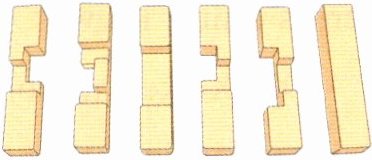
Lu Ban, a famous Chinese craftsman(工匠), is known as “China’s Father of Carpentry (木工)”. He invented many tools like the saw(锯), the plane(木工刨) and the ink line (墨线). It is said that Lu Ban invented the Luban lock(锁) to test his son’s skills. His son worked on it all night and finally solved it the next morning. It’s full of challenges and fun.
Lu Ban’s Inventions
Lu Ban’s inventions changed the woodworking. The plane helps make surfaces of hard wood flat. The ink line helps draw straight lines(直线). The saw is sharp(锋利的) enough to cut hard wood. Once upon a time(很久以前), a leaf cut Lu Ban’s finger. So he got the idea of making a tool with a toothed
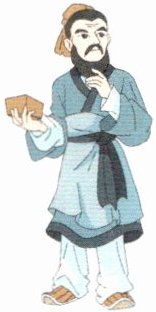
edge(带齿边缘) which became the first saw.
Symbol of Luban Locks
In 2023, the Permanent Representative of China to the UN(中国常驻联合国代表), Zhang Jun used the Luban lock to symbolize(象征) teamwork. He showed that if one piece of the lock was removed, the whole structure(结构) would fall apart. It showed the importance of unity(团结).
Cultural Heritage
Today, Luban locks are not only fun puzzles(智力游戏) but also cultural treasures. Tengzhou, Shandong province, Lu Ban’s birthplace, is famous for making these locks.
Li Hao, a lock-making master, develops the technique to keep the craft alive. He achieves a big success.
Modern Luban Locks
Traditional Luban locks have six pieces, but more advanced(先进的) ones can have over 100. The largest lock ever made had 424 pieces.
Luban locks show the creativity and intelligence(智慧) of Chinese culture, combining(结合) fun with history and skills.
词汇积累 change /tʃeɪndʒ/ 改变 surface /'sɜːfɪs/ 表面 flat /flæt/ 平的
finger /'fɪŋgə(r)/ 手指 symbol /'sɪmbl/ 象征
(
A. He was a teacher. B. He was an artist.
C. He was a craftsman.
(
A. To show China’s advanced carpentry skills.
B. To show the importance of unity.
C. To explain the history of Lu Ban’s inventions.
(
A. Lu Ban and Luban Locks B. Lu Ban, a Famous Man
C. The Symbol of Luban Locks
(
A. B. C.
B. C.
(
A. In a science book. B. In a cultural magazine. C. In a storybook.
Lu Ban: The Inventor
Lu Ban, a famous Chinese craftsman(工匠), is known as “China’s Father of Carpentry (木工)”. He invented many tools like the saw(锯), the plane(木工刨) and the ink line (墨线). It is said that Lu Ban invented the Luban lock(锁) to test his son’s skills. His son worked on it all night and finally solved it the next morning. It’s full of challenges and fun.
Lu Ban’s Inventions
Lu Ban’s inventions changed the woodworking. The plane helps make surfaces of hard wood flat. The ink line helps draw straight lines(直线). The saw is sharp(锋利的) enough to cut hard wood. Once upon a time(很久以前), a leaf cut Lu Ban’s finger. So he got the idea of making a tool with a toothed
edge(带齿边缘) which became the first saw.
Symbol of Luban Locks
In 2023, the Permanent Representative of China to the UN(中国常驻联合国代表), Zhang Jun used the Luban lock to symbolize(象征) teamwork. He showed that if one piece of the lock was removed, the whole structure(结构) would fall apart. It showed the importance of unity(团结).
Cultural Heritage
Today, Luban locks are not only fun puzzles(智力游戏) but also cultural treasures. Tengzhou, Shandong province, Lu Ban’s birthplace, is famous for making these locks.
Li Hao, a lock-making master, develops the technique to keep the craft alive. He achieves a big success.
Modern Luban Locks
Traditional Luban locks have six pieces, but more advanced(先进的) ones can have over 100. The largest lock ever made had 424 pieces.
Luban locks show the creativity and intelligence(智慧) of Chinese culture, combining(结合) fun with history and skills.
词汇积累 change /tʃeɪndʒ/ 改变 surface /'sɜːfɪs/ 表面 flat /flæt/ 平的
finger /'fɪŋgə(r)/ 手指 symbol /'sɪmbl/ 象征
(
C
) 1. Who was Lu Ban?A. He was a teacher. B. He was an artist.
C. He was a craftsman.
(
B
) 2. Why did Zhang Jun use the Luban lock at the UN in 2023?A. To show China’s advanced carpentry skills.
B. To show the importance of unity.
C. To explain the history of Lu Ban’s inventions.
(
A
) 3. What may be the best title of this passage?A. Lu Ban and Luban Locks B. Lu Ban, a Famous Man
C. The Symbol of Luban Locks
(
C
) 4. Which picture shows Luban locks correctly?A.
B. C.(
B
) 5. Where can we probably see this passage?A. In a science book. B. In a cultural magazine. C. In a storybook.
答案
1.C 2.B 3.A 4.C 5.B
解析
【分析】
解答此类阅读理解题,需先通读短文了解大意,再带着每个小题的问题定位原文对应内容,逐一排查选项:1题定位鲁班的身份;2题定位2023年张军使用鲁班锁的原因;3题归纳全文主旨;4题结合鲁班锁结构特点判断插图;5题根据文章内容判断出处。
【解析】
1. 根据短文第一段第一句“Lu Ban, a famous Chinese craftsman(工匠), is known as ‘China’s Father of Carpentry (木工)’”,可知鲁班是工匠,对应选项C。
2. 根据“Symbol of Luban Locks”部分最后一句“It showed the importance of unity(团结)”,可知张军用鲁班锁是为了展示团结的重要性,对应选项B。
3. 全文围绕鲁班的身份、发明及鲁班锁的文化意义展开,选项A“Lu Ban and Luban Locks”最全面概括主旨;选项B仅提及鲁班,未涉及核心内容鲁班锁;选项C仅侧重鲁班锁的象征意义,不全面,故选A。
4. 鲁班锁是多部件组合、拆后结构会散的智力玩具,结合插图特点,选项C符合鲁班锁的结构特征。
5. 文章介绍鲁班锁的文化遗产属性、现代发展等内容,属于文化类题材,最可能出自文化杂志,对应选项B。
【答案】
1.C 2.B 3.A 4.C 5.B
【知识点】
阅读理解细节理解、主旨大意
【点评】
本题为英语阅读理解题,考查学生定位原文信息、归纳主旨的能力,内容围绕中国传统文化中的鲁班及鲁班锁展开,兼具知识性与文化性,难度适中。
【难度系数】
0.3
解答此类阅读理解题,需先通读短文了解大意,再带着每个小题的问题定位原文对应内容,逐一排查选项:1题定位鲁班的身份;2题定位2023年张军使用鲁班锁的原因;3题归纳全文主旨;4题结合鲁班锁结构特点判断插图;5题根据文章内容判断出处。
【解析】
1. 根据短文第一段第一句“Lu Ban, a famous Chinese craftsman(工匠), is known as ‘China’s Father of Carpentry (木工)’”,可知鲁班是工匠,对应选项C。
2. 根据“Symbol of Luban Locks”部分最后一句“It showed the importance of unity(团结)”,可知张军用鲁班锁是为了展示团结的重要性,对应选项B。
3. 全文围绕鲁班的身份、发明及鲁班锁的文化意义展开,选项A“Lu Ban and Luban Locks”最全面概括主旨;选项B仅提及鲁班,未涉及核心内容鲁班锁;选项C仅侧重鲁班锁的象征意义,不全面,故选A。
4. 鲁班锁是多部件组合、拆后结构会散的智力玩具,结合插图特点,选项C符合鲁班锁的结构特征。
5. 文章介绍鲁班锁的文化遗产属性、现代发展等内容,属于文化类题材,最可能出自文化杂志,对应选项B。
【答案】
1.C 2.B 3.A 4.C 5.B
【知识点】
阅读理解细节理解、主旨大意
【点评】
本题为英语阅读理解题,考查学生定位原文信息、归纳主旨的能力,内容围绕中国传统文化中的鲁班及鲁班锁展开,兼具知识性与文化性,难度适中。
【难度系数】
0.3
