

 登录
谈历史,还能清晰描述历史上的文化遗迹等,进而培养传承和保护历史文化的意识,增强文化自信。
佳句积累 >>
1. 中国以其悠久的历史和灿烂的文化而闻名于世。
China
2. 中华文化源远流长,是世界文明的重要组成部分。
Chinese culture
3. 长城是中华民族的象征,也是人类文明的瑰宝。
The Great Wall is
4. 剪纸是中国传统文化的重要组成部分。
Paper-cutting is
5. 了解历史不仅可以增长知识,还能增强我们的文化自信。
Learning about history can
6. 只有珍惜过去,我们才能创造更好的未来。
佳句积累 >>
1. 中国以其悠久的历史和灿烂的文化而闻名于世。
China
is
famous
for
its long history and brilliant culture.2. 中华文化源远流长,是世界文明的重要组成部分。
Chinese culture
has
a
long
history
and is an important part of the world civilisation.3. 长城是中华民族的象征,也是人类文明的瑰宝。
The Great Wall is
a
symbol
of
the Chinese nation and a
treasure
of
human civilisation.4. 剪纸是中国传统文化的重要组成部分。
Paper-cutting is
an
important
part
of
traditional Chinese culture.5. 了解历史不仅可以增长知识,还能增强我们的文化自信。
Learning about history can
not
only
increase our knowledge but
also
strengthen our cultural confidence.6. 只有珍惜过去,我们才能创造更好的未来。
Only
when
we value the past can
we create a better future.答案
1. is famous for
2. has a long history
3. a symbol of; a treasure of
4. an important part of
5. not only; but also
6. Only when; can
写作任务 >>
假设你是李明,你的笔友 Tony 发邮件询问你最近在读什么历史故事,以及读后的感悟与收获。请你给他回复一封电子邮件,分享你对阅读历史故事的看法。要点如下:
1. 介绍一个你喜欢的历史故事及其主要人物的品质;
2. 谈谈阅读历史故事的好处(如了解过去、提高阅读与思辨能力等);
3. 建议对方多读历史故事,并说明理由。
注意:
1. 不能照抄原文;不得在作文中出现真实校名和考生的真实姓名。
2. 语句连贯,词数 80 左右。作文开头和结尾已经给出,不计入总词数。
Dear Tony,
I'm glad to hear from you. You asked about the stories about history I read recently. I'd like to share my thoughts with you.
What do you think of my thoughts? Looking forward to your reply.
Yours,
Li Ming
审题思路
体裁:应用文
人称:第一人称(介绍自己的喜好)
时态:一般现在时(描述读历史的好处)
谋篇布局
习作演练
Dear Tony,
I'm glad to hear from you. You asked about the stories about history I read recently. I'd like to share my thoughts with you.
What do you think of my thoughts? Looking forward to your reply.
Yours,
Li Ming
假设你是李明,你的笔友 Tony 发邮件询问你最近在读什么历史故事,以及读后的感悟与收获。请你给他回复一封电子邮件,分享你对阅读历史故事的看法。要点如下:
1. 介绍一个你喜欢的历史故事及其主要人物的品质;
2. 谈谈阅读历史故事的好处(如了解过去、提高阅读与思辨能力等);
3. 建议对方多读历史故事,并说明理由。
注意:
1. 不能照抄原文;不得在作文中出现真实校名和考生的真实姓名。
2. 语句连贯,词数 80 左右。作文开头和结尾已经给出,不计入总词数。
Dear Tony,
I'm glad to hear from you. You asked about the stories about history I read recently. I'd like to share my thoughts with you.
My favourite history story is about Yu the Great who controlled the floods. He is a determined and selfless character. What impressed me most is that he passed by his home over three times in 13 years but never entered. That shows how much he cared about his people.
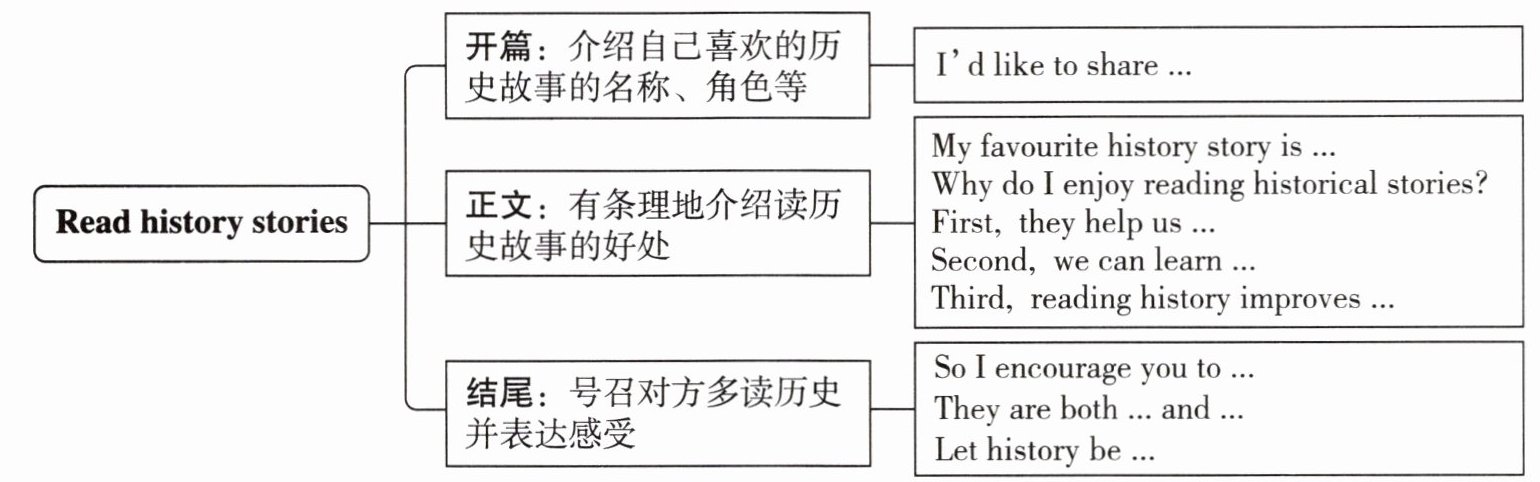
Why do I enjoy reading historical stories? First, they help us learn about the past and gain wisdom from ancient people. Second, we can learn life lessons from historical figures—like how Yu taught me to put duty first. Third, reading history improves our reading, analytical, and critical thinking as we explore why things happened.
So I encourage you to read more historical stories. They are both interesting and meaningful. Let history be the lighthouse guiding our growth.
What do you think of my thoughts? Looking forward to your reply.
Yours,
Li Ming
审题思路
体裁:应用文
人称:第一人称(介绍自己的喜好)
时态:一般现在时(描述读历史的好处)
谋篇布局
习作演练
Dear Tony,
I'm glad to hear from you. You asked about the stories about history I read recently. I'd like to share my thoughts with you.
My favourite history story is about Yu the Great who controlled the floods. He is a determined and selfless character. What impressed me most is that he passed by his home over three times in 13 years but never entered. That shows how much he cared about his people.
Why do I enjoy reading historical stories? First, they help us learn about the past and gain wisdom from ancient people. Second, we can learn life lessons from historical figures—like how Yu taught me to put duty first. Third, reading history improves our reading, analytical, and critical thinking as we explore why things happened.
So I encourage you to read more historical stories. They are both interesting and meaningful. Let history be the lighthouse guiding our growth.
What do you think of my thoughts? Looking forward to your reply.
Yours,
Li Ming
答案
One possible version:
Dear Tony,
I'm glad to hear from you. You asked about the stories about history I read recently. I'd like to share my thoughts with you.
My favourite history story is about Yu the Great who controlled the floods. He is a determined and selfless character. What impressed me most is that he passed by his home over three times in 13 years but never entered. That shows how much he cared about his people.
Why do I enjoy reading historical stories? First, they help us learn about the past and gain wisdom from ancient people. Second, we can learn life lessons from historical figures—like how Yu taught me to put duty first. Third, reading history improves our reading, analytical, and critical thinking as we explore why things happened.
So I encourage you to read more historical stories. They are both interesting and meaningful. Let history be the lighthouse guiding our growth.
What do you think of my thoughts? Looking forward to your reply.
Yours,
Li Ming
