

 登录
登录
() 5.There are interesting things in our class.
A.many
B.much
C.an
D.a lot
A.many
B.much
C.an
D.a lot
答案
A
解析
本题考查形容词辨析,需要根据题干中名词“things”为可数名词复数形式,选择可修饰可数名词复数的形容词。“many”意为“许多”,后接可数名词复数;“much”意为“许多”,后接不可数名词;“an”和“a lot(of)”中“an”修饰单数名词,“a lot”不能直接修饰名词,需用“a lot of”。因此,只有“many”符合题意。
() 6.People in China visitors.
A.welcome to
B.welcomes
C.welcomes to
D.welcome
A.welcome to
B.welcomes
C.welcomes to
D.welcome
答案
D
解析
本题中句子的主语“People”为复数形式,根据主谓一致原则,谓语动词应用原形,“welcome sb.”表示“欢迎某人”,中间不需要加“to”。所以这里应选“welcome”,句子表达“中国人欢迎游客”。
() 7.I love basketball games, they are exciting.
A.but
B.because
C.and
D.also
A.but
B.because
C.and
D.also
答案
B
解析
本题可根据各个连词的含义,结合句子前后的逻辑关系来选择合适的连词。选项A“but”表示转折关系,意为“但是”;选项B“because”表示因果关系,意为“因为”;选项C“and”表示并列或顺承关系,意为“和、并且”;选项D“also”意为“也”,通常用于句中实义动词前或be动词、助动词、情态动词之后。前半句“I love basketball games”(我喜欢篮球比赛),后半句“they are exciting”(它们很令人兴奋),后半句是前半句的原因,所以此处应该用“because”来引导原因状语从句。
() 8.Come and China this summer.
A.visit
B.visited
C.see
D.saw
A.visit
B.visited
C.see
D.saw
答案
A
解析
本题考查祈使句中动词的用法。“Come and...”为祈使句结构,and 连接两个并列的动词原形,come是原形,所以此处也应用动词原形,visited是visit的过去式,saw是see的过去式,不符合要求。visit强调访问、参观,更符合“来中国参观访问”的语境,see侧重看到的结果,此处用visit更合适。所以应选A。
() 9.I'll go to the library and some books about kangaroos.
A.look at
B.find about
C.look for
D.look
A.look at
B.find about
C.look for
D.look
答案
C
解析
本题可根据各选项短语的含义,结合句子语境来选择合适的答案。选项A“look at”表示“看”;选项B“find about”表达错误,通常说“find out”表示“查明,弄清楚”;选项C“look for”表示“寻找”,强调寻找的动作或过程;选项D“look”表示“看”,是不及物动词,后面不能直接接宾语。句子表达的是去图书馆找一些关于袋鼠的书,强调寻找的动作,所以用“look for”合适。
() 10.Yellowstone National Park is in .
A.the UK
B.the US
C.Australia
D.the PRC
A.the UK
B.the US
C.Australia
D.the PRC
答案
B
解析
Yellowstone National Park(黄石国家公园)是美国著名国家公园,这是需要掌握的地理常识知识,根据题意可知问的是黄石国家公园所在国家。A选项the UK是英国;B选项the US是美国;C选项Australia是澳大利亚;D选项the PRC是中华人民共和国。所以答案选B。
五、从Ⅱ栏中选出与Ⅰ栏相对应的答句。
Ⅰ
() 1. What will you do this weekend?
() 2. Will you play football with me after school?
() 3. When will you go home?
() 4. What animals do you like?
() 5. What did you do last weekend?
Ⅱ
A. I played the piano.
B. I'll go swimming.
C. Yesterday evening.
D. Kangaroos and koalas.
E. At about five o'clock.
F. Of course.
G. I like reading stories.
Ⅰ
() 1. What will you do this weekend?
() 2. Will you play football with me after school?
() 3. When will you go home?
() 4. What animals do you like?
() 5. What did you do last weekend?
Ⅱ
A. I played the piano.
B. I'll go swimming.
C. Yesterday evening.
D. Kangaroos and koalas.
E. At about five o'clock.
F. Of course.
G. I like reading stories.
答案
1. B
2. F
3. E
4. D
5. A
2. F
3. E
4. D
5. A
六、连词成句。
1. wants, about, my, to, out, Australia, friend, find (.)
My wants to out Australia.
2. go, parents, evening, shopping, will, this, your (?)
your parents this ?
3. cities, there, any, in, are, Australia, interesting (?)
there any in ?
4. book, can't, to, wait, the, I, read (.)
I .
5. I, future, use, can, “will”, about, to, the, talk (.)
I can “will” to the future.
1. wants, about, my, to, out, Australia, friend, find (.)
My wants to out Australia.
2. go, parents, evening, shopping, will, this, your (?)
your parents this ?
3. cities, there, any, in, are, Australia, interesting (?)
there any in ?
4. book, can't, to, wait, the, I, read (.)
I .
5. I, future, use, can, “will”, about, to, the, talk (.)
I can “will” to the future.
答案
1. friend; find; about
2. Will; go; shopping; evening
3. Are; interesting; cities; Australia
4. can't; wait; to; read; the; book
5. use; talk; about
2. Will; go; shopping; evening
3. Are; interesting; cities; Australia
4. can't; wait; to; read; the; book
5. use; talk; about
七、看图,完成对话。
1. A: Hello, may I to Wang Tao?
B: Yes, speaking.
A: Hello, Wang Tao. This is Liu Yan. What you do tomorrow?
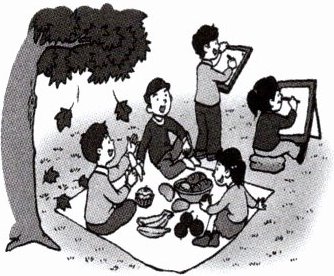
B: I will a with my friends.
A: Really? It's very interesting. Can I go you?
B: Sure. Let's at nine in the park.
2. A: will your mother go next month?
B: She will go to .
A: Great! It's a beautiful country. There are many big cities Sydney and Melbourne.
B: That's true. My mother likes animals very much. She will see kangaroos and in Australia.
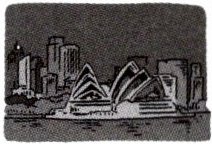
1. A: Hello, may I to Wang Tao?
B: Yes, speaking.
A: Hello, Wang Tao. This is Liu Yan. What you do tomorrow?
B: I will a with my friends.
A: Really? It's very interesting. Can I go you?
B: Sure. Let's at nine in the park.
2. A: will your mother go next month?
B: She will go to .
A: Great! It's a beautiful country. There are many big cities Sydney and Melbourne.
B: That's true. My mother likes animals very much. She will see kangaroos and in Australia.
答案
1.
A: Hello, may I speak to Wang Tao?
B: Yes, speaking.
A: Hello, Wang Tao. This is Liu Yan. What will you do tomorrow?
B: I will have a picnic with my friends.
A: Really? It's very interesting. Can I go with you?
B: Sure. Let's meet at nine in the park.
2.
A: Where will your mother go next month?
B: She will go to Australia.
A: Great! It's a beautiful country. There are many big cities like Sydney and Melbourne.
B: That's true. My mother likes animals very much. She will see kangaroos and koalas in Australia.
A: Hello, may I speak to Wang Tao?
B: Yes, speaking.
A: Hello, Wang Tao. This is Liu Yan. What will you do tomorrow?
B: I will have a picnic with my friends.
A: Really? It's very interesting. Can I go with you?
B: Sure. Let's meet at nine in the park.
2.
A: Where will your mother go next month?
B: She will go to Australia.
A: Great! It's a beautiful country. There are many big cities like Sydney and Melbourne.
B: That's true. My mother likes animals very much. She will see kangaroos and koalas in Australia.
