

 登录
登录
一、阅读理解

Have you ever wondered why we say maidongxi instead of mainanbei, shangcesuo instead of xiacesuo, and yijianxiangzuo instead of yijianxiangyou? Many Chinese words have directions in them, and there is lots of history and culture hidden behind.
East or West When going shopping, Chinese people say maidongxi instead of mainanbei. A theory says that in the Tang Dynasty, there were two popular markets in Chang'an, the national capital at the time. One was called the East Market, and the other was called the West Market. When shopping, people usually went to the East Market first, and then went to the West Market. As time went by, people started to describe shopping as maidongxi.
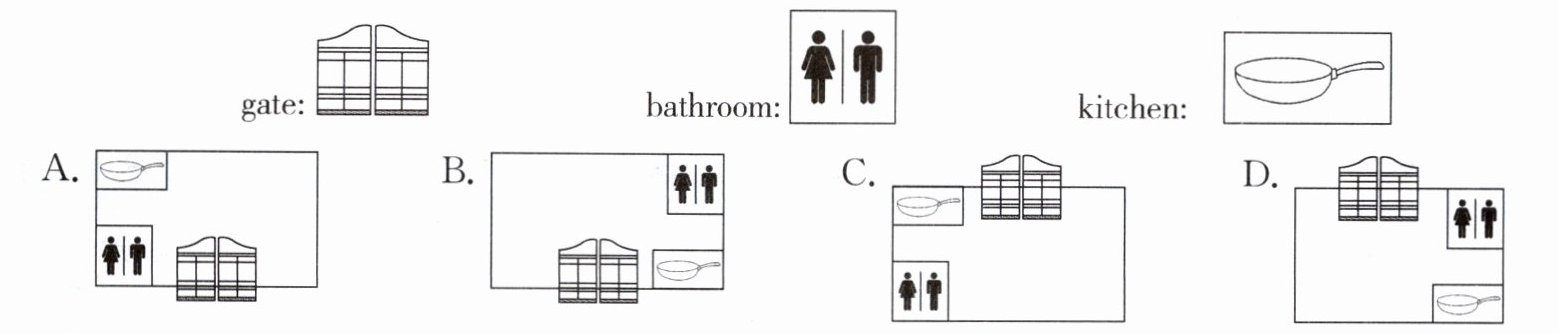
Up or down We use shangcesuo to mean "go to the bathroom" and xiachufang to mean "go to the kitchen". Why? In ancient times, houses were laid out(布局) in a certain way. The gate of the house would face south, with the bathroom in the northeastern part of the house and the kitchen in the southeastern part. On maps, north is usually at the top while south is at the bottom. In Chinese, we talk about the north as shang and the south as xia. So people would say they're going up to the bathroom and down to the kitchen.
Ancient Chinese not only used shang and xia to refer to directions but also social positions. For example, people used huangshang to refer to the emperor and dianxia to refer to princes who had a lower position than the emperor.
Left or right Most people today are right-handed. They feel uncomfortable if they try to use their left hand to write or use chopsticks. This was true in old times as well. So in ancient China, "left" was related to(与……有关联) being different, such as in yijianxiangzuo. If people don't accept common beliefs(信念), we still say they are following pangmenzuodao.
When shaking hands, it's important to know which hand to use. In most cultures, the right hand is generally used for a handshake. For example, in some countries, such as India and Nepal, the left hand is considered unclean. However, if you are in a culture where the left hand is used, you'd better do as the locals do.
"Left" and "right" also have something to do with people's social position. For a long time in ancient China, "right" stood for higher position than "left". For example, the character "佑", developed from "右", means a person in a higher position would protect someone in a lower position.
( )1. Why does the writer mention shangcesuo and yijianxiangzuo at the beginning?
A. To share a story. B. To solve a mystery. C. To give an example. D. To start the topic.
()2. Which picture shows the layout of houses in ancient China according to the passage?
()3. Which Chinese phrase shows the cultural meaning of Chinese words mentioned in the passage?
A. 左顾右盼 B. 七上八下 C. 无出其右 D. 日落西山
()4. Which of the following may be the best title for this passage?
A. Social Position Hidden Behind Chinese Words for Directions
B. History and Culture Behind Chinese Words for Directions
C. Differences Between Chinese and English for Directions
D. Changes in the Use of Words for Directions in Chinese
Have you ever wondered why we say maidongxi instead of mainanbei, shangcesuo instead of xiacesuo, and yijianxiangzuo instead of yijianxiangyou? Many Chinese words have directions in them, and there is lots of history and culture hidden behind.
East or West When going shopping, Chinese people say maidongxi instead of mainanbei. A theory says that in the Tang Dynasty, there were two popular markets in Chang'an, the national capital at the time. One was called the East Market, and the other was called the West Market. When shopping, people usually went to the East Market first, and then went to the West Market. As time went by, people started to describe shopping as maidongxi.
Up or down We use shangcesuo to mean "go to the bathroom" and xiachufang to mean "go to the kitchen". Why? In ancient times, houses were laid out(布局) in a certain way. The gate of the house would face south, with the bathroom in the northeastern part of the house and the kitchen in the southeastern part. On maps, north is usually at the top while south is at the bottom. In Chinese, we talk about the north as shang and the south as xia. So people would say they're going up to the bathroom and down to the kitchen.
Ancient Chinese not only used shang and xia to refer to directions but also social positions. For example, people used huangshang to refer to the emperor and dianxia to refer to princes who had a lower position than the emperor.
Left or right Most people today are right-handed. They feel uncomfortable if they try to use their left hand to write or use chopsticks. This was true in old times as well. So in ancient China, "left" was related to(与……有关联) being different, such as in yijianxiangzuo. If people don't accept common beliefs(信念), we still say they are following pangmenzuodao.
When shaking hands, it's important to know which hand to use. In most cultures, the right hand is generally used for a handshake. For example, in some countries, such as India and Nepal, the left hand is considered unclean. However, if you are in a culture where the left hand is used, you'd better do as the locals do.
"Left" and "right" also have something to do with people's social position. For a long time in ancient China, "right" stood for higher position than "left". For example, the character "佑", developed from "右", means a person in a higher position would protect someone in a lower position.
( )1. Why does the writer mention shangcesuo and yijianxiangzuo at the beginning?
A. To share a story. B. To solve a mystery. C. To give an example. D. To start the topic.
()2. Which picture shows the layout of houses in ancient China according to the passage?
()3. Which Chinese phrase shows the cultural meaning of Chinese words mentioned in the passage?
A. 左顾右盼 B. 七上八下 C. 无出其右 D. 日落西山
()4. Which of the following may be the best title for this passage?
A. Social Position Hidden Behind Chinese Words for Directions
B. History and Culture Behind Chinese Words for Directions
C. Differences Between Chinese and English for Directions
D. Changes in the Use of Words for Directions in Chinese
答案
【语篇解读】本文是一篇说明文。文章主要讲述了中国词语中方向词的使用及其背后的历史和文化含义。
1. D 推理判断题。根据“Have you ever wondered why we say maidongxi instead of mainanbei, shangcesuo instead of xiacesuo, and yijianxiangzuo instead of yijianxiangyou? Many Chinese words have directions in them, and there is lots of history and culture hidden behind.”可知,作者在第一段用“上厕所”和“意见相左”是为了引出本文将介绍的词语相关的话题。故选 D。
2. B 图示理解题。根据“The gate of the house would face south, with the bathroom in the northeastern part of the house and the kitchen in the southeastern part.”可知,在中国古代,房屋的布局图应该显示大门朝南,卫生间在东北部,厨房在东南部。故选 B。
3. C 推理判断题。根据“'Left' and 'right' also have something to do with people's social position.”可知,左右与社会地位有关,成语“无出其右”表示“无人能超过他”,故选 C。
4. B 标题归纳题。本文主要介绍了许多汉字都表示方向,其背后隐藏着许多历史和文化,以选项 B“表示方向的汉字背后的历史和文化”为标题最合适。故选 B。
1. D 推理判断题。根据“Have you ever wondered why we say maidongxi instead of mainanbei, shangcesuo instead of xiacesuo, and yijianxiangzuo instead of yijianxiangyou? Many Chinese words have directions in them, and there is lots of history and culture hidden behind.”可知,作者在第一段用“上厕所”和“意见相左”是为了引出本文将介绍的词语相关的话题。故选 D。
2. B 图示理解题。根据“The gate of the house would face south, with the bathroom in the northeastern part of the house and the kitchen in the southeastern part.”可知,在中国古代,房屋的布局图应该显示大门朝南,卫生间在东北部,厨房在东南部。故选 B。
3. C 推理判断题。根据“'Left' and 'right' also have something to do with people's social position.”可知,左右与社会地位有关,成语“无出其右”表示“无人能超过他”,故选 C。
4. B 标题归纳题。本文主要介绍了许多汉字都表示方向,其背后隐藏着许多历史和文化,以选项 B“表示方向的汉字背后的历史和文化”为标题最合适。故选 B。
解析
【分析】
拿到这篇阅读理解,首先明确解题思路:先通读题干明确每道题的考点,再带着问题回原文精准定位对应内容。第1题判断开篇内容的作用,梳理首段行文逻辑,作者先抛出几个大家日常熟悉的带方向的中文表达的疑问,后续马上引出核心观点,就能判断开篇的作用。第2题是图示细节题,直接回原文找古代房屋布局的全部限定条件,逐一核对就能选出符合的图。第3题需要结合文中提到的方向词的文化内涵,匹配对应的成语含义,排除不符合的选项。第4题是标题归纳题,抓住首段的总起主旨句,排除片面、无关的选项,选出覆盖全文核心内容的标题即可。
【解析】
1. 推理判断题:定位到文章第一段,作者开篇先提出三个关于日常带方向的中文表达的疑问,紧接着引出核心观点“Many Chinese words have directions in them, and there is lots of history and culture hidden behind”,目的是引出本文要讨论的方向词背后历史文化的相关话题,并非分享故事、解谜或者单纯举例子,因此选D。
2. 图示理解题:定位到文章第三段的描述“The gate of the house would face south, with the bathroom in the northeastern part of the house and the kitchen in the southeastern part”,满足“大门朝南、卫生间在房屋东北部、厨房在房屋东南部”三个条件的布局就是正确答案,对应选项B。
3. 推理判断题:文中明确提到方向词的文化内涵包含“左右和社会地位相关,古代很长时间里‘右’代表比‘左’更高的地位”。选项A“左顾右盼”仅表示字面的环顾四周,和文中提到的文化含义无关;选项B“七上八下”形容心绪不宁,和方向词的文化设定无关;选项D“日落西山”指太阳朝西边落下,仅用了方位词的字面含义;只有选项C“无出其右”的含义是没有能超过某人的,对应“右代表更高地位”的文化设定,符合要求,因此选C。
4. 标题归纳题:全文围绕中文里带方向的词汇背后隐藏的历史和文化展开,分别从东西、上下、左右三个维度介绍相关表达的由来和文化内涵。选项A仅提到社会地位,内容过于片面;选项C文中完全没有涉及中英方向词的差异,属于无中生有;选项D全文没有介绍方向词使用的演变过程,不符合内容;只有选项B完整覆盖了全文的核心主旨,是最合适的标题,因此选B。
【答案】
1. D 2. B 3. C 4. B
【知识点】
阅读理解细节定位
阅读理解推理判断
阅读理解主旨归纳
【点评】
本题是介绍中国方位词相关文化的说明文阅读,考点覆盖了开篇作用推理、细节图示匹配、文化常识关联、标题归纳多个常见阅读题型,解题的核心技巧是紧扣原文给出的关键信息,不要脱离文本主观臆断,抓住首段总起句就能快速把握全文核心,细节类题目精准定位原文对应语句即可快速排除错误选项。
【难度系数】
0.7
拿到这篇阅读理解,首先明确解题思路:先通读题干明确每道题的考点,再带着问题回原文精准定位对应内容。第1题判断开篇内容的作用,梳理首段行文逻辑,作者先抛出几个大家日常熟悉的带方向的中文表达的疑问,后续马上引出核心观点,就能判断开篇的作用。第2题是图示细节题,直接回原文找古代房屋布局的全部限定条件,逐一核对就能选出符合的图。第3题需要结合文中提到的方向词的文化内涵,匹配对应的成语含义,排除不符合的选项。第4题是标题归纳题,抓住首段的总起主旨句,排除片面、无关的选项,选出覆盖全文核心内容的标题即可。
【解析】
1. 推理判断题:定位到文章第一段,作者开篇先提出三个关于日常带方向的中文表达的疑问,紧接着引出核心观点“Many Chinese words have directions in them, and there is lots of history and culture hidden behind”,目的是引出本文要讨论的方向词背后历史文化的相关话题,并非分享故事、解谜或者单纯举例子,因此选D。
2. 图示理解题:定位到文章第三段的描述“The gate of the house would face south, with the bathroom in the northeastern part of the house and the kitchen in the southeastern part”,满足“大门朝南、卫生间在房屋东北部、厨房在房屋东南部”三个条件的布局就是正确答案,对应选项B。
3. 推理判断题:文中明确提到方向词的文化内涵包含“左右和社会地位相关,古代很长时间里‘右’代表比‘左’更高的地位”。选项A“左顾右盼”仅表示字面的环顾四周,和文中提到的文化含义无关;选项B“七上八下”形容心绪不宁,和方向词的文化设定无关;选项D“日落西山”指太阳朝西边落下,仅用了方位词的字面含义;只有选项C“无出其右”的含义是没有能超过某人的,对应“右代表更高地位”的文化设定,符合要求,因此选C。
4. 标题归纳题:全文围绕中文里带方向的词汇背后隐藏的历史和文化展开,分别从东西、上下、左右三个维度介绍相关表达的由来和文化内涵。选项A仅提到社会地位,内容过于片面;选项C文中完全没有涉及中英方向词的差异,属于无中生有;选项D全文没有介绍方向词使用的演变过程,不符合内容;只有选项B完整覆盖了全文的核心主旨,是最合适的标题,因此选B。
【答案】
1. D 2. B 3. C 4. B
【知识点】
阅读理解细节定位
阅读理解推理判断
阅读理解主旨归纳
【点评】
本题是介绍中国方位词相关文化的说明文阅读,考点覆盖了开篇作用推理、细节图示匹配、文化常识关联、标题归纳多个常见阅读题型,解题的核心技巧是紧扣原文给出的关键信息,不要脱离文本主观臆断,抓住首段总起句就能快速把握全文核心,细节类题目精准定位原文对应语句即可快速排除错误选项。
【难度系数】
0.7
