

 登录
登录
3 Read the conversation. 阅读对话。
A reporter from the city newspaper is talking to Chen Xiao, a university student who loves Chinese traditional culture, to learn more about the revival (复兴) of hanfu culture.
Reporter: Hi, Chen Xiao! We see you often wear traditional Chinese clothing called hanfu. Can you tell us more about this?
Chen: Sure! Hanfu is the traditional clothing of the Han people, with a history of more than 3,000 years. I love wearing hanfu and often share photos online. As a result, I have gained about 70,000 followers who are interested in hanfu.
Reporter: That's amazing! How did your love for hanfu begin?
Chen: It started when I joined the hanfu club at university. There, we learn that wearing hanfu is a way to express ourselves and celebrate our cultural identity (身份). Because of this, many club members choose to wear hanfu at important events or during holidays to help more people appreciate (欣赏) this traditional clothing. I even wear it on regular days.
Reporter: Wow, it sounds like hanfu is becoming popular again!
Chen: Yes, for hanfu fans like me, there is a special day called Chinese National Costume Day to celebrate traditional Chinese clothing.
Reporter: That's great! Is hanfu the only traditional clothing for this celebration?
Chen: No, the traditional clothing of all ethnic groups (民族) in China is celebrated. But hanfu has gained the most attention in recent years because of its long history and deep connection to Chinese culture.
Reporter: Some people might still think it strange to wear hanfu in daily life. What do you think?
Chen: I feel proud of Chinese culture, and that's why I wear hanfu in public. For me, wearing hanfu is not about turning back the clock. It is about passing down our culture. It shows that old traditions can live together with modern life.
Reporter: That's a beautiful way to look at it! Thank you for sharing.
3 - 1 Tick ($√$) the main idea of the interview. 勾选访谈的主旨大意。
□ Chen Xiao shares her hanfu outfits on social media and has many followers.
□ Chen Xiao talks about her love for hanfu and the revival of hanfu culture.
□ Chen Xiao expresses her opinion about whether hanfu is suitable for modern life.
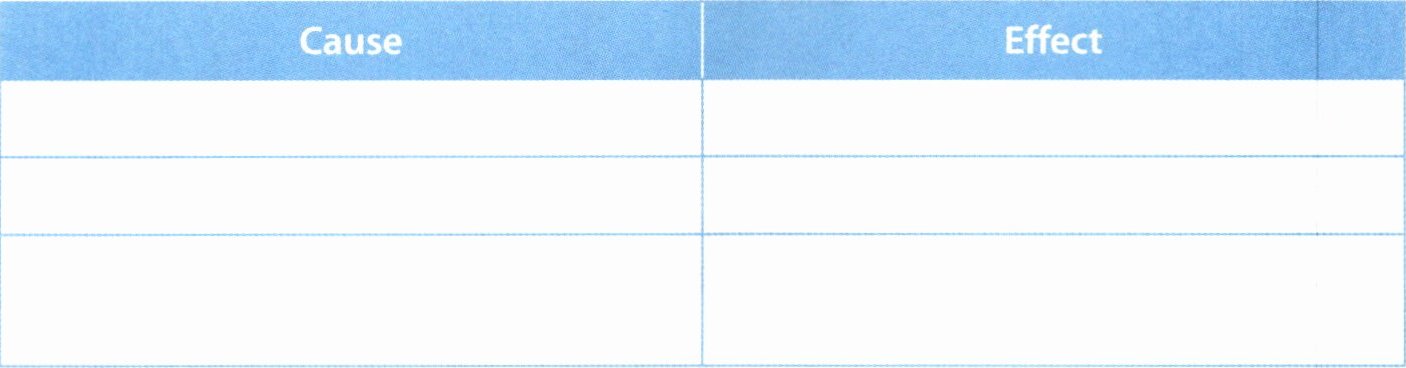
3 - 2 Put the following sentences into a table to show two cause - effect relationships. Then, find one more from the interview and add it to the table. 将以下句子放入表格中以形成两组因果关系,然后从对话中再找出一组因果关系,并填入表格。
Chen Xiao wears hanfu in public.
Chen Xiao often shares hanfu photos online.
Chen Xiao feels proud of Chinese culture.
Chen Xiao has gained about 70,000 followers who are interested in hanfu.
3 - 3 Answer the questions. 回答问题。
(1) How long is the history of hanfu?
(2) What's the meaning of the underlined sentence?
A reporter from the city newspaper is talking to Chen Xiao, a university student who loves Chinese traditional culture, to learn more about the revival (复兴) of hanfu culture.
Reporter: Hi, Chen Xiao! We see you often wear traditional Chinese clothing called hanfu. Can you tell us more about this?
Chen: Sure! Hanfu is the traditional clothing of the Han people, with a history of more than 3,000 years. I love wearing hanfu and often share photos online. As a result, I have gained about 70,000 followers who are interested in hanfu.
Reporter: That's amazing! How did your love for hanfu begin?
Chen: It started when I joined the hanfu club at university. There, we learn that wearing hanfu is a way to express ourselves and celebrate our cultural identity (身份). Because of this, many club members choose to wear hanfu at important events or during holidays to help more people appreciate (欣赏) this traditional clothing. I even wear it on regular days.
Reporter: Wow, it sounds like hanfu is becoming popular again!
Chen: Yes, for hanfu fans like me, there is a special day called Chinese National Costume Day to celebrate traditional Chinese clothing.
Reporter: That's great! Is hanfu the only traditional clothing for this celebration?
Chen: No, the traditional clothing of all ethnic groups (民族) in China is celebrated. But hanfu has gained the most attention in recent years because of its long history and deep connection to Chinese culture.
Reporter: Some people might still think it strange to wear hanfu in daily life. What do you think?
Chen: I feel proud of Chinese culture, and that's why I wear hanfu in public. For me, wearing hanfu is not about turning back the clock. It is about passing down our culture. It shows that old traditions can live together with modern life.
Reporter: That's a beautiful way to look at it! Thank you for sharing.
3 - 1 Tick ($√$) the main idea of the interview. 勾选访谈的主旨大意。
□ Chen Xiao shares her hanfu outfits on social media and has many followers.
□ Chen Xiao talks about her love for hanfu and the revival of hanfu culture.
□ Chen Xiao expresses her opinion about whether hanfu is suitable for modern life.
3 - 2 Put the following sentences into a table to show two cause - effect relationships. Then, find one more from the interview and add it to the table. 将以下句子放入表格中以形成两组因果关系,然后从对话中再找出一组因果关系,并填入表格。
Chen Xiao wears hanfu in public.
Chen Xiao often shares hanfu photos online.
Chen Xiao feels proud of Chinese culture.
Chen Xiao has gained about 70,000 followers who are interested in hanfu.
3 - 3 Answer the questions. 回答问题。
(1) How long is the history of hanfu?
(2) What's the meaning of the underlined sentence?
答案
3 - 1: 第二个选项打√
3 - 2:
Cause: Chen Xiao often shares hanfu photos online.
Effect: Chen Xiao has gained about 70,000 followers who are interested in hanfu.
Cause: Chen Xiao feels proud of Chinese culture.
Effect: Chen Xiao wears hanfu in public.
Cause: Chen Xiao joined the hanfu club at university.
Effect: Her love for hanfu began and she learned to express cultural identity through it.
3 - 3:
(1) More than 3,000 years.
(2) Wearing hanfu is not about going back to the past but about carrying forward traditional culture and showing that tradition and modernity can coexist.
3 - 2:
Cause: Chen Xiao often shares hanfu photos online.
Effect: Chen Xiao has gained about 70,000 followers who are interested in hanfu.
Cause: Chen Xiao feels proud of Chinese culture.
Effect: Chen Xiao wears hanfu in public.
Cause: Chen Xiao joined the hanfu club at university.
Effect: Her love for hanfu began and she learned to express cultural identity through it.
3 - 3:
(1) More than 3,000 years.
(2) Wearing hanfu is not about going back to the past but about carrying forward traditional culture and showing that tradition and modernity can coexist.
解析
3-1: 题目要求选择访谈的主旨大意。
第一个选项是陈霄在社交媒体上分享她的汉服装扮并拥有许多粉丝,这只是访谈中的一部分内容,不能概括整体主旨。
第二个选项是陈霄谈论她对汉服的热爱以及汉服文化的复兴,该选项准确概括了访谈的核心内容。
第三个选项是陈霄表达她对汉服是否适合现代生活的看法,这也只是访谈中的一部分内容,并非主旨。
3-2: 题目要求将给出的句子整理成因果关系表格,并从对话中再找出一组因果关系。
根据对话内容,可以整理出以下两组因果关系,并在对话中找到另外一组:
已给句子形成的因果关系:
Cause: Chen Xiao often shares hanfu photos online.
Effect: Chen Xiao has gained about 70,000 followers who are interested in hanfu.
Cause: Chen Xiao feels proud of Chinese culture.
Effect: Chen Xiao wears hanfu in public.
从对话中再找出一组因果关系:
Cause: Chen Xiao joined the hanfu club at university.
Effect: Her love for hanfu began and she learned to express cultural identity through it.
3-3:
(1) 题目问汉服的历史有多久。根据对话中的“Hanfu is the traditional clothing of the Han people, with a history of more than 3,000 years.”可知答案。
(2) 题目问划线句子的意思。根据对话中的“For me, wearing hanfu is not about turning back the clock. It is about passing down our culture. It shows that old traditions can live together with modern life.”可知,这句话表达了汉服不是复古,而是传承文化,传统与现代可以共存的意思。
第一个选项是陈霄在社交媒体上分享她的汉服装扮并拥有许多粉丝,这只是访谈中的一部分内容,不能概括整体主旨。
第二个选项是陈霄谈论她对汉服的热爱以及汉服文化的复兴,该选项准确概括了访谈的核心内容。
第三个选项是陈霄表达她对汉服是否适合现代生活的看法,这也只是访谈中的一部分内容,并非主旨。
3-2: 题目要求将给出的句子整理成因果关系表格,并从对话中再找出一组因果关系。
根据对话内容,可以整理出以下两组因果关系,并在对话中找到另外一组:
已给句子形成的因果关系:
Cause: Chen Xiao often shares hanfu photos online.
Effect: Chen Xiao has gained about 70,000 followers who are interested in hanfu.
Cause: Chen Xiao feels proud of Chinese culture.
Effect: Chen Xiao wears hanfu in public.
从对话中再找出一组因果关系:
Cause: Chen Xiao joined the hanfu club at university.
Effect: Her love for hanfu began and she learned to express cultural identity through it.
3-3:
(1) 题目问汉服的历史有多久。根据对话中的“Hanfu is the traditional clothing of the Han people, with a history of more than 3,000 years.”可知答案。
(2) 题目问划线句子的意思。根据对话中的“For me, wearing hanfu is not about turning back the clock. It is about passing down our culture. It shows that old traditions can live together with modern life.”可知,这句话表达了汉服不是复古,而是传承文化,传统与现代可以共存的意思。
