

 登录
Ⅳ.读写题(本题共分为两节,共15分)
When we think of pollution, dirty air or plastic waste often come to mind. But noise pollution is just as harmful, though many people ignore it.
Noise pollution means unwanted or harmful sounds that disturb our daily lives. Common sources include traffic, trains, planes, construction work, and even loud music from neighbours. A normal conversation is about 60 decibels. Sounds above 85 decibels—like a busy street or a lawn mower—can harm our hearing over time.
Long-term exposure(暴露) to loud noise does more than just hurt our ears. It can cause headaches, increase stress, and make it hard to sleep. Studies have shown that people living near airports or highways have higher risks of heart problems. Children who grow up in noisy areas may have more difficulty learning to read.
So what can we do? If you live in a noisy place, use earplugs(耳塞) or noise-cancelling headphones(降噪耳机). Keep the volume down when listening to music. Plant trees around your home—they can block some of the sound. Also, support local rules that limit noise from construction or traffic at night. Noise pollution may not leave visible waste, but its effects on health are real. It’s time to turn down the volume on this hidden danger.
第一节 阅读短文,根据语篇内容,在方框内的缩写文章中,填入与短文意思最符合的单词,每空一词。(每小题1分,共6分)
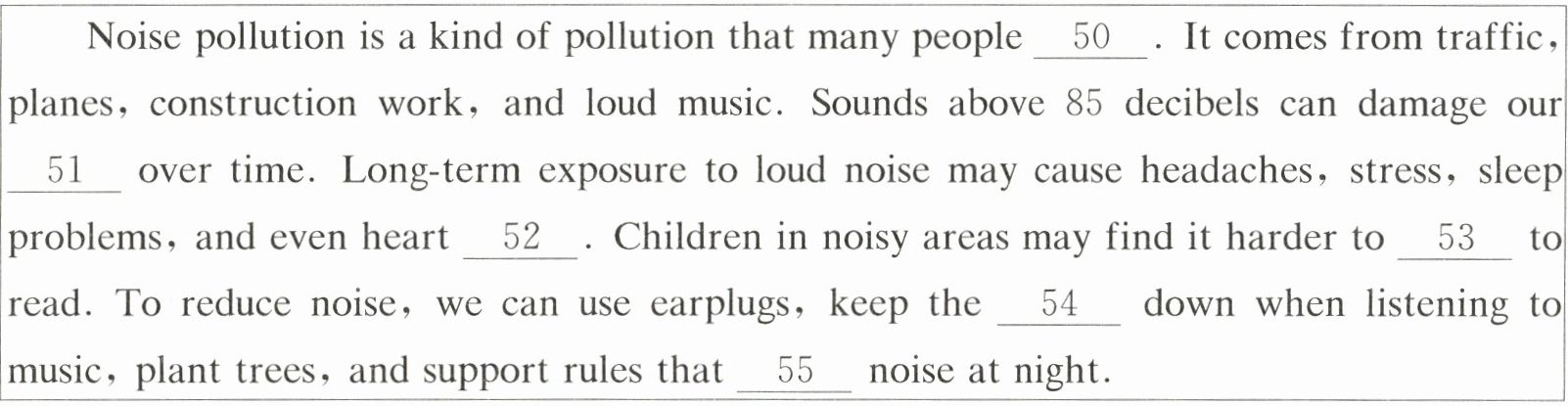
50.
第二节 阅读短文,根据语篇内容,回答问题。(每小题3分,共9分)
56. How loud is a normal conversation?
57. What can too much loud noise do to your sleep?
58. What are two things you can use to protect your ears from loud noise?
When we think of pollution, dirty air or plastic waste often come to mind. But noise pollution is just as harmful, though many people ignore it.
Noise pollution means unwanted or harmful sounds that disturb our daily lives. Common sources include traffic, trains, planes, construction work, and even loud music from neighbours. A normal conversation is about 60 decibels. Sounds above 85 decibels—like a busy street or a lawn mower—can harm our hearing over time.
Long-term exposure(暴露) to loud noise does more than just hurt our ears. It can cause headaches, increase stress, and make it hard to sleep. Studies have shown that people living near airports or highways have higher risks of heart problems. Children who grow up in noisy areas may have more difficulty learning to read.
So what can we do? If you live in a noisy place, use earplugs(耳塞) or noise-cancelling headphones(降噪耳机). Keep the volume down when listening to music. Plant trees around your home—they can block some of the sound. Also, support local rules that limit noise from construction or traffic at night. Noise pollution may not leave visible waste, but its effects on health are real. It’s time to turn down the volume on this hidden danger.
第一节 阅读短文,根据语篇内容,在方框内的缩写文章中,填入与短文意思最符合的单词,每空一词。(每小题1分,共6分)
50.
ignore
51. hearing
52. problems/diseases
53. learn
54. volume
55. limit
第二节 阅读短文,根据语篇内容,回答问题。(每小题3分,共9分)
56. How loud is a normal conversation?
57. What can too much loud noise do to your sleep?
58. What are two things you can use to protect your ears from loud noise?
答案
50. ignore 51. hearing 52. problems/diseases
53. learn 54. volume 55. limit
56. A normal conversation is about 60 decibels.
57. Too much loud noise can make it hard to sleep.
58. I can use earplugs or noise-cancelling headphones.
