

 登录
登录
2. Read and choose
1) —Who's that boy?
—That's my neighbour. He is friendly.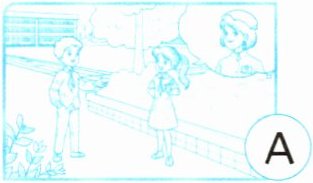 A
A
2) —What's your mother's job?
—She is a nurse in a children's hospital.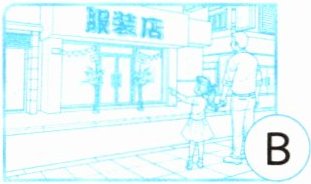 B
B
3) —Dad, there is a new shop over there.
—Great. Let's go and see!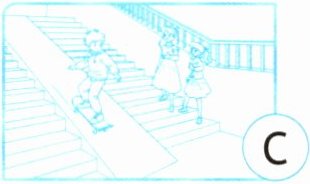 C
C
1) —Who's that boy?
—That's my neighbour. He is friendly.
A2) —What's your mother's job?
—She is a nurse in a children's hospital.
B3) —Dad, there is a new shop over there.
—Great. Let's go and see!
C答案
1) C 2) A 3) B
解析
我们根据每段对话的核心信息匹配对应图片:
1) 对话核心是介绍一位友好的男孩邻居,图C中有滑滑板的男孩,符合对话描述。
2) 对话核心是说明妈妈是儿童医院的护士,图A中出现了戴护士帽的女性,符合护士的身份设定,匹配对话内容。
3) 对话核心是父女二人发现新商店打算前去查看,图B是服装店,属于商店,父女二人正看向店铺,符合对话场景。
1) 对话核心是介绍一位友好的男孩邻居,图C中有滑滑板的男孩,符合对话描述。
2) 对话核心是说明妈妈是儿童医院的护士,图A中出现了戴护士帽的女性,符合护士的身份设定,匹配对话内容。
3) 对话核心是父女二人发现新商店打算前去查看,图B是服装店,属于商店,父女二人正看向店铺,符合对话场景。
3. Read and choose
Do you have a pet? 1) But I like dogs.
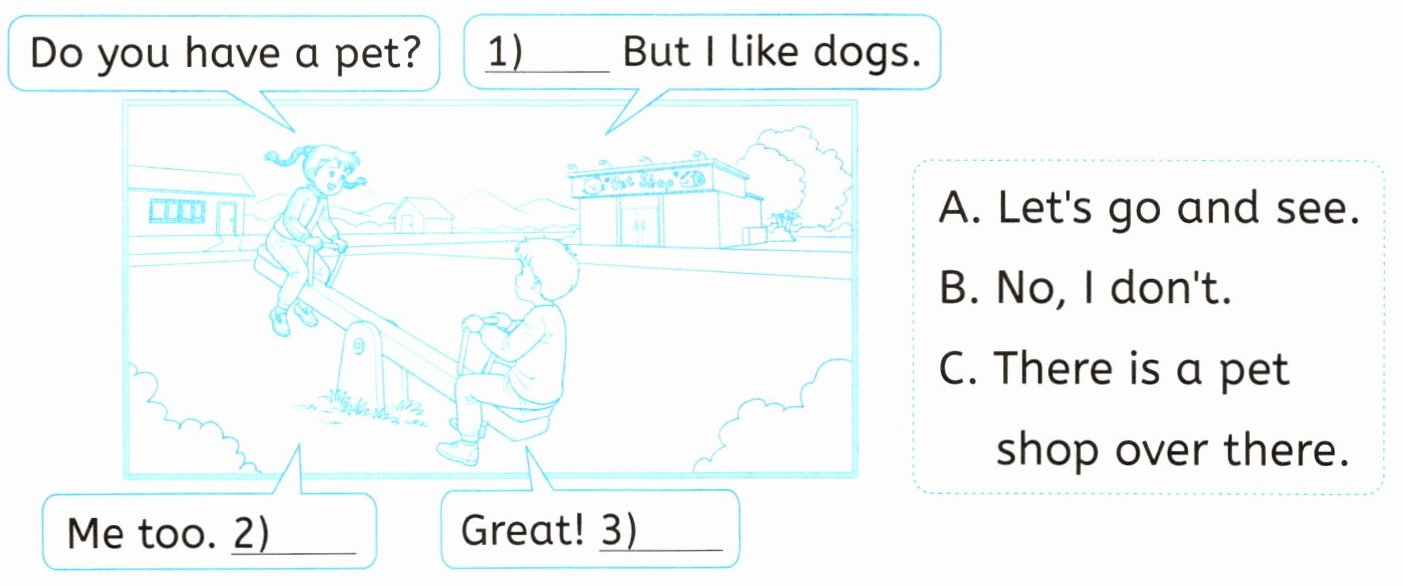
Me too. 2) Great! 3)
A.Let's go and see.
B.No, I don't.
C.There is a pet shop over there.
Do you have a pet? 1) But I like dogs.
Me too. 2) Great! 3)
A.Let's go and see.
B.No, I don't.
C.There is a pet shop over there.
答案
1)B 2)C 3)A
解析
1) 问句"Do you have a pet?"是一般疑问句,结合后句"But I like dogs."的转折逻辑,说明回答者没有宠物,选B。
2) 前句"Me too."表示自己也喜欢狗,接下来引出场景,说明附近有一家宠物店,选C。
3) 前句"Great!"表示对有宠物店这件事的赞同,接下来提议去宠物店看看,选A。
2) 前句"Me too."表示自己也喜欢狗,接下来引出场景,说明附近有一家宠物店,选C。
3) 前句"Great!"表示对有宠物店这件事的赞同,接下来提议去宠物店看看,选A。
