

 登录
登录
1. Read and tick
1) How many fun facts are there in the "Reading time"?
Four.
Five.
Six.
2) How many planets are there in the picture of our solar system?
Eight.
Nine.
Ten.
3) How many planets are mentioned(提及) in the fun facts?
Five.
Six.
Seven.
1) How many fun facts are there in the "Reading time"?
Four.
Five.
Six.
2) How many planets are there in the picture of our solar system?
Eight.
Nine.
Ten.
3) How many planets are mentioned(提及) in the fun facts?
Five.
Six.
Seven.
答案
1) 勾选Five. 2) 勾选Eight. 3) 勾选Six.
解析
本题需要结合人教版六年级上册Unit 5 Exploring space的"Reading time"板块的阅读文本和配套插图作答:1. 统计阅读板块里的趣味事实总数,可知一共有5个趣味事实;2. 结合太阳系基础常识和教材配套的太阳系插图,可知图中一共呈现了8颗行星;3. 统计趣味事实内容中提及的行星总数,可知一共提到了6颗行星。
2. Look, read and match
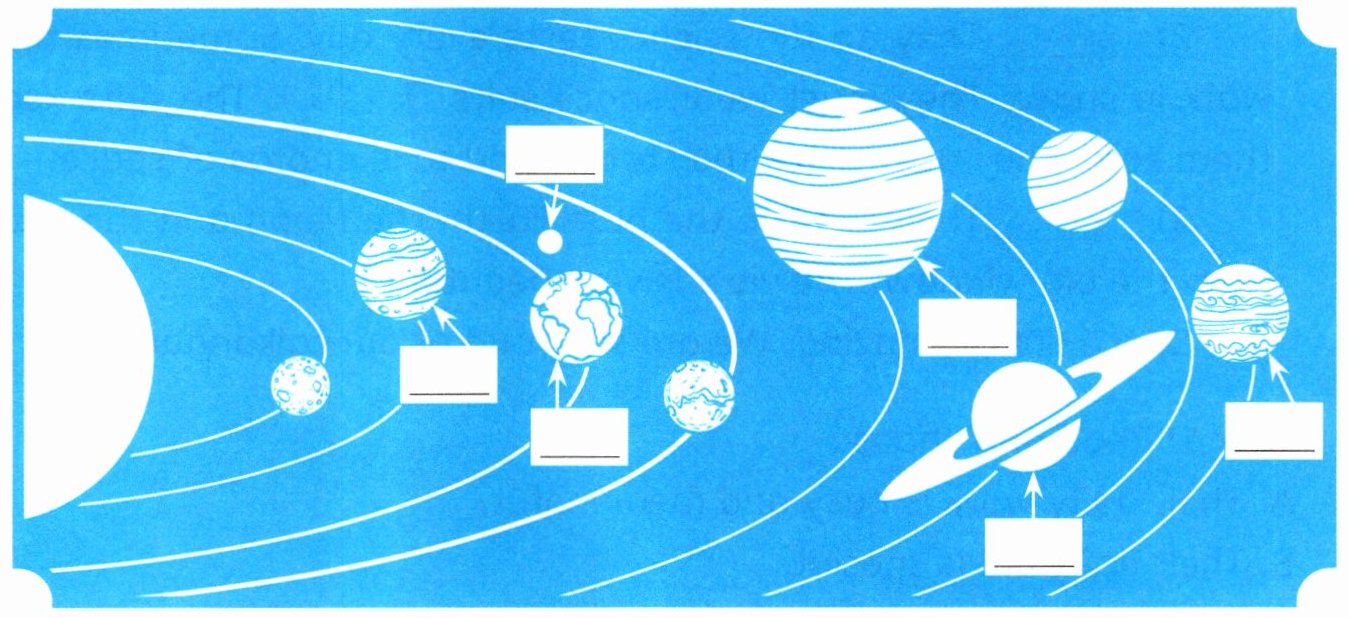
A. It's the hottest planet in the solar system.
B. A big, old storm called the Great Red Spot is on it.
C. It has the fastest wind in the solar system.
D. It has over 200 moons, and maybe more!
E. It's not a planet and footprints could stay there for thousands of years.
F. Man-made space junk floats around it.
A. It's the hottest planet in the solar system.
B. A big, old storm called the Great Red Spot is on it.
C. It has the fastest wind in the solar system.
D. It has over 200 moons, and maybe more!
E. It's not a planet and footprints could stay there for thousands of years.
F. Man-made space junk floats around it.
答案
按照图中空白框从左到右、从上到下的顺序依次为:A、F、E、B、D、C
解析
结合太阳系天体的基础常识,将描述和对应天体逐一匹配:
1. 指向地球的卫星月球的描述:E选项说明它不是行星,脚印可以留存数千年,完全符合月球的特征,对应最上方指向月球的空白框。
2. 指向金星的描述:A选项说明它是太阳系最热的行星,符合金星的特点,对应金星下方的空白框。
3. 指向地球的描述:F选项说明人造太空垃圾在它周围漂浮,符合地球的实际情况,对应地球下方的空白框。
4. 指向体积最大的木星的描述:B选项提到的古老大风暴“大红斑”是木星的标志性特征,对应木星旁的空白框。
5. 指向带环的土星的描述:D选项说明它拥有超过200颗卫星,符合土星卫星数量极多的特点,对应土星下方的空白框。
6. 指向最外侧的海王星的描述:C选项说明它拥有太阳系最快的风速,符合海王星的特征,对应最右侧海王星下方的空白框。
1. 指向地球的卫星月球的描述:E选项说明它不是行星,脚印可以留存数千年,完全符合月球的特征,对应最上方指向月球的空白框。
2. 指向金星的描述:A选项说明它是太阳系最热的行星,符合金星的特点,对应金星下方的空白框。
3. 指向地球的描述:F选项说明人造太空垃圾在它周围漂浮,符合地球的实际情况,对应地球下方的空白框。
4. 指向体积最大的木星的描述:B选项提到的古老大风暴“大红斑”是木星的标志性特征,对应木星旁的空白框。
5. 指向带环的土星的描述:D选项说明它拥有超过200颗卫星,符合土星卫星数量极多的特点,对应土星下方的空白框。
6. 指向最外侧的海王星的描述:C选项说明它拥有太阳系最快的风速,符合海王星的特征,对应最右侧海王星下方的空白框。
3. Read and write T (True) or F (False)
1) The closest planet to the Sun is the hottest planet. ()
2) The Great Red Spot on Jupiter may be over 300 years old. ()
3) The amount(数量) of space junk around Earth is not growing. ()
1) The closest planet to the Sun is the hottest planet. ()
2) The Great Red Spot on Jupiter may be over 300 years old. ()
3) The amount(数量) of space junk around Earth is not growing. ()
答案
1) F 2) T 3) F
解析
1) 距离太阳最近的行星是水星,但水星没有大气层留存热量,太阳系温度最高的行星是金星,因此该表述错误。2) 木星的大红斑是持续的巨型风暴,人类从17世纪就开始观测到它,至今它的存在时长已经超过300年,该表述符合事实。3) 随着人类太空活动越来越多,地球周边的太空垃圾数量一直在持续增长,并非没有增长,该表述错误。
