

 登录
登录
三、选择合适的句子,补全对话。
Sarah: Tom, let's play a festival guessing game.
Tom: OK. 1.
Sarah: Did you have a big dinner with your family?
Tom: Yes, we did.
Sarah: Did you eat mooncakes?
Tom: 2.
Sarah: 3.
Tom: Yes, I did.
Sarah: Oh, it's the Spring Festival. 4.
Tom: That's right. What did you do last Spring Festival?
Sarah: 5.
A. No, we didn't.
B. People always come back home from different places.
C. I took a trip with my family.
D. Did you get lucky money from your parents?
E. Sounds great.
Sarah: Tom, let's play a festival guessing game.
Tom: OK. 1.
E
Sarah: Did you have a big dinner with your family?
Tom: Yes, we did.
Sarah: Did you eat mooncakes?
Tom: 2.
A
Sarah: 3.
D
Tom: Yes, I did.
Sarah: Oh, it's the Spring Festival. 4.
B
Tom: That's right. What did you do last Spring Festival?
Sarah: 5.
C
A. No, we didn't.
B. People always come back home from different places.
C. I took a trip with my family.
D. Did you get lucky money from your parents?
E. Sounds great.
答案
1. E 2. A 3. D 4. B 5. C
解析
【分析】
先通读对话与选项,明确对话主题是Sarah和Tom玩节日猜谜游戏。第一步,Tom回应Sarah的游戏提议,需选表示赞同的句子;第二步,Sarah问是否吃月饼,结合最终猜的是春节,Tom应给出否定回答;第三步,下文Tom答Yes I did,此处需选一般疑问句;第四步,Sarah猜出是春节后,需补充春节的相关特点;第五步,上文问去年春节做什么,需选对应活动的句子。
【解析】
1. 上文Sarah提议玩游戏,Tom需回应赞同,选E(Sounds great.);
2. Sarah问是否吃月饼,结合最终节日为春节,Tom应回答没吃,选A(No, we didn't.);
3. 下文Tom答Yes I did,此处需选一般疑问句,对应D(Did you get lucky money from your parents?);
4. 猜出是春节后,补充春节的习俗,选B(People always come back home from different places.);
5. 上文问去年春节做什么,选C(I took a trip with my family.)。
【答案】1.E 2.A 3.D 4.B 5.C
【知识点】英语日常交际用语、补全对话
【点评】本题围绕节日主题考查日常交际用语的运用,需结合上下文语境选句,难度适中,适合基础阶段学生练习。
【难度系数】0.6
先通读对话与选项,明确对话主题是Sarah和Tom玩节日猜谜游戏。第一步,Tom回应Sarah的游戏提议,需选表示赞同的句子;第二步,Sarah问是否吃月饼,结合最终猜的是春节,Tom应给出否定回答;第三步,下文Tom答Yes I did,此处需选一般疑问句;第四步,Sarah猜出是春节后,需补充春节的相关特点;第五步,上文问去年春节做什么,需选对应活动的句子。
【解析】
1. 上文Sarah提议玩游戏,Tom需回应赞同,选E(Sounds great.);
2. Sarah问是否吃月饼,结合最终节日为春节,Tom应回答没吃,选A(No, we didn't.);
3. 下文Tom答Yes I did,此处需选一般疑问句,对应D(Did you get lucky money from your parents?);
4. 猜出是春节后,补充春节的习俗,选B(People always come back home from different places.);
5. 上文问去年春节做什么,选C(I took a trip with my family.)。
【答案】1.E 2.A 3.D 4.B 5.C
【知识点】英语日常交际用语、补全对话
【点评】本题围绕节日主题考查日常交际用语的运用,需结合上下文语境选句,难度适中,适合基础阶段学生练习。
【难度系数】0.6
四、请选择某个节日(如: Teachers’ Day/Mid-Autumn Festival/Labour Day/Dragon Boat Festival 等),写一写你的活动及感受。
Hello! My name is . It was last . I . I .
Hello! My name is . It was last . I . I .
答案
参考示例:
Hello! My name is Tom. It was Mid-Autumn Festival last Saturday. I had a big dinner with my family and ate lots of tasty mooncakes. I watched the bright full moon in the yard with my grandma, I felt very happy that day.
Hello! My name is Tom. It was Mid-Autumn Festival last Saturday. I had a big dinner with my family and ate lots of tasty mooncakes. I watched the bright full moon in the yard with my grandma, I felt very happy that day.
解析
【分析】
这是一道英语节日话题的书面表达题,解题思路为:1. 先填写自己的名字;2. 选定一个熟悉的节日;3. 用一般过去时描述节日当天的具体活动;4. 补充表达自己的节日感受,确保语句通顺、语法正确,贴合节日主题。
【解析】
按照题目给出的句式结构,依次填写符合要求的内容:名字选Tom,时间选last Saturday,节日选Mid-Autumn Festival,活动部分用一般过去时描述和家人聚餐、吃月饼、和奶奶看月亮的内容,最后补充开心的感受,符合语法规范与节日主题。
【答案】
Hello! My name is Tom. It was Mid-Autumn Festival last Saturday. I had a big dinner with my family and ate lots of tasty mooncakes. I watched the bright full moon in the yard with my grandma, I felt very happy that day.
【知识点】
英语书面表达、一般过去时、节日话题
【点评】
本题考查学生对节日话题的英语写作能力,要求运用一般过去时描述节日活动与感受,贴近生活实际,难度适中,能有效考查学生的语言运用能力。
【难度系数】
0.6
这是一道英语节日话题的书面表达题,解题思路为:1. 先填写自己的名字;2. 选定一个熟悉的节日;3. 用一般过去时描述节日当天的具体活动;4. 补充表达自己的节日感受,确保语句通顺、语法正确,贴合节日主题。
【解析】
按照题目给出的句式结构,依次填写符合要求的内容:名字选Tom,时间选last Saturday,节日选Mid-Autumn Festival,活动部分用一般过去时描述和家人聚餐、吃月饼、和奶奶看月亮的内容,最后补充开心的感受,符合语法规范与节日主题。
【答案】
Hello! My name is Tom. It was Mid-Autumn Festival last Saturday. I had a big dinner with my family and ate lots of tasty mooncakes. I watched the bright full moon in the yard with my grandma, I felt very happy that day.
【知识点】
英语书面表达、一般过去时、节日话题
【点评】
本题考查学生对节日话题的英语写作能力,要求运用一般过去时描述节日活动与感受,贴近生活实际,难度适中,能有效考查学生的语言运用能力。
【难度系数】
0.6
五、阅读短文,选择正确的选项。
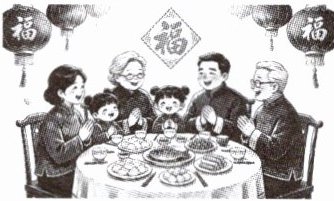
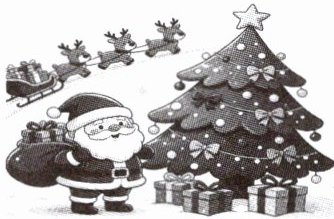
Chinese and Western(西方的) festivals are different because of different cultures(文化). Chinese festivals are about families, like the Spring Festival. We always get together, eat special food and have fun with our families. Western festivals are about joy(快乐) and friendship, like Christmas. People have parties and give gifts to each other. But one thing is the same: All festivals are happy times for people.
(
A.Having parties.
B.Eating the same food.
C.Making people happy.
Chinese and Western(西方的) festivals are different because of different cultures(文化). Chinese festivals are about families, like the Spring Festival. We always get together, eat special food and have fun with our families. Western festivals are about joy(快乐) and friendship, like Christmas. People have parties and give gifts to each other. But one thing is the same: All festivals are happy times for people.
(
C
)—What do Chinese and Western festivals have in common? —A.Having parties.
B.Eating the same food.
C.Making people happy.
答案
C
解析
【分析】本题考查阅读理解中的细节理解,需先定位短文中关于中西方节日共同点的描述,再逐一分析选项,选出正确答案。
【解析】根据短文最后一句“But one thing is the same: All festivals are happy times for people.”可知,中西方节日的共同点是都能让人开心。分析选项:A选项“Having parties”是西方节日(如圣诞节)的活动,并非中西方节日的共同点;B选项“Eating the same food”文中未提及,且中国节日吃特殊食物,不符合;C选项“Making people happy”与短文表述的共同点一致,因此选C。
【答案】C
【知识点】阅读理解细节理解、中西方文化常识
【点评】本题难度较低,只需准确提取文中关键信息即可解答,属于基础阅读理解题。
【难度系数】0.8
【解析】根据短文最后一句“But one thing is the same: All festivals are happy times for people.”可知,中西方节日的共同点是都能让人开心。分析选项:A选项“Having parties”是西方节日(如圣诞节)的活动,并非中西方节日的共同点;B选项“Eating the same food”文中未提及,且中国节日吃特殊食物,不符合;C选项“Making people happy”与短文表述的共同点一致,因此选C。
【答案】C
【知识点】阅读理解细节理解、中西方文化常识
【点评】本题难度较低,只需准确提取文中关键信息即可解答,属于基础阅读理解题。
【难度系数】0.8
