

 登录
D
13-year-old Sarah sits in her yard, looking at her creative handmade crafts on the table. There are baskets and cloth bags — all made from recycled materials. They are part of Sarah’s project to help build a greener community.
Two years ago, Sarah passed by a park near her house every day after school. Plastic bottles and broken toys were here and there. Seeing this, Sarah felt sad. One afternoon, Sarah noticed some kids selling orange juice at the park. People stopped to buy it. That was when Sarah got an idea.
“Mum, what if we sell handmade crafts?” she asked excitedly that evening, “Then we can buy trees for our neighbourhood with the money!” With her mum’s help, Sarah started making crafts with great interest, using old boxes and plastic bottles. Every day after school, she sat in her yard, waiting for customers. At first, no one came. Sarah felt down, but she didn’t give up.
Later, people began to stop by. A kind woman bought a cloth bag, saying it was perfect for shopping. Some children bought the flower pots. By the end of the first month, Sarah had made 150! She bought 30 small trees. Together with her parents, they planted the trees around the park and along the
sidewalks.
Now, the neighbourhood looks nicer, and the birds have more places to rest. Sarah even teaches her friends how to make eco-friendly crafts after school. They organise sales every month to raise money for new projects. This year, Sarah shared her story at a community event. “Making a greener community is important,” she said proudly. “If everyone helps a little, we can make our lives better. ” She believes that no effort is too small when it comes to caring for the environment.
( ) 66. What did Sarah sell to make money?
A. Small trees.
B. Orange juice.
C. Plastic bottles.
D. Handmade crafts.
( ) 67. What can we learn from Sarah’s words in the last paragraph?
A. The first step is difficult.
B. Doing is better than saying.
C. Great hopes make a great man.
D. A small effort can make a big difference.
( ) 68. Look at the mind map. Which of the following can be put in _________▲?
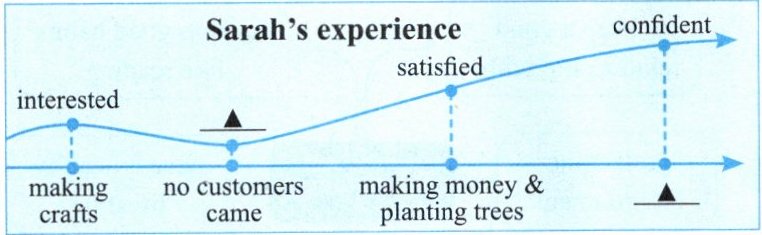
A. sad; sharing her story
B. afraid; feeding birds
C. bored; caring for nature
D. nervous; recycling old boxes
( ) 69. Which of the following can best describe Sarah?
A. Kind and honest.
B. Helpful and creative.
C. Strict and nice.
D. Quiet and hard-working.
( ) 70. What’s the best title for the passage?
A. A Girl’s Dream Job
B. A Community Park
C. A Girl’s Green Project
D. An Eco-friendly Habit
13-year-old Sarah sits in her yard, looking at her creative handmade crafts on the table. There are baskets and cloth bags — all made from recycled materials. They are part of Sarah’s project to help build a greener community.
Two years ago, Sarah passed by a park near her house every day after school. Plastic bottles and broken toys were here and there. Seeing this, Sarah felt sad. One afternoon, Sarah noticed some kids selling orange juice at the park. People stopped to buy it. That was when Sarah got an idea.
“Mum, what if we sell handmade crafts?” she asked excitedly that evening, “Then we can buy trees for our neighbourhood with the money!” With her mum’s help, Sarah started making crafts with great interest, using old boxes and plastic bottles. Every day after school, she sat in her yard, waiting for customers. At first, no one came. Sarah felt down, but she didn’t give up.
Later, people began to stop by. A kind woman bought a cloth bag, saying it was perfect for shopping. Some children bought the flower pots. By the end of the first month, Sarah had made 150! She bought 30 small trees. Together with her parents, they planted the trees around the park and along the
sidewalks.
Now, the neighbourhood looks nicer, and the birds have more places to rest. Sarah even teaches her friends how to make eco-friendly crafts after school. They organise sales every month to raise money for new projects. This year, Sarah shared her story at a community event. “Making a greener community is important,” she said proudly. “If everyone helps a little, we can make our lives better. ” She believes that no effort is too small when it comes to caring for the environment.
( ) 66. What did Sarah sell to make money?
A. Small trees.
B. Orange juice.
C. Plastic bottles.
D. Handmade crafts.
( ) 67. What can we learn from Sarah’s words in the last paragraph?
A. The first step is difficult.
B. Doing is better than saying.
C. Great hopes make a great man.
D. A small effort can make a big difference.
( ) 68. Look at the mind map. Which of the following can be put in _________▲?
A. sad; sharing her story
B. afraid; feeding birds
C. bored; caring for nature
D. nervous; recycling old boxes
( ) 69. Which of the following can best describe Sarah?
A. Kind and honest.
B. Helpful and creative.
C. Strict and nice.
D. Quiet and hard-working.
( ) 70. What’s the best title for the passage?
A. A Girl’s Dream Job
B. A Community Park
C. A Girl’s Green Project
D. An Eco-friendly Habit
答案
66. D 67. D 68. A 69. B 70. C
