

 登录
登录
四、阅读短文,根据所给单词或上下文提示,在每个空格内填入一个恰当的词。
It's always a happy moment to get some pocket money. But have you ever thought about how to spend your pocket money 1. (wise)? Now let's check out the following tips and learn to spend your money in a better way.
Make a list. We all have a lot of 2. (thing) that we want. But do you really need them that much? That's why making a 3. and a shopping list before you spend money. Start with the thing you want most. You can also write down about how much it 4. (cost) or how important it is in your life. By doing this, you will see if it is necessary to buy it and avoid unnecessary purchases.
Help others. How about being more selfless(无私的) and 5. (use) our pocket money to help others? We all know that many people in the world are in need of our help. So consider using your pocket money to do something useful and helpful, to feel how you can make a 6. (difference).
Save as much 7. you can. There is an old saying, "Money doesn't grow on trees." If you spend all your pocket money all at once, you'll have no money until your next "pay day". Get 8. piggy bank(存钱罐) or ask your parents to start a savings account for you. Someday when you look back, you'll get a strange sense of achievement by saving so much money by 9. ! Just remember: every coin 10. (count).
It's always a happy moment to get some pocket money. But have you ever thought about how to spend your pocket money 1. (wise)? Now let's check out the following tips and learn to spend your money in a better way.
Make a list. We all have a lot of 2. (thing) that we want. But do you really need them that much? That's why making a 3. and a shopping list before you spend money. Start with the thing you want most. You can also write down about how much it 4. (cost) or how important it is in your life. By doing this, you will see if it is necessary to buy it and avoid unnecessary purchases.
Help others. How about being more selfless(无私的) and 5. (use) our pocket money to help others? We all know that many people in the world are in need of our help. So consider using your pocket money to do something useful and helpful, to feel how you can make a 6. (difference).
Save as much 7. you can. There is an old saying, "Money doesn't grow on trees." If you spend all your pocket money all at once, you'll have no money until your next "pay day". Get 8. piggy bank(存钱罐) or ask your parents to start a savings account for you. Someday when you look back, you'll get a strange sense of achievement by saving so much money by 9. ! Just remember: every coin 10. (count).
答案
1. wisely 2. things 3. plan 4. costs 5. using 6. difference 7. as 8. a 9. yourself 10. counts
解析
1. 此处修饰动词短语spend your pocket money,需要使用副词形式,形容词wise的副词变形为wisely,意为“明智地”。
2. 固定短语a lot of后接可数名词时,名词要使用复数形式,thing的复数变形为things。
3. 根据上下文语境,这里指在消费前制定一个计划和购物清单,plan意为“计划”,符合语境和八年级词汇范围。
4. 主语it是第三人称单数,句子为一般现在时,谓语动词cost要使用第三人称单数形式costs。
5. 此处和前面的动名词短语being more selfless并列,共同跟在how about之后,需要用动名词形式,use的动名词变形为using。
6. 固定搭配make a difference意为“产生影响、起作用”,直接填所给提示词的原形difference即可。
7. 固定结构as much as you can意为“尽可能多地”,填入as构成搭配。
8. 此处泛指“一个存钱罐”,piggy bank是以辅音音素开头的单数可数名词,用不定冠词a。
9. 固定搭配by oneself意为“独自、靠自己”,句子主语为you,对应的反身代词是yourself。
10. 主语every coin是单数概念,句子为一般现在时,谓语动词count要使用第三人称单数形式counts。
2. 固定短语a lot of后接可数名词时,名词要使用复数形式,thing的复数变形为things。
3. 根据上下文语境,这里指在消费前制定一个计划和购物清单,plan意为“计划”,符合语境和八年级词汇范围。
4. 主语it是第三人称单数,句子为一般现在时,谓语动词cost要使用第三人称单数形式costs。
5. 此处和前面的动名词短语being more selfless并列,共同跟在how about之后,需要用动名词形式,use的动名词变形为using。
6. 固定搭配make a difference意为“产生影响、起作用”,直接填所给提示词的原形difference即可。
7. 固定结构as much as you can意为“尽可能多地”,填入as构成搭配。
8. 此处泛指“一个存钱罐”,piggy bank是以辅音音素开头的单数可数名词,用不定冠词a。
9. 固定搭配by oneself意为“独自、靠自己”,句子主语为you,对应的反身代词是yourself。
10. 主语every coin是单数概念,句子为一般现在时,谓语动词count要使用第三人称单数形式counts。
五、根据材料内容,从下面五个选项中选出能填入文中空缺处的最佳选项,使文章意思通顺、内容完整。
Money may not buy happiness, but it helps. Many teenagers want to learn how
to manage money before going out into the world. 1. This idea is raised by Dr. Mara Harvey, a money expert. The following are some of her tips.
Learn to make money. 2. Ask parents or neighbors if you can do chores to make pocket money. These could include washing a car or taking a dog for a walk. In this way, you can also improve your communication skills, it will help when you have a grown-up job, too.
Help your money grow. Money can’t grow if it’s sitting inside a piggy bank. Put your money in the bank and you can get interest(利息). 3. One day you may feel surprised at how much money you have.
Make a plan. If you have a big event, such as a holiday coming up, it might mean you will need to spend more of your pocket money. Try making a budget and a plan for spending and saving. 4. Then it will help you take control of your money.
5. Figure out how much you can reasonably spend each month. Spend your money on what you truly need. Then try to cut down on unnecessary spending. For example, rather than eating out, you can choose to cook at home.
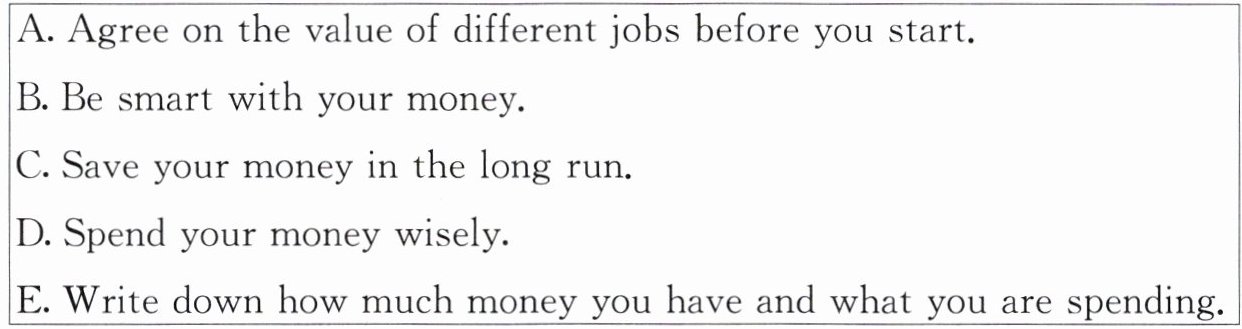
Money may not buy happiness, but it helps. Many teenagers want to learn how
to manage money before going out into the world. 1. This idea is raised by Dr. Mara Harvey, a money expert. The following are some of her tips.
Learn to make money. 2. Ask parents or neighbors if you can do chores to make pocket money. These could include washing a car or taking a dog for a walk. In this way, you can also improve your communication skills, it will help when you have a grown-up job, too.
Help your money grow. Money can’t grow if it’s sitting inside a piggy bank. Put your money in the bank and you can get interest(利息). 3. One day you may feel surprised at how much money you have.
Make a plan. If you have a big event, such as a holiday coming up, it might mean you will need to spend more of your pocket money. Try making a budget and a plan for spending and saving. 4. Then it will help you take control of your money.
5. Figure out how much you can reasonably spend each month. Spend your money on what you truly need. Then try to cut down on unnecessary spending. For example, rather than eating out, you can choose to cook at home.
答案
1. B 2. A 3. C 4. E 5. D
解析
我们可以根据上下文逻辑和段落主题逐一匹配选项:
1. 第一空:前文提到很多青少年想要在步入社会前学习理财,后文引出理财专家的相关建议,B选项“Be smart with your money. 明智地理财”总起全文,贴合上下文逻辑,引出下文的理财小贴士。
2. 第二空:本段主题是“学会赚钱”,后文介绍了通过给父母、邻居做家务赚取零花钱的方式,A选项“Agree on the value of different jobs before you start. 在开始工作前就不同工作的酬劳达成一致”,符合赚零花钱的场景逻辑,衔接自然。
3. 第三空:本段主题是“让你的钱增值”,前文提到把钱存进银行获得利息,后文提到最终你会惊讶自己攒下的钱的数额,C选项“Save your money in the long run. 长期坚持存钱”符合语境,说明长期存银行拿利息最终会积累大量财富。
4. 第四空:本段主题是“制定计划”,前文提到要做收支的预算和规划,E选项“Write down how much money you have and what you are spending. 记录下你拥有的钱数和你的支出项目”是做预算规划的具体做法,和后文“帮你掌控自己的钱”逻辑通顺。
5. 第五空:本空是本段的主题句,后文内容介绍要规划每月合理支出,只把钱花在刚需上,减少不必要的开销,D选项“Spend your money wisely. 明智地花钱”可以概括本段核心内容。
1. 第一空:前文提到很多青少年想要在步入社会前学习理财,后文引出理财专家的相关建议,B选项“Be smart with your money. 明智地理财”总起全文,贴合上下文逻辑,引出下文的理财小贴士。
2. 第二空:本段主题是“学会赚钱”,后文介绍了通过给父母、邻居做家务赚取零花钱的方式,A选项“Agree on the value of different jobs before you start. 在开始工作前就不同工作的酬劳达成一致”,符合赚零花钱的场景逻辑,衔接自然。
3. 第三空:本段主题是“让你的钱增值”,前文提到把钱存进银行获得利息,后文提到最终你会惊讶自己攒下的钱的数额,C选项“Save your money in the long run. 长期坚持存钱”符合语境,说明长期存银行拿利息最终会积累大量财富。
4. 第四空:本段主题是“制定计划”,前文提到要做收支的预算和规划,E选项“Write down how much money you have and what you are spending. 记录下你拥有的钱数和你的支出项目”是做预算规划的具体做法,和后文“帮你掌控自己的钱”逻辑通顺。
5. 第五空:本空是本段的主题句,后文内容介绍要规划每月合理支出,只把钱花在刚需上,减少不必要的开销,D选项“Spend your money wisely. 明智地花钱”可以概括本段核心内容。
