

 登录
登录
Ⅲ. Completethe passagewithproperwordsor thecorrect form ofthewordsgiven.
答案
Ⅲ. 1. an 2. mainly 3. his 4. to prove
5. tries 6. to 7. surprisingly 8. because 9. countries 10. cultural
5. tries 6. to 7. surprisingly 8. because 9. countries 10. cultural
解析
【分析】
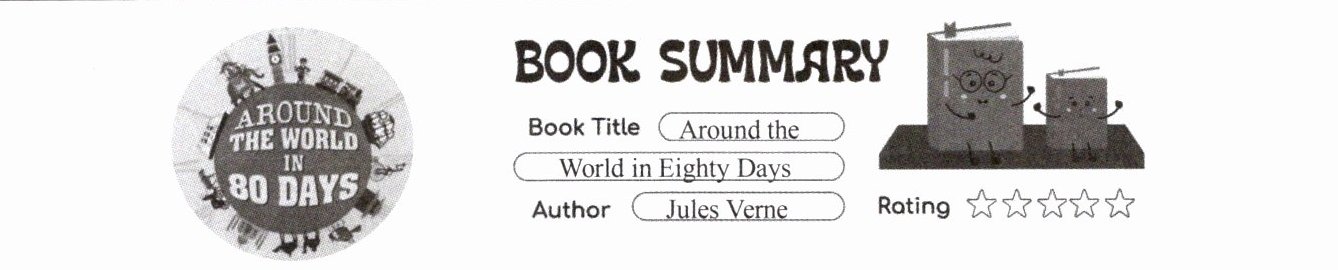
这是围绕经典名著《八十天环游地球》主题的英语短文填空题,解题时首先结合配图明确文章核心背景,先通读待填空文本梳理整体语义逻辑,再逐个分析每个空格的语法属性:判断空格所需的词性(冠词、副词、代词、非谓语动词、谓语动词、介词、连词等),结合固定搭配规则、词性转换要求、上下文语义提示,最终确定每个空的正确答案。
【解析】
1. 空格后为元音音素开头的可数名词单数,表泛指“一次”,填入不定冠词an;
2. 空格修饰谓语动词,需要将形容词main变为副词形式mainly,表“主要地”;
3. 空格修饰名词wealth,指代主角福格的财产,填入形容词性物主代词his;
4. 此处符合不定式作目的状语的用法,填入不定式to prove;
5. 主语为第三人称单数,句子为一般现在时,谓语动词try要变为第三人称单数形式tries;
6. 此处为固定搭配travel to +地点,表“去往某地旅行”,填入介词to;
7. 空格修饰整个句子作状语,需要将形容词surprising变为副词形式surprisingly,表“令人惊讶的是”;
8. 后半句是前半句的原因,引导原因状语从句填入连词because;
9. 空格前有many修饰,可数名词country要变为复数形式countries;
10. 空格修饰名词background,需要将名词culture变为形容词形式cultural,表“文化的”。
【答案】
1. an 2. mainly 3. his 4. to prove
5. tries 6. to 7. surprisingly 8. because 9. countries 10. cultural
【知识点】
短文填空,词性转换,英语固定搭配
【点评】
本题结合经典文学作品的趣味背景考察初中英语核心基础语法点,考点覆盖虚词使用、动词变形、词性转换等多个高频考点,既要求学生熟练掌握基础语法规则,也需要学生结合上下文语义逻辑做出合理判断,难度适中。
【难度系数】
0.6
这是围绕经典名著《八十天环游地球》主题的英语短文填空题,解题时首先结合配图明确文章核心背景,先通读待填空文本梳理整体语义逻辑,再逐个分析每个空格的语法属性:判断空格所需的词性(冠词、副词、代词、非谓语动词、谓语动词、介词、连词等),结合固定搭配规则、词性转换要求、上下文语义提示,最终确定每个空的正确答案。
【解析】
1. 空格后为元音音素开头的可数名词单数,表泛指“一次”,填入不定冠词an;
2. 空格修饰谓语动词,需要将形容词main变为副词形式mainly,表“主要地”;
3. 空格修饰名词wealth,指代主角福格的财产,填入形容词性物主代词his;
4. 此处符合不定式作目的状语的用法,填入不定式to prove;
5. 主语为第三人称单数,句子为一般现在时,谓语动词try要变为第三人称单数形式tries;
6. 此处为固定搭配travel to +地点,表“去往某地旅行”,填入介词to;
7. 空格修饰整个句子作状语,需要将形容词surprising变为副词形式surprisingly,表“令人惊讶的是”;
8. 后半句是前半句的原因,引导原因状语从句填入连词because;
9. 空格前有many修饰,可数名词country要变为复数形式countries;
10. 空格修饰名词background,需要将名词culture变为形容词形式cultural,表“文化的”。
【答案】
1. an 2. mainly 3. his 4. to prove
5. tries 6. to 7. surprisingly 8. because 9. countries 10. cultural
【知识点】
短文填空,词性转换,英语固定搭配
【点评】
本题结合经典文学作品的趣味背景考察初中英语核心基础语法点,考点覆盖虚词使用、动词变形、词性转换等多个高频考点,既要求学生熟练掌握基础语法规则,也需要学生结合上下文语义逻辑做出合理判断,难度适中。
【难度系数】
0.6
Ⅳ. Read the poem and complete the following tasks.
Once upon a time, in a land far away,
There lived a little boy named Jay.
He dreamed of flying up in the sky,
To see the world from way up high.
One day, he took his bag and set out,
On a journey to find what life's all about.
He hiked through forests and climbed up hills,
Sailed on boats and crossed over rills.
In each new place, he made a friend,
And learned something new before the journey's end.
From the deserts of Africa to the mountains of Nepal,
Jay saw the world and had fun.
He came back home with a smile on his face,
With memories that time cannot erase.
And he knew that he would travel once more,
To see the beauty that the world has in store.
So if you want to see the world like Jay,
Take your bags and start today.
There's a big, wide world out there to explore,
So come on, let's go, and see what's in store!
Choose the correct answer.
(
A. To introduce a boy named Jay.
B. To explain Jay's dream job.
C. To describe the beauty of the world.
D. To encourage kids to travel around.
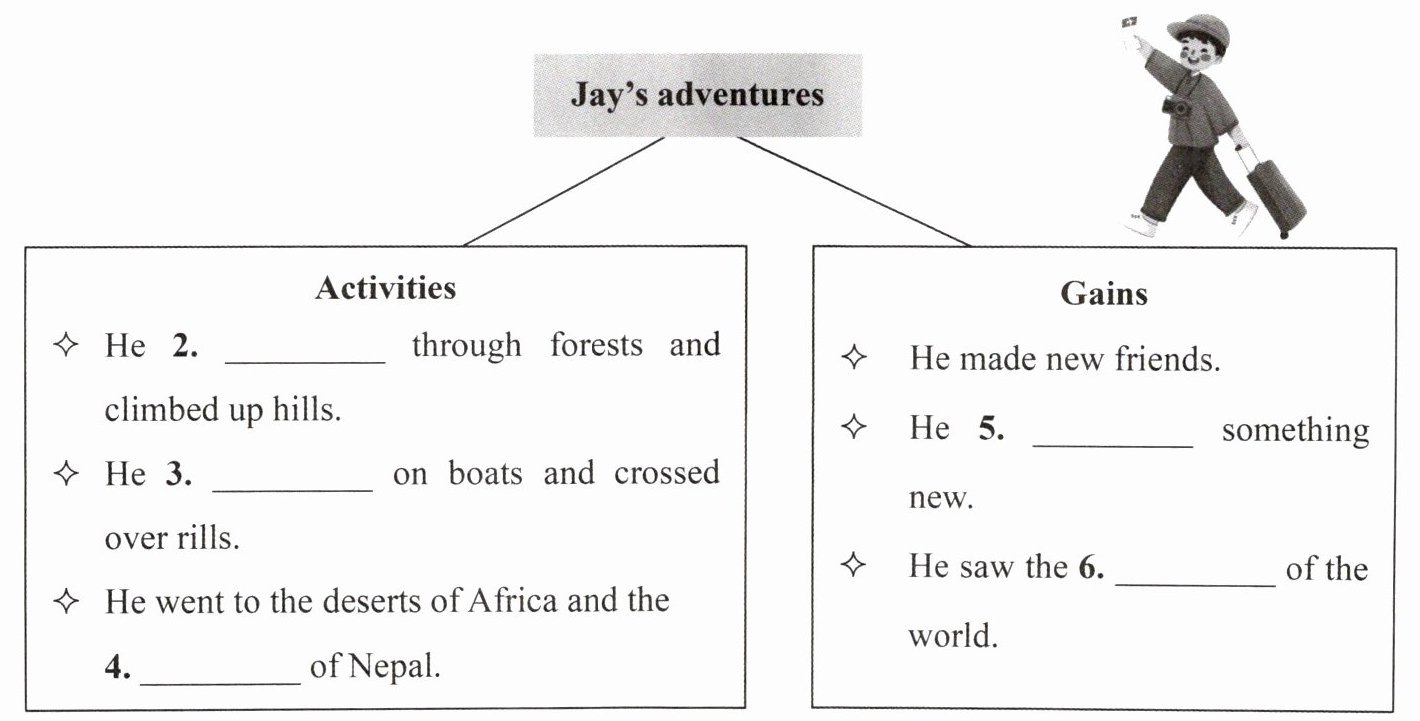
Complete the mind map.
Challenge yourself
7*. What else could Jay learn from his adventures?
Once upon a time, in a land far away,
There lived a little boy named Jay.
He dreamed of flying up in the sky,
To see the world from way up high.
One day, he took his bag and set out,
On a journey to find what life's all about.
He hiked through forests and climbed up hills,
Sailed on boats and crossed over rills.
In each new place, he made a friend,
And learned something new before the journey's end.
From the deserts of Africa to the mountains of Nepal,
Jay saw the world and had fun.
He came back home with a smile on his face,
With memories that time cannot erase.
And he knew that he would travel once more,
To see the beauty that the world has in store.
So if you want to see the world like Jay,
Take your bags and start today.
There's a big, wide world out there to explore,
So come on, let's go, and see what's in store!
Choose the correct answer.
(
D
)1. Why does the writer write the poem?A. To introduce a boy named Jay.
B. To explain Jay's dream job.
C. To describe the beauty of the world.
D. To encourage kids to travel around.
Complete the mind map.
Challenge yourself
7*. What else could Jay learn from his adventures?
One possible version: He could also learn different ways of life.
答案
Ⅳ. 1. D 2. hiked 3. sailed 4. mountains 5. learned/learnt 6. beauty 7*. One
possible version: He could also learn different ways of life.
possible version: He could also learn different ways of life.
解析
【分析】
这是一篇诗歌类阅读题,分为主旨选择、思维导图细节填空、开放拓展三个部分,解题思路如下:1. 做第1题时先通读全诗,重点关注首尾段的内容,提炼作者的写作意图,排除不符合文意的干扰选项;2. 完成思维导图的2-6空时,直接回到诗歌原文定位对应描述Jay旅行经历和收获的语句,提取匹配的词汇,注意全文描述过去的旅行,动词要使用正确的过去式形式;3. 最后开放题结合旅行的常见正向收获,写出逻辑合理的内容即可。
【解析】
1. 第1题:逐一分析选项,A选项介绍男孩Jay只是诗歌的引子,并非最终写作目的;B选项文中完全没有提及Jay的理想职业,不符合文意;C选项描述世界美景只是部分内容,不是核心目的;诗歌最后一段直接呼吁读者收拾行李出发探索广阔世界,可知作者的写作目的是鼓励孩子们去旅行探索,因此选D。
2. 第2空:定位原文语句"He hiked through forests and climbed up hills",直接提取动词过去式hiked。
3. 第3空:定位原文语句"Sailed on boats and crossed over rills",提取动词过去式sailed。
4. 第4空:定位原文语句"From the deserts of Africa to the mountains of Nepal",提取名词mountains。
5. 第5空:定位原文语句"And learned something new before the journey's end",动词过去式learned/learnt都符合要求。
6. 第6空:定位原文语句"To see the beauty that the world has in store",提取名词beauty。
7. 第7开放题:结合旅行的常见收获,写出符合逻辑的内容即可,示例答案合理。
【答案】
1. D 2. hiked 3. sailed 4. mountains 5. learned/learnt 6. beauty 7. One possible version: He could also learn different ways of life.
【知识点】
诗歌阅读理解,细节信息定位,主旨推断
【点评】
本题以旅行冒险的趣味诗歌为载体,基础细节题占比高,能考察学生快速从文本中定位信息的能力,主旨选择和开放拓展部分兼顾能力考察,引导学生主动思考旅行的多元意义,整体难度友好,符合小学初中低年级英语阅读的考察要求。
【难度系数】
0.6
这是一篇诗歌类阅读题,分为主旨选择、思维导图细节填空、开放拓展三个部分,解题思路如下:1. 做第1题时先通读全诗,重点关注首尾段的内容,提炼作者的写作意图,排除不符合文意的干扰选项;2. 完成思维导图的2-6空时,直接回到诗歌原文定位对应描述Jay旅行经历和收获的语句,提取匹配的词汇,注意全文描述过去的旅行,动词要使用正确的过去式形式;3. 最后开放题结合旅行的常见正向收获,写出逻辑合理的内容即可。
【解析】
1. 第1题:逐一分析选项,A选项介绍男孩Jay只是诗歌的引子,并非最终写作目的;B选项文中完全没有提及Jay的理想职业,不符合文意;C选项描述世界美景只是部分内容,不是核心目的;诗歌最后一段直接呼吁读者收拾行李出发探索广阔世界,可知作者的写作目的是鼓励孩子们去旅行探索,因此选D。
2. 第2空:定位原文语句"He hiked through forests and climbed up hills",直接提取动词过去式hiked。
3. 第3空:定位原文语句"Sailed on boats and crossed over rills",提取动词过去式sailed。
4. 第4空:定位原文语句"From the deserts of Africa to the mountains of Nepal",提取名词mountains。
5. 第5空:定位原文语句"And learned something new before the journey's end",动词过去式learned/learnt都符合要求。
6. 第6空:定位原文语句"To see the beauty that the world has in store",提取名词beauty。
7. 第7开放题:结合旅行的常见收获,写出符合逻辑的内容即可,示例答案合理。
【答案】
1. D 2. hiked 3. sailed 4. mountains 5. learned/learnt 6. beauty 7. One possible version: He could also learn different ways of life.
【知识点】
诗歌阅读理解,细节信息定位,主旨推断
【点评】
本题以旅行冒险的趣味诗歌为载体,基础细节题占比高,能考察学生快速从文本中定位信息的能力,主旨选择和开放拓展部分兼顾能力考察,引导学生主动思考旅行的多元意义,整体难度友好,符合小学初中低年级英语阅读的考察要求。
【难度系数】
0.6
