

 登录
登录
训练3
体裁:说明文
主题:科普知识
难度:★★★★

Have you noticed that people speak differently to babies compared to adults? Caregivers, especially mothers, change their speech when talking to young children. How? Their speech includes higher pitches(音高)and a wider pitch range(范围). They use shorter sentences and repeat words more often. You can think of it as baby talk. Researchers have recently discovered that dolphins also use baby talk with their babies.
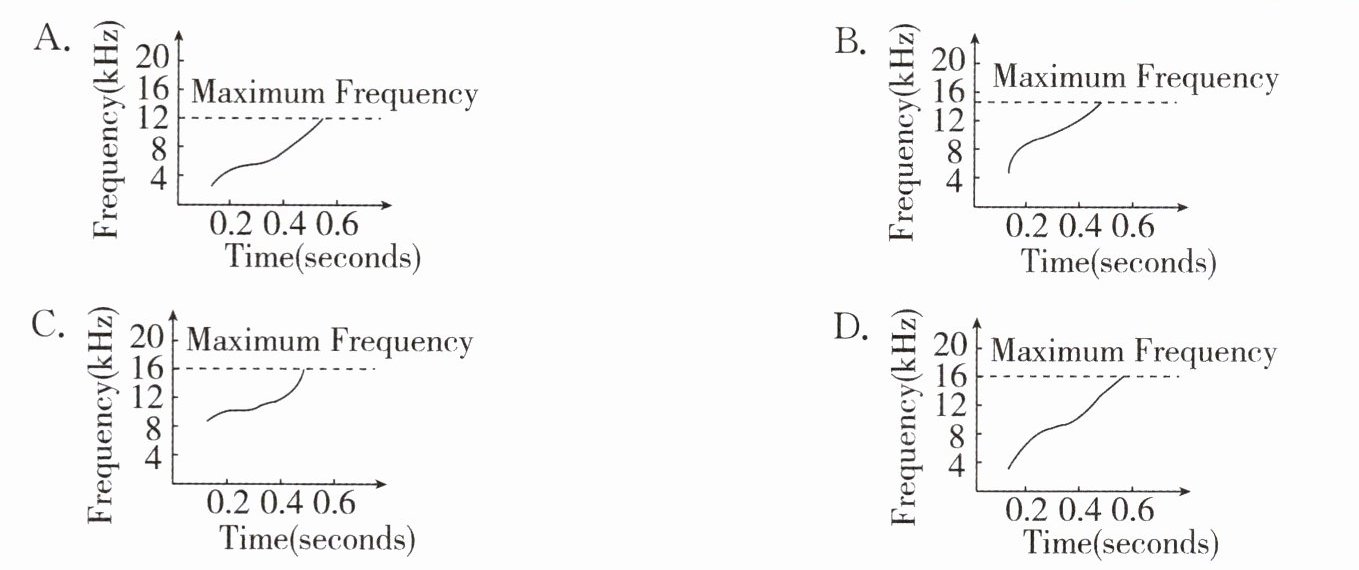
The research team recorded the sounds of 19 mother dolphins living in the Sarasota Bay area. The sounds of the same female dolphins were compared when they were with and without their babies. Chart 1 shows the sound of a female dolphin without her baby. The researchers found that when dolphins were with their babies, dolphin mothers had a wider range of frequencies(频率)of the sound—the maximum(最高)frequencies were higher and the lowest frequencies were lower.
The findings mirror how humans change the speech when speaking to babies. Dolphin “baby talk” may have a similar purpose to human “baby talk”: it may help babies learn how to phonate. We humans don’t only “baby talk” with babies, but with the children who are still learning to speak. As a result, our children are able to talk. That’s exactly what happens to dolphins. The changes in speech don’t just happen when dolphin mothers stay with very young babies, but also between mothers and babies that are closer to “toddler” age. Another possible reason for using specific pitches is to catch the children’s attention. It’s really important for a young dolphin to know “Oh, Mom is talking to me now.”
The research about baby talk in dolphins reminds us how important it is in humans. Whenever we speak with a young child, how we say things could be as important as what we say.
1. What’s one of the features of baby talk according to the first paragraph?
A. Lower pitches.
B. Longer sentences.
C. A smaller pitch range.
D. More same words.
2. 新趋势·图示理解 Which chart shows the sound that dolphin mothers make when with babies?
3. What does the underlined word “phonate” mean in Paragraph 3?
A. Make the sound.
B. Understand baby talk.
C. Change the speech.
D. Catch people’s attention.
4. Why does the writer write this passage?
A. To help people understand the sounds made by dolphins.
B. To ask people to build a good relationship with dolphins.
C. To remind people to communicate with children more often.
D. To let people be careful with the way of talking with children.
体裁:说明文
主题:科普知识
难度:★★★★
Have you noticed that people speak differently to babies compared to adults? Caregivers, especially mothers, change their speech when talking to young children. How? Their speech includes higher pitches(音高)and a wider pitch range(范围). They use shorter sentences and repeat words more often. You can think of it as baby talk. Researchers have recently discovered that dolphins also use baby talk with their babies.
The research team recorded the sounds of 19 mother dolphins living in the Sarasota Bay area. The sounds of the same female dolphins were compared when they were with and without their babies. Chart 1 shows the sound of a female dolphin without her baby. The researchers found that when dolphins were with their babies, dolphin mothers had a wider range of frequencies(频率)of the sound—the maximum(最高)frequencies were higher and the lowest frequencies were lower.
The findings mirror how humans change the speech when speaking to babies. Dolphin “baby talk” may have a similar purpose to human “baby talk”: it may help babies learn how to phonate. We humans don’t only “baby talk” with babies, but with the children who are still learning to speak. As a result, our children are able to talk. That’s exactly what happens to dolphins. The changes in speech don’t just happen when dolphin mothers stay with very young babies, but also between mothers and babies that are closer to “toddler” age. Another possible reason for using specific pitches is to catch the children’s attention. It’s really important for a young dolphin to know “Oh, Mom is talking to me now.”
The research about baby talk in dolphins reminds us how important it is in humans. Whenever we speak with a young child, how we say things could be as important as what we say.
1. What’s one of the features of baby talk according to the first paragraph?
A. Lower pitches.
B. Longer sentences.
C. A smaller pitch range.
D. More same words.
2. 新趋势·图示理解 Which chart shows the sound that dolphin mothers make when with babies?
3. What does the underlined word “phonate” mean in Paragraph 3?
A. Make the sound.
B. Understand baby talk.
C. Change the speech.
D. Catch people’s attention.
4. Why does the writer write this passage?
A. To help people understand the sounds made by dolphins.
B. To ask people to build a good relationship with dolphins.
C. To remind people to communicate with children more often.
D. To let people be careful with the way of talking with children.
答案
1. D 细节理解题。根据第一段“Their speech includes higher pitches and a wider pitch range. They use shorter sentences and repeat words more often.”可知婴儿语包括更高的音高、更宽的音高范围、更短的句子、更频繁重复的词语。故选D。
2. D 图示理解题。根据文章中的图表Chart 1和第二段“Chart 1 shows the sound of a female dolphin without her baby. The researchers found that when dolphins were with their babies, dolphin mothers had a wider range of frequencies of the sound—the maximum frequencies were higher and the lowest frequencies were lower.”可知相比没有幼崽,海豚妈妈和幼崽在一起时发出的声音频率范围更广,最高频率更高,最低频率更低。故选D。
3. A 词义猜测题。根据下文“We humans don’t only ‘baby talk’ with babies, but with the children who are still learning to speak.”可知人类会和还在学习说话的孩子们说“婴儿语”,这是为了让孩子学会说话,因此海豚的“婴儿语”也是为了帮助幼崽学习发声。故选A。
4. D 推理判断题。根据最后一段“Whenever we speak with a young child, how we say things could be as important as what we say.”可知关于海豚婴儿语的研究提醒人们该语言的重要性,当我们和幼儿交谈时,我们如何说话和我们说什么一样重要。由此可推知,作者想让人们注意与孩子说话的方式。故选D。
2. D 图示理解题。根据文章中的图表Chart 1和第二段“Chart 1 shows the sound of a female dolphin without her baby. The researchers found that when dolphins were with their babies, dolphin mothers had a wider range of frequencies of the sound—the maximum frequencies were higher and the lowest frequencies were lower.”可知相比没有幼崽,海豚妈妈和幼崽在一起时发出的声音频率范围更广,最高频率更高,最低频率更低。故选D。
3. A 词义猜测题。根据下文“We humans don’t only ‘baby talk’ with babies, but with the children who are still learning to speak.”可知人类会和还在学习说话的孩子们说“婴儿语”,这是为了让孩子学会说话,因此海豚的“婴儿语”也是为了帮助幼崽学习发声。故选A。
4. D 推理判断题。根据最后一段“Whenever we speak with a young child, how we say things could be as important as what we say.”可知关于海豚婴儿语的研究提醒人们该语言的重要性,当我们和幼儿交谈时,我们如何说话和我们说什么一样重要。由此可推知,作者想让人们注意与孩子说话的方式。故选D。
解析
【分析】
这是一篇科普类说明文,主题围绕海豚的“婴儿语”展开,设置了细节理解、图示理解、词义猜测、推理判断四类题型。解题时需先通读原文把握主旨,再针对每个小题的题型,定位原文对应信息,结合题干要求逐一分析选项,确保答案准确。
【解析】
1. 细节理解题:根据第一段关键句“Their speech includes higher pitches and a wider pitch range. They use shorter sentences and repeat words more often.”可知,婴儿语的特征包括更高的音高、更宽的音高范围、更短的句子、更频繁重复的词语。选项A(更低音高)、B(更长句子)、C(更小音高范围)均与原文不符,D(更多重复的词)符合,故选D。
2. 图示理解题:根据第二段内容,Chart 1是海豚没有幼崽时的声音,而海豚妈妈和幼崽在一起时,声音的频率范围更广,最高频率更高,最低频率更低。对比选项图表,符合该特征的是选项D,故选D。
3. 词义猜测题:根据第三段下文“We humans don’t only ‘baby talk’ with babies, but with the children who are still learning to speak. As a result, our children are able to talk.”可知,人类用婴儿语帮助孩子学习说话,由此可推知海豚的“婴儿语”目的是帮助幼崽学习发声,故“phonate”意为“发声”,对应选项A。
4. 推理判断题:根据最后一段关键句“Whenever we speak with a young child, how we say things could be as important as what we say.”可知,作者通过海豚婴儿语的研究,提醒人们和幼儿交流时,说话的方式和内容同样重要,即要注意与孩子说话的方式,对应选项D。
【答案】
1.D 2.D 3.A 4.D
【知识点】
阅读理解细节理解、阅读理解词义猜测、阅读理解推理判断
【点评】
本文为科普类阅读材料,考查学生对原文细节的定位能力、词义猜测能力及作者意图的推断能力,题型贴合初中英语阅读核心考点,需学生精准抓取原文信息,结合语境分析选项。
【难度系数】
0.4
这是一篇科普类说明文,主题围绕海豚的“婴儿语”展开,设置了细节理解、图示理解、词义猜测、推理判断四类题型。解题时需先通读原文把握主旨,再针对每个小题的题型,定位原文对应信息,结合题干要求逐一分析选项,确保答案准确。
【解析】
1. 细节理解题:根据第一段关键句“Their speech includes higher pitches and a wider pitch range. They use shorter sentences and repeat words more often.”可知,婴儿语的特征包括更高的音高、更宽的音高范围、更短的句子、更频繁重复的词语。选项A(更低音高)、B(更长句子)、C(更小音高范围)均与原文不符,D(更多重复的词)符合,故选D。
2. 图示理解题:根据第二段内容,Chart 1是海豚没有幼崽时的声音,而海豚妈妈和幼崽在一起时,声音的频率范围更广,最高频率更高,最低频率更低。对比选项图表,符合该特征的是选项D,故选D。
3. 词义猜测题:根据第三段下文“We humans don’t only ‘baby talk’ with babies, but with the children who are still learning to speak. As a result, our children are able to talk.”可知,人类用婴儿语帮助孩子学习说话,由此可推知海豚的“婴儿语”目的是帮助幼崽学习发声,故“phonate”意为“发声”,对应选项A。
4. 推理判断题:根据最后一段关键句“Whenever we speak with a young child, how we say things could be as important as what we say.”可知,作者通过海豚婴儿语的研究,提醒人们和幼儿交流时,说话的方式和内容同样重要,即要注意与孩子说话的方式,对应选项D。
【答案】
1.D 2.D 3.A 4.D
【知识点】
阅读理解细节理解、阅读理解词义猜测、阅读理解推理判断
【点评】
本文为科普类阅读材料,考查学生对原文细节的定位能力、词义猜测能力及作者意图的推断能力,题型贴合初中英语阅读核心考点,需学生精准抓取原文信息,结合语境分析选项。
【难度系数】
0.4
