

 登录
登录
C
Thirteen-year-old Sarah was busy in her yard. She carefully put her handmade works on a table. There were colorful baskets, small flower pots, and useful cloth bags. They were all made from old things like boxes, plastic bottles, and cans. These aren't just cute things for fun; they're part of her plan to make her neighborhood a greener place.
Two years ago, Sarah walked past a park near her house every day after school. She often saw plastic bottles, empty drink cans, and broken toys lying by the road. These messy scenes made her feel really sad.
One afternoon, she saw some children selling orange juice in the park. People stopped to buy it. Seeing this gave Sarah a wonderful idea. "Mom," she asked happily that evening, "what if we sell things we make? We could use the money to buy trees for our neighborhood!"
With her mom's help, Sarah started making things. She worked hard and found it meaningful to reuse old materials. Every day after school, she sat in her yard, waiting for people to buy her things. At first, nobody stopped. Sarah felt a bit sad, but she kept trying.
Soon, people began to notice her little shop. A kind woman bought a cloth bag, saying it was great for shopping. Kids loved the little flower pots. One boy even asked Sarah to make him a special basket for his toys. After one month, Sarah made 150! She bought 30 small trees and planted them with her parents along the sidewalks.
Now, the neighborhood looks much nicer. Birds have more places to rest. Sarah also teaches her friends to make green works after school. They have yard sales every month to get money for new things like bird feeders.
This year, Sarah shared her story at a community meeting. "Making our community greener is very important," she said proudly. "If everyone does a little bit, our life will be much better." Sarah truly believes that every small act matters when we care for our Earth.
根据材料内容选择最佳答案。
( )11. What materials does Sarah use to make her crafts?
A. New cloth and wood.
B. Old boxes, plastic bottles and cans.
C. Colorful paper and fresh flowers.
D. Expensive tools and metals.
( )12. What does the underlined word "messy" in Paragraph 2 probably mean?
A. Dirty and untidy.
B. Clean but untidy.
C. Busy and crowded.
D. Large and empty.
( )13. What did Sarah do with the money she earned in the first month?
A. She bought new clothes for herself.
B. She gave it to the children selling orange juice.
C. She bought 30 small trees for the neighborhood.
D. She used it to buy more materials for her crafts.
( )14. Look at the mind map. Which of the following can be put in ▲?
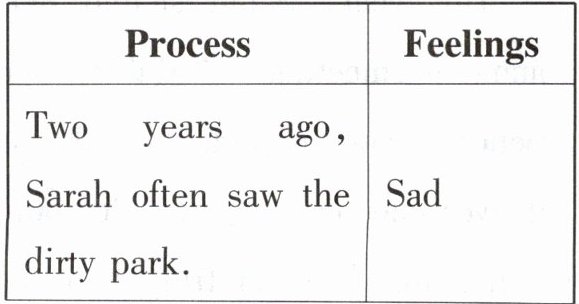
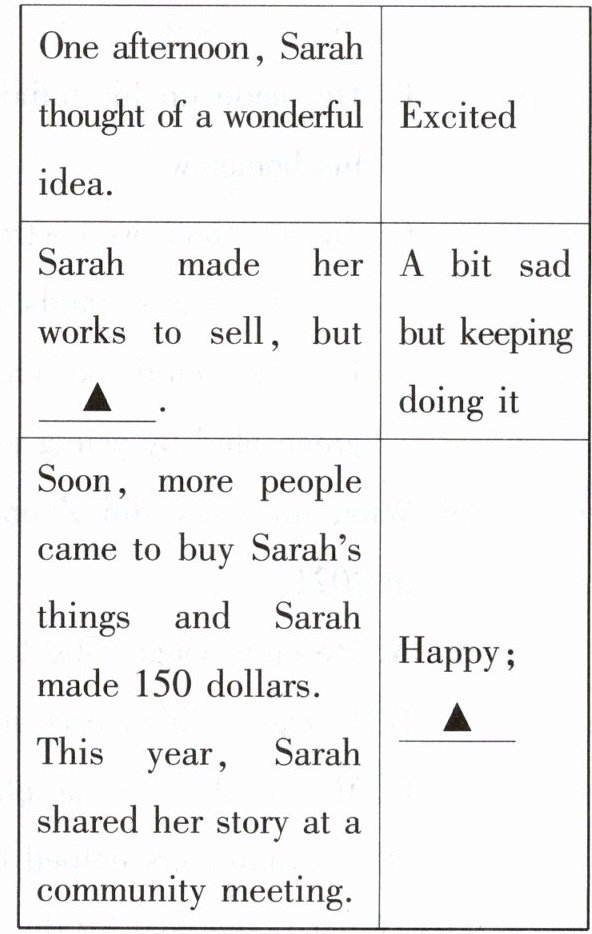
A. teaching her classmates; sad
B. feeding birds; afraid
C. recycling old boxes; nervous
D. no customers came; Proud
( )15. Which of the following is the best title for the passage?
A. Sarah's Handmade Works for Fun
B. A Girl's Efforts to Green Her Neighborhood
C. Ways to Sell Works in the Yard
D. A Park Full of Plastic Bottles
Thirteen-year-old Sarah was busy in her yard. She carefully put her handmade works on a table. There were colorful baskets, small flower pots, and useful cloth bags. They were all made from old things like boxes, plastic bottles, and cans. These aren't just cute things for fun; they're part of her plan to make her neighborhood a greener place.
Two years ago, Sarah walked past a park near her house every day after school. She often saw plastic bottles, empty drink cans, and broken toys lying by the road. These messy scenes made her feel really sad.
One afternoon, she saw some children selling orange juice in the park. People stopped to buy it. Seeing this gave Sarah a wonderful idea. "Mom," she asked happily that evening, "what if we sell things we make? We could use the money to buy trees for our neighborhood!"
With her mom's help, Sarah started making things. She worked hard and found it meaningful to reuse old materials. Every day after school, she sat in her yard, waiting for people to buy her things. At first, nobody stopped. Sarah felt a bit sad, but she kept trying.
Soon, people began to notice her little shop. A kind woman bought a cloth bag, saying it was great for shopping. Kids loved the little flower pots. One boy even asked Sarah to make him a special basket for his toys. After one month, Sarah made 150! She bought 30 small trees and planted them with her parents along the sidewalks.
Now, the neighborhood looks much nicer. Birds have more places to rest. Sarah also teaches her friends to make green works after school. They have yard sales every month to get money for new things like bird feeders.
This year, Sarah shared her story at a community meeting. "Making our community greener is very important," she said proudly. "If everyone does a little bit, our life will be much better." Sarah truly believes that every small act matters when we care for our Earth.
根据材料内容选择最佳答案。
( )11. What materials does Sarah use to make her crafts?
A. New cloth and wood.
B. Old boxes, plastic bottles and cans.
C. Colorful paper and fresh flowers.
D. Expensive tools and metals.
( )12. What does the underlined word "messy" in Paragraph 2 probably mean?
A. Dirty and untidy.
B. Clean but untidy.
C. Busy and crowded.
D. Large and empty.
( )13. What did Sarah do with the money she earned in the first month?
A. She bought new clothes for herself.
B. She gave it to the children selling orange juice.
C. She bought 30 small trees for the neighborhood.
D. She used it to buy more materials for her crafts.
( )14. Look at the mind map. Which of the following can be put in ▲?
A. teaching her classmates; sad
B. feeding birds; afraid
C. recycling old boxes; nervous
D. no customers came; Proud
( )15. Which of the following is the best title for the passage?
A. Sarah's Handmade Works for Fun
B. A Girl's Efforts to Green Her Neighborhood
C. Ways to Sell Works in the Yard
D. A Park Full of Plastic Bottles
答案
11. B
12. A 由上下文语境可知,此处的“messy”指的是那里的环境脏乱差。dirty and untidy意为“脏并且不整洁的”,符合题意。
13. C 14. D 15. B
12. A 由上下文语境可知,此处的“messy”指的是那里的环境脏乱差。dirty and untidy意为“脏并且不整洁的”,符合题意。
13. C 14. D 15. B
解析
【分析】
这是一篇英语阅读理解题,需根据原文内容逐一分析各题目:11题考查制作手工艺品的材料,需定位原文第一段找相关描述;12题考查词义猜测,需结合第二段语境判断“messy”的含义;13题考查细节查找,需定位第五段关于第一个月收入用途的内容;14题需结合原文情节发展匹配思维导图空缺;15题考查主旨大意,需梳理全文核心内容确定最佳标题。
【解析】
11题:根据原文第一段“They were all made from old things like boxes, plastic bottles, and cans.”可知Sarah用旧盒子、塑料瓶、罐子制作手工艺品,对应选项B。
12题:第二段提到路边有塑料瓶、空罐、破玩具,这些场景是脏乱不整洁的,“messy”意为“脏且不整洁的”,对应选项A。
13题:根据第五段“After one month, Sarah made 150! She bought 30 small trees and planted them with her parents along the sidewalks.”可知她用第一个月赚的钱买了30棵小树,对应选项C。
14题:原文第四段提到“At first, nobody stopped. Sarah felt a bit sad”,结合选项,只有D项“no customers came(没顾客)”符合情节,对应空缺,故选D。
15题:全文讲述Sarah通过制作手工艺品售卖,用所得钱买树让社区变绿,还教朋友做环保作品的故事,核心是女孩让社区变绿的努力,对应选项B。
【答案】11.B 12.A 13.C 14.D 15.B
【知识点】英语阅读理解,细节理解,词义猜测
【点评】本文为记叙文,通过Sarah的环保行动故事考查学生对英语阅读中基础考点的掌握,题目设置贴合日常阅读练习,难度适中。
【难度系数】0.7
这是一篇英语阅读理解题,需根据原文内容逐一分析各题目:11题考查制作手工艺品的材料,需定位原文第一段找相关描述;12题考查词义猜测,需结合第二段语境判断“messy”的含义;13题考查细节查找,需定位第五段关于第一个月收入用途的内容;14题需结合原文情节发展匹配思维导图空缺;15题考查主旨大意,需梳理全文核心内容确定最佳标题。
【解析】
11题:根据原文第一段“They were all made from old things like boxes, plastic bottles, and cans.”可知Sarah用旧盒子、塑料瓶、罐子制作手工艺品,对应选项B。
12题:第二段提到路边有塑料瓶、空罐、破玩具,这些场景是脏乱不整洁的,“messy”意为“脏且不整洁的”,对应选项A。
13题:根据第五段“After one month, Sarah made 150! She bought 30 small trees and planted them with her parents along the sidewalks.”可知她用第一个月赚的钱买了30棵小树,对应选项C。
14题:原文第四段提到“At first, nobody stopped. Sarah felt a bit sad”,结合选项,只有D项“no customers came(没顾客)”符合情节,对应空缺,故选D。
15题:全文讲述Sarah通过制作手工艺品售卖,用所得钱买树让社区变绿,还教朋友做环保作品的故事,核心是女孩让社区变绿的努力,对应选项B。
【答案】11.B 12.A 13.C 14.D 15.B
【知识点】英语阅读理解,细节理解,词义猜测
【点评】本文为记叙文,通过Sarah的环保行动故事考查学生对英语阅读中基础考点的掌握,题目设置贴合日常阅读练习,难度适中。
【难度系数】0.7
