

 登录
登录
语篇研读
五、阅读短文,完成下列任务。
How did you spend your last holiday? If much of it was spent online, you're not alone. A new survey shows that many people spend over five and a half hours online every day. But is this really helping us relax, or is it just making our brains tired?
First, let's think about how we spend our time online. Most of us watch short videos rather than engage in something more meaningful like learning a new skill. Such content, often of low value, actually makes our thinking less clear. The term "brain rot" perfectly describes what happens when we spend too much time on meaningless online things.
Meanwhile, using the Internet is like eating your favourite snack—it's hard to stop. The more time we spend on screens, the less we enjoy real life. We're missing out on beautiful sunsets, heartfelt conversations, and fun activities.
Moreover, we're forgetting how to relax in a meaningful way. Spending time with friends in real life is much better than laughing alone at a meme on your screen. Nature doesn't have Wi-Fi, but it offers better things like fresh air, sunlight, and birdsong.
In short, life isn't about how much time you have—it's about how you use it. Screens are here to stay, but they shouldn't take over our free time. The summer holiday is coming soon. Will you choose to do something more meaningful?
【任务一 理解文章内容】
1. What does the underlined phrase "brain rot" in paragraph 2 mean? (
A. Enjoying real-life activities.
B. Learning something new online.
C. Feeling sad after watching videos.
D. Thinking less clearly because of much screen time.
2. Why does the writer compare using the Internet to eating snacks? (
A. Because it's not easy to control.
B. Because it's a waste of time.
C. Because it's bad for one's health.
D. Because it's one way to have fun.
3. What does the writer suggest for a meaningful holiday? (
A. Chatting with friends online.
B. Staying indoors and using Wi-Fi.
C. Watching more educational videos.
D. Spending time with friends or in nature.
【任务二 理清文章结构】
4. How is the passage structured? (
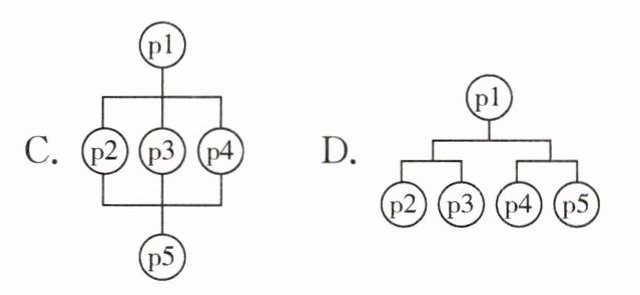
【任务三 探究文章主旨】
5. What's the best title for the passage? (
A. Advantages of Online Education
B. Smart Tips for Internet Usage
C. Short Videos' Popularity in the World
D. Balancing Screen Time and Real Life
【任务四 迁移拓展】
6. How can you enjoy your holidays without spending too much time on screens?
五、阅读短文,完成下列任务。
How did you spend your last holiday? If much of it was spent online, you're not alone. A new survey shows that many people spend over five and a half hours online every day. But is this really helping us relax, or is it just making our brains tired?
First, let's think about how we spend our time online. Most of us watch short videos rather than engage in something more meaningful like learning a new skill. Such content, often of low value, actually makes our thinking less clear. The term "brain rot" perfectly describes what happens when we spend too much time on meaningless online things.
Meanwhile, using the Internet is like eating your favourite snack—it's hard to stop. The more time we spend on screens, the less we enjoy real life. We're missing out on beautiful sunsets, heartfelt conversations, and fun activities.
Moreover, we're forgetting how to relax in a meaningful way. Spending time with friends in real life is much better than laughing alone at a meme on your screen. Nature doesn't have Wi-Fi, but it offers better things like fresh air, sunlight, and birdsong.
In short, life isn't about how much time you have—it's about how you use it. Screens are here to stay, but they shouldn't take over our free time. The summer holiday is coming soon. Will you choose to do something more meaningful?
【任务一 理解文章内容】
1. What does the underlined phrase "brain rot" in paragraph 2 mean? (
D
)A. Enjoying real-life activities.
B. Learning something new online.
C. Feeling sad after watching videos.
D. Thinking less clearly because of much screen time.
2. Why does the writer compare using the Internet to eating snacks? (
A
)A. Because it's not easy to control.
B. Because it's a waste of time.
C. Because it's bad for one's health.
D. Because it's one way to have fun.
3. What does the writer suggest for a meaningful holiday? (
D
)A. Chatting with friends online.
B. Staying indoors and using Wi-Fi.
C. Watching more educational videos.
D. Spending time with friends or in nature.
【任务二 理清文章结构】
4. How is the passage structured? (
C
)【任务三 探究文章主旨】
5. What's the best title for the passage? (
D
)A. Advantages of Online Education
B. Smart Tips for Internet Usage
C. Short Videos' Popularity in the World
D. Balancing Screen Time and Real Life
【任务四 迁移拓展】
6. How can you enjoy your holidays without spending too much time on screens?
I can try some outdoor activities, such as taking a walk, riding a bike, or having a picnic.(言之成理即可)
答案
1. D 2. A 3. D 4. C 5. D
6. I can try some outdoor activities, such as taking a walk, riding a bike, or having a picnic.(言之成理即可)
6. I can try some outdoor activities, such as taking a walk, riding a bike, or having a picnic.(言之成理即可)
解析
【分析】
1. 第1题是词义猜测题,需定位到第二段相关语句,结合上下文推断短语含义;
2. 第2题是细节理解题,定位到第三段作者的比喻描述,提取关键信息;
3. 第3题是细节理解题,定位到第四段作者关于有意义假期的建议内容;
4. 第4题是文章结构题,梳理文章整体脉络,判断结构类型;
5. 第5题是主旨大意题,结合全文核心观点确定最佳标题;
6. 第6题是开放题,围绕文章提到的现实生活、自然等有意义的活动,给出合理答案即可。
【解析】
1. 词义猜测题:根据第二段“Such content, often of low value, actually makes our thinking less clear. The term 'brain rot' perfectly describes what happens when we spend too much time on meaningless online things.”可知,“brain rot”指因长时间接触无意义线上内容导致思维不清晰,对应选项D;
2. 细节理解题:根据第三段“using the Internet is like eating your favourite snack—it's hard to stop.”可知,作者将上网比作吃零食是因为很难控制,对应选项A;
3. 细节理解题:根据第四段“Spending time with friends in real life is much better than... Nature doesn't have Wi-Fi, but it offers better things...”可知,作者建议的有意义假期是花时间和朋友相处或在自然中,对应选项D;
4. 文章结构题:文章第一段总起提出线上时间的问题,第二至第四段分点论述线上时间的弊端及有意义的放松方式,第五段总结观点,属于总-分-总结构,对应选项C;
5. 主旨大意题:全文围绕“不要让屏幕时间占据空闲,要平衡屏幕时间与现实生活”展开,最佳标题为“Balancing Screen Time and Real Life”,对应选项D;
6. 开放题:结合文章中提到的现实活动,可回答如“I can try some outdoor activities, such as taking a walk, riding a bike, or having a picnic.”(言之成理即可)。
【答案】
1. D 2. A 3. D 4. C 5. D
6. I can try some outdoor activities, such as taking a walk, riding a bike, or having a picnic.(言之成理即可)
【知识点】
英语阅读理解、词义猜测、主旨大意
【点评】
本题为英语阅读理解综合题,涵盖词义猜测、细节理解、文章结构、主旨大意等题型,考查学生定位原文信息、理解文章逻辑及主旨的能力,难度适中,符合初中英语阅读考查要求。
【难度系数】
0.6
1. 第1题是词义猜测题,需定位到第二段相关语句,结合上下文推断短语含义;
2. 第2题是细节理解题,定位到第三段作者的比喻描述,提取关键信息;
3. 第3题是细节理解题,定位到第四段作者关于有意义假期的建议内容;
4. 第4题是文章结构题,梳理文章整体脉络,判断结构类型;
5. 第5题是主旨大意题,结合全文核心观点确定最佳标题;
6. 第6题是开放题,围绕文章提到的现实生活、自然等有意义的活动,给出合理答案即可。
【解析】
1. 词义猜测题:根据第二段“Such content, often of low value, actually makes our thinking less clear. The term 'brain rot' perfectly describes what happens when we spend too much time on meaningless online things.”可知,“brain rot”指因长时间接触无意义线上内容导致思维不清晰,对应选项D;
2. 细节理解题:根据第三段“using the Internet is like eating your favourite snack—it's hard to stop.”可知,作者将上网比作吃零食是因为很难控制,对应选项A;
3. 细节理解题:根据第四段“Spending time with friends in real life is much better than... Nature doesn't have Wi-Fi, but it offers better things...”可知,作者建议的有意义假期是花时间和朋友相处或在自然中,对应选项D;
4. 文章结构题:文章第一段总起提出线上时间的问题,第二至第四段分点论述线上时间的弊端及有意义的放松方式,第五段总结观点,属于总-分-总结构,对应选项C;
5. 主旨大意题:全文围绕“不要让屏幕时间占据空闲,要平衡屏幕时间与现实生活”展开,最佳标题为“Balancing Screen Time and Real Life”,对应选项D;
6. 开放题:结合文章中提到的现实活动,可回答如“I can try some outdoor activities, such as taking a walk, riding a bike, or having a picnic.”(言之成理即可)。
【答案】
1. D 2. A 3. D 4. C 5. D
6. I can try some outdoor activities, such as taking a walk, riding a bike, or having a picnic.(言之成理即可)
【知识点】
英语阅读理解、词义猜测、主旨大意
【点评】
本题为英语阅读理解综合题,涵盖词义猜测、细节理解、文章结构、主旨大意等题型,考查学生定位原文信息、理解文章逻辑及主旨的能力,难度适中,符合初中英语阅读考查要求。
【难度系数】
0.6
