

 登录
登录
2. 读一读,根据短文内容填空。
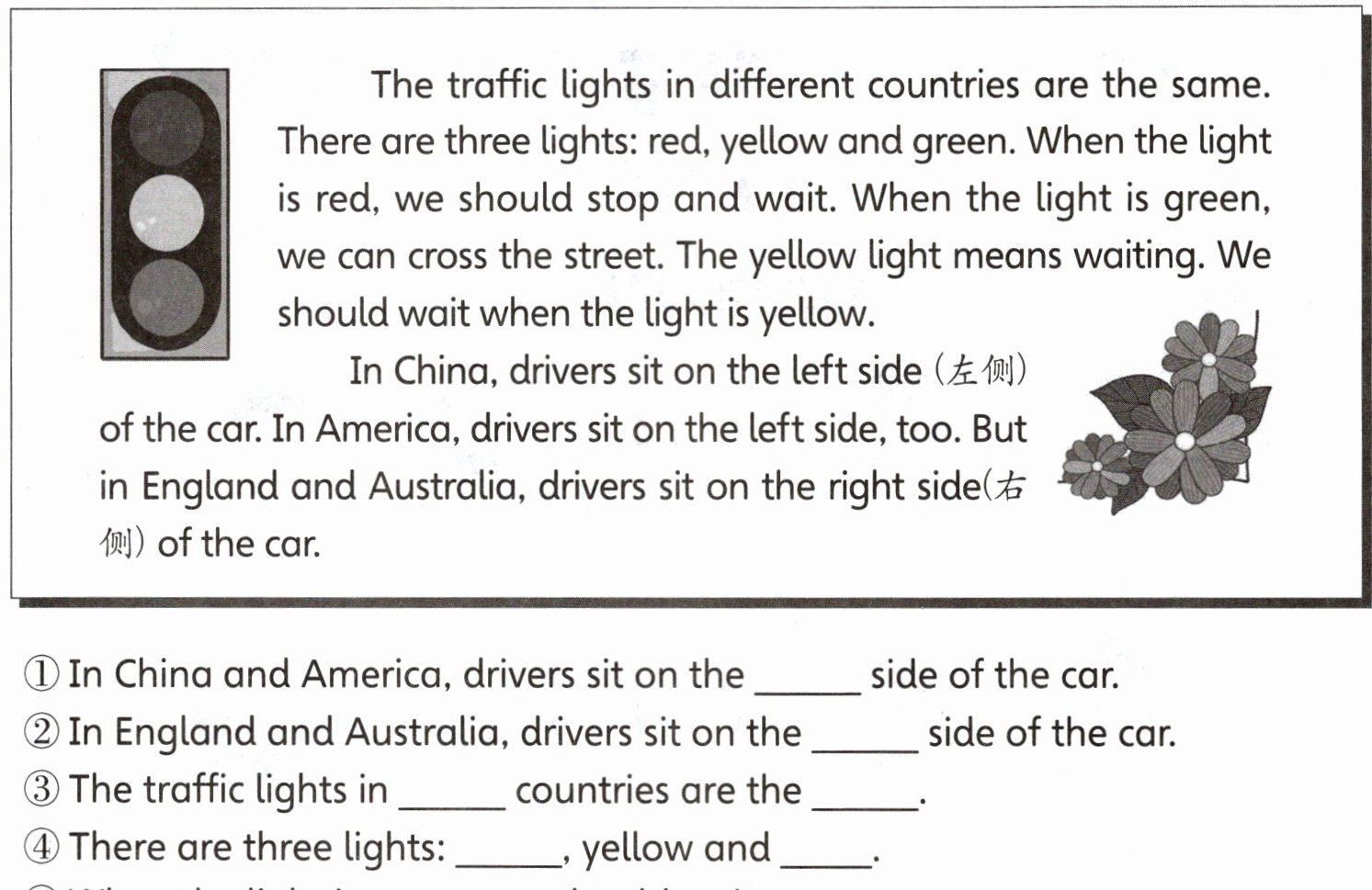
The traffic lights in different countries are the same. There are three lights: red, yellow and green. When the light is red, we should stop and wait. When the light is green, we can cross the street. The yellow light means waiting. We should wait when the light is yellow.
In China, drivers sit on the left side (左侧) of the car. In America, drivers sit on the left side, too. But in England and Australia, drivers sit on the right side(右侧) of the car.
① In China and America, drivers sit on the
② In England and Australia, drivers sit on the
③ The traffic lights in
④ There are three lights:
⑤ When the light is
The traffic lights in different countries are the same. There are three lights: red, yellow and green. When the light is red, we should stop and wait. When the light is green, we can cross the street. The yellow light means waiting. We should wait when the light is yellow.
In China, drivers sit on the left side (左侧) of the car. In America, drivers sit on the left side, too. But in England and Australia, drivers sit on the right side(右侧) of the car.
① In China and America, drivers sit on the
left
side of the car.② In England and Australia, drivers sit on the
right
side of the car.③ The traffic lights in
different
countries are the same
.④ There are three lights:
red
, yellow and green
.⑤ When the light is
yellow
, we should wait.答案
①left ②right ③different; same ④red; green ⑤yellow
解析
【分析】
这是一道基础的英语阅读细节填空题,解题思路非常清晰:不需要复杂推理,只需要先通读短文了解大意,再带着每道小题的关键词回到原文定位对应的语句,直接提取缺失的单词即可。我们可以逐个匹配:先找题干里的国家、交通灯相关关键词,在原文中找到完全对应的描述,就能直接得到答案,避免自己主观臆造内容。
【解析】
① 定位到原文第二段前两句:"In China, drivers sit on the left side (左侧) of the car. In America, drivers sit on the left side, too.",可知中国和美国的司机都在汽车左侧驾驶,空处填left。
② 定位到原文第二段最后一句:"But in England and Australia, drivers sit on the right side(右侧) of the car.",可知英国和澳大利亚的司机都在汽车右侧驾驶,空处填right。
③ 定位到原文第一段第一句:"The traffic lights in different countries are the same.",可知不同国家的交通灯是一致的,两个空依次填different、same。
④ 定位到原文第一段第二句:"There are three lights: red, yellow and green.",可知交通灯的三个颜色是红、黄、绿,两个空依次填red、green。
⑤ 定位到原文第一段最后两句:"The yellow light means waiting. We should wait when the light is yellow.",可知黄灯亮起时我们需要等待,空处填yellow。
【答案】
①left ②right ③different; same ④red; green ⑤yellow
【知识点】
阅读细节查找,交通类英语词汇,生活常识
【点评】
本题属于非常基础的阅读细节题,所有答案都能在原文中直接找到对应内容,不需要额外推导,主要锻炼学生快速定位文本信息的能力,同时还能让学生了解不同国家的交通规则小常识,只要认真对照原文找关键词就不容易出错。
【难度系数】
0.9
这是一道基础的英语阅读细节填空题,解题思路非常清晰:不需要复杂推理,只需要先通读短文了解大意,再带着每道小题的关键词回到原文定位对应的语句,直接提取缺失的单词即可。我们可以逐个匹配:先找题干里的国家、交通灯相关关键词,在原文中找到完全对应的描述,就能直接得到答案,避免自己主观臆造内容。
【解析】
① 定位到原文第二段前两句:"In China, drivers sit on the left side (左侧) of the car. In America, drivers sit on the left side, too.",可知中国和美国的司机都在汽车左侧驾驶,空处填left。
② 定位到原文第二段最后一句:"But in England and Australia, drivers sit on the right side(右侧) of the car.",可知英国和澳大利亚的司机都在汽车右侧驾驶,空处填right。
③ 定位到原文第一段第一句:"The traffic lights in different countries are the same.",可知不同国家的交通灯是一致的,两个空依次填different、same。
④ 定位到原文第一段第二句:"There are three lights: red, yellow and green.",可知交通灯的三个颜色是红、黄、绿,两个空依次填red、green。
⑤ 定位到原文第一段最后两句:"The yellow light means waiting. We should wait when the light is yellow.",可知黄灯亮起时我们需要等待,空处填yellow。
【答案】
①left ②right ③different; same ④red; green ⑤yellow
【知识点】
阅读细节查找,交通类英语词汇,生活常识
【点评】
本题属于非常基础的阅读细节题,所有答案都能在原文中直接找到对应内容,不需要额外推导,主要锻炼学生快速定位文本信息的能力,同时还能让学生了解不同国家的交通规则小常识,只要认真对照原文找关键词就不容易出错。
【难度系数】
0.9
3. 看图片,写句子。

① We should
② We shouldn't
③
.
.
.
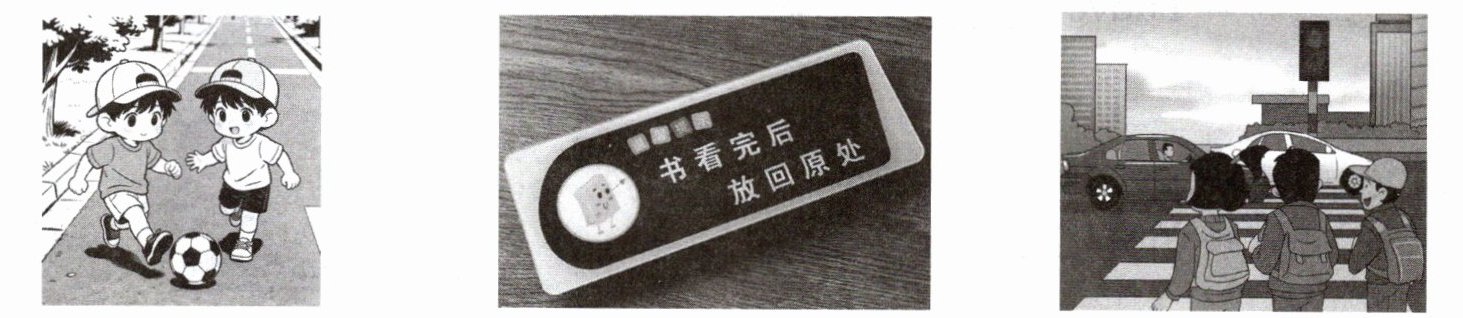
④
⑤
⑥
.
.
.
① We should
② We shouldn't
③
.
.
.
④
⑤
⑥
.
.
.
答案
①look before we cross the street ②walk on the grass ③We should wait in line. ④We shouldn't play football on the street. ⑤We should put books back before we leave. ⑥We should stop and wait.
解析
【分析】
这是一道结合场景的英语写句子题,核心考察情态动词should/shouldn't的用法。解题时首先明确:should含义为“应该”,后面接正确的文明/安全行为;shouldn't含义为“不应该”,后面接错误的违规危险行为。先对应第一组插图的公共文明、交通安全场景,完成前两个给出部分提示的句子,再结合日常行为常识自主仿写剩余的符合句式要求的句子,保证语法正确、内容和场景匹配即可。
【解析】
① 句中已有情态动词should,结合交通安全常识,过马路前要观察路况,填入对应表达look before we cross the street,句意为“我们过马路前要先观望路况”,符合逻辑。
② 句中已有情态动词的否定形式shouldn't,结合公共文明规则,践踏草坪是不被允许的行为,填入对应表达walk on the grass,句意为“我们不应该践踏草坪”,符合要求。
③ 按照should+正确行为的句式仿写,公共场合排队是正确的文明行为,可写出句子:We should wait in line.
④ 对应街道出行的场景,在街上踢足球属于危险的错误行为,用shouldn't引导写出句子:We shouldn't play football on the street.
⑤ 对应阅览场景,离开前将书籍放回原位是正确行为,用should引导写出句子:We should put books back before we leave.
⑥ 对应交通信号灯场景,遇到停止信号要停下等待,用should引导写出句子:We should stop and wait.
【答案】
①look before we cross the street ②walk on the grass ③We should wait in line. ④We shouldn't play football on the street. ⑤We should put books back before we leave. ⑥We should stop and wait.
【知识点】
情态动词should用法
情景写句
日常行为常识
【点评】
本题将英语语法知识点和生活场景、行为规范结合起来,既考察学生对should/shouldn't基础用法的掌握程度,也引导学生将英语知识和生活实际结合,难度较低,只要掌握情态动词后接动词原形的规则,结合基础的文明安全常识就能顺利完成作答。
【难度系数】
0.8
这是一道结合场景的英语写句子题,核心考察情态动词should/shouldn't的用法。解题时首先明确:should含义为“应该”,后面接正确的文明/安全行为;shouldn't含义为“不应该”,后面接错误的违规危险行为。先对应第一组插图的公共文明、交通安全场景,完成前两个给出部分提示的句子,再结合日常行为常识自主仿写剩余的符合句式要求的句子,保证语法正确、内容和场景匹配即可。
【解析】
① 句中已有情态动词should,结合交通安全常识,过马路前要观察路况,填入对应表达look before we cross the street,句意为“我们过马路前要先观望路况”,符合逻辑。
② 句中已有情态动词的否定形式shouldn't,结合公共文明规则,践踏草坪是不被允许的行为,填入对应表达walk on the grass,句意为“我们不应该践踏草坪”,符合要求。
③ 按照should+正确行为的句式仿写,公共场合排队是正确的文明行为,可写出句子:We should wait in line.
④ 对应街道出行的场景,在街上踢足球属于危险的错误行为,用shouldn't引导写出句子:We shouldn't play football on the street.
⑤ 对应阅览场景,离开前将书籍放回原位是正确行为,用should引导写出句子:We should put books back before we leave.
⑥ 对应交通信号灯场景,遇到停止信号要停下等待,用should引导写出句子:We should stop and wait.
【答案】
①look before we cross the street ②walk on the grass ③We should wait in line. ④We shouldn't play football on the street. ⑤We should put books back before we leave. ⑥We should stop and wait.
【知识点】
情态动词should用法
情景写句
日常行为常识
【点评】
本题将英语语法知识点和生活场景、行为规范结合起来,既考察学生对should/shouldn't基础用法的掌握程度,也引导学生将英语知识和生活实际结合,难度较低,只要掌握情态动词后接动词原形的规则,结合基础的文明安全常识就能顺利完成作答。
【难度系数】
0.8
