

 登录
登录
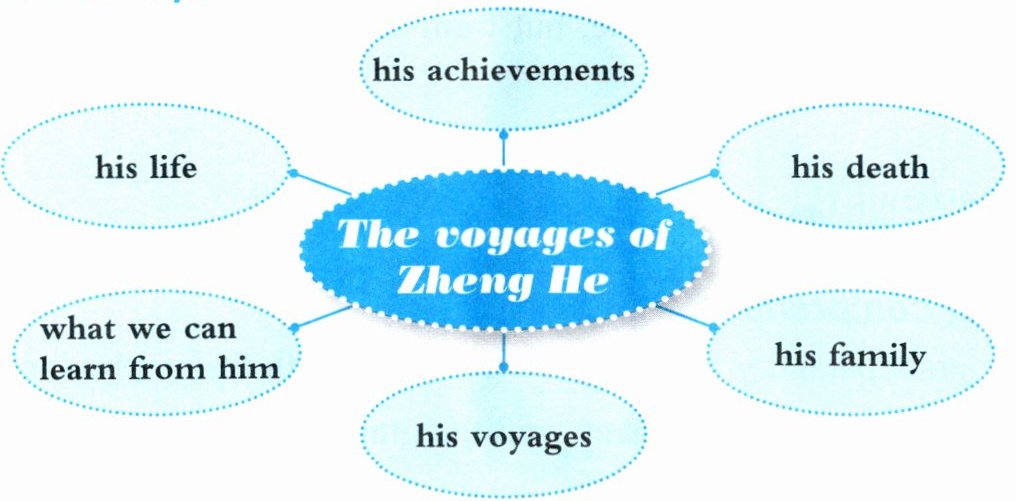
Ⅰ. Try to retell the article as well as introduce Zheng He with the help of the mindmap.
答案
Zheng He was one of the greatest sailors in Chinese history. Here is an introduction to his life, achievements, voyages, family, death, and what we can learn from him, based on the provided mindmap:
1. His Life:
Zheng He was born in 1371 in Yunnan, China. He was originally named Ma He and was of Hui ethnicity. He was captured by the Ming army during the Ming conquest of Yunnan and subsequently castrated, after which he was given the name Zheng He by the Prince of Yan, Zhu Di (later Emperor Yongle).
2. His Achievements:
Zheng He is best known for his seven major maritime expeditions, which are sometimes referred to as the "Treasure Voyages." He led these expeditions between 1405 and 1433, sailing to various countries in Southeast Asia, South Asia, the Middle East, and East Africa. These voyages helped to establish a maritime network that facilitated trade and cultural exchange between China and other nations. Zheng He's fleet was remarkable for its size and scale, with some ships being the largest wooden boats ever built.
3. His Voyages:
Zheng He's voyages began in 1405 when he was appointed by Emperor Yongle to lead a fleet of over 200 ships and more than 27,000 men. Over the next 28 years, he completed seven voyages, visiting over 30 countries and regions. These voyages were not only for trade but also for diplomatic missions, establishing Chinese presence and fostering relationships with foreign nations. The expeditions were a display of China's power and wealth, and they brought back many exotic goods, animals, and cultural artifacts.
4. His Family:
Little is known about Zheng He's family life. He was married and had at least two sons, but details about his family are scarce due to the historical focus on his maritime achievements. His family belonged to the Muslim faith, and it is believed that his voyages to various Islamic countries were partly motivated by a desire to establish connections with the Islamic world and possibly to facilitate pilgrimage to Mecca.
5. His Death:
Zheng He died in 1433 during or shortly after his seventh voyage. He passed away in Calicut, India, and was buried at sea. His death marked the end of the great treasure voyages, as subsequent emperors shifted China's focus inward, leading to a decline in maritime exploration.
6. What We Can Learn From Him:
Zheng He's life and voyages teach us the importance of exploration, courage, and cultural exchange. He demonstrated exceptional leadership and navigational skills, leading massive fleets across uncharted waters. His ability to foster diplomatic relationships and trade with diverse cultures highlights the benefits of open communication and mutual respect. Zheng He's legacy reminds us of the importance of embracing diversity and learning from other cultures, as well as the significance of perseverance and innovation in the face of challenges.
1. His Life:
Zheng He was born in 1371 in Yunnan, China. He was originally named Ma He and was of Hui ethnicity. He was captured by the Ming army during the Ming conquest of Yunnan and subsequently castrated, after which he was given the name Zheng He by the Prince of Yan, Zhu Di (later Emperor Yongle).
2. His Achievements:
Zheng He is best known for his seven major maritime expeditions, which are sometimes referred to as the "Treasure Voyages." He led these expeditions between 1405 and 1433, sailing to various countries in Southeast Asia, South Asia, the Middle East, and East Africa. These voyages helped to establish a maritime network that facilitated trade and cultural exchange between China and other nations. Zheng He's fleet was remarkable for its size and scale, with some ships being the largest wooden boats ever built.
3. His Voyages:
Zheng He's voyages began in 1405 when he was appointed by Emperor Yongle to lead a fleet of over 200 ships and more than 27,000 men. Over the next 28 years, he completed seven voyages, visiting over 30 countries and regions. These voyages were not only for trade but also for diplomatic missions, establishing Chinese presence and fostering relationships with foreign nations. The expeditions were a display of China's power and wealth, and they brought back many exotic goods, animals, and cultural artifacts.
4. His Family:
Little is known about Zheng He's family life. He was married and had at least two sons, but details about his family are scarce due to the historical focus on his maritime achievements. His family belonged to the Muslim faith, and it is believed that his voyages to various Islamic countries were partly motivated by a desire to establish connections with the Islamic world and possibly to facilitate pilgrimage to Mecca.
5. His Death:
Zheng He died in 1433 during or shortly after his seventh voyage. He passed away in Calicut, India, and was buried at sea. His death marked the end of the great treasure voyages, as subsequent emperors shifted China's focus inward, leading to a decline in maritime exploration.
6. What We Can Learn From Him:
Zheng He's life and voyages teach us the importance of exploration, courage, and cultural exchange. He demonstrated exceptional leadership and navigational skills, leading massive fleets across uncharted waters. His ability to foster diplomatic relationships and trade with diverse cultures highlights the benefits of open communication and mutual respect. Zheng He's legacy reminds us of the importance of embracing diversity and learning from other cultures, as well as the significance of perseverance and innovation in the face of challenges.
