

 登录
登录
D
Jobs
We can know people's jobs from the words they often say. So what do these persons do?
Lily's mother always says, "Don't worry. You will get well soon. Take some medicine(药)."
Jack's father always says, "Stop! Don't move. Hands up(举起手来)!"
Kate's mother always says, "Come and see for yourselves. We have all kinds of clothes at a very good price."
Ben's father always says, "What would you like to eat?"
Jenny's mother always says, "Good morning, class! Today we will have a new lesson."
根据短文内容完成表格。
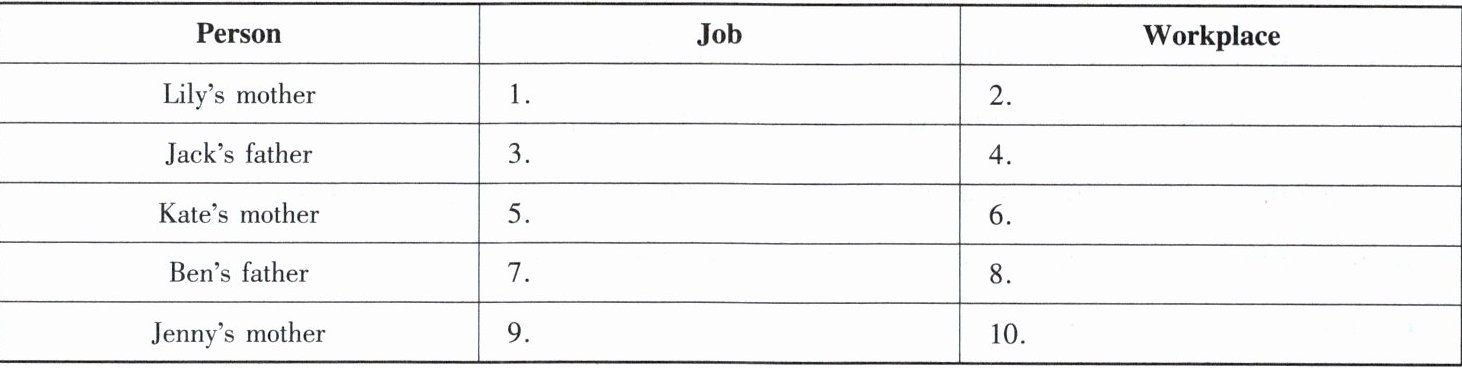
Jobs
We can know people's jobs from the words they often say. So what do these persons do?
Lily's mother always says, "Don't worry. You will get well soon. Take some medicine(药)."
Jack's father always says, "Stop! Don't move. Hands up(举起手来)!"
Kate's mother always says, "Come and see for yourselves. We have all kinds of clothes at a very good price."
Ben's father always says, "What would you like to eat?"
Jenny's mother always says, "Good morning, class! Today we will have a new lesson."
根据短文内容完成表格。
答案
1. A doctor / Nurse
2. Hospital
3. A policeman
4. Police station
5. A shop assistant / Saleswoman
6. Clothes store
7. A waiter / Cook
8. Restaurant
9. A teacher
10. School
2. Hospital
3. A policeman
4. Police station
5. A shop assistant / Saleswoman
6. Clothes store
7. A waiter / Cook
8. Restaurant
9. A teacher
10. School
解析
我们可以根据短文中不同人物的日常用语,推断出他们对应的职业和工作地点:
1. Lily的妈妈常叮嘱对方别担心、按时吃药、很快会康复,这类表述符合医护人员的工作场景,可推断出她的职业和工作地点。
2. Jack的爸爸常说出“不许动、举起手”这类指令,符合警察的工作特征,可推断出他的职业和工作地点。
3. Kate的妈妈常向顾客介绍各类价格优惠的衣服,符合服装销售人员的工作场景,可推断出她的职业和工作地点。
4. Ben的爸爸常询问对方想要吃什么,符合餐饮行业从业者的工作特征,可推断出他的职业和工作地点。
5. Jenny的妈妈常和班级学生问好、告知要上新课,符合教师的工作场景,可推断出她的职业和工作地点。
1. Lily的妈妈常叮嘱对方别担心、按时吃药、很快会康复,这类表述符合医护人员的工作场景,可推断出她的职业和工作地点。
2. Jack的爸爸常说出“不许动、举起手”这类指令,符合警察的工作特征,可推断出他的职业和工作地点。
3. Kate的妈妈常向顾客介绍各类价格优惠的衣服,符合服装销售人员的工作场景,可推断出她的职业和工作地点。
4. Ben的爸爸常询问对方想要吃什么,符合餐饮行业从业者的工作特征,可推断出他的职业和工作地点。
5. Jenny的妈妈常和班级学生问好、告知要上新课,符合教师的工作场景,可推断出她的职业和工作地点。
E
It was the last day of the winter vacation. Li Xin went to bed early in the evening. He wanted to go to school early the next morning because he couldn't wait to see his teachers and classmates. The next morning, Li Xin got up at 6:00. He looked outside. "Wow, how beautiful!" said Li Xin. There were many tress in front of his house. They were really beautiful with the white snow. Then he went to school. How did Li Xin go to school? There was much snow on the street. He decided to walk to school. Twenty minutes later, Li Xin got to school. Some teachers and students were cleaning the snow outside the school. Li Xin did it, too. He was tired, but he felt happy on the first day back to school.
1. 判断正(T)误(F)。
Li Xin went to bed early on the evening of the first school day. ()
2. 补全句子。
Li Xin wanted to go to school early because .
3. What was in front of Li Xin's house?
4. How did Li Xin go to school?
5. 将文中画线句子译成汉语。
It was the last day of the winter vacation. Li Xin went to bed early in the evening. He wanted to go to school early the next morning because he couldn't wait to see his teachers and classmates. The next morning, Li Xin got up at 6:00. He looked outside. "Wow, how beautiful!" said Li Xin. There were many tress in front of his house. They were really beautiful with the white snow. Then he went to school. How did Li Xin go to school? There was much snow on the street. He decided to walk to school. Twenty minutes later, Li Xin got to school. Some teachers and students were cleaning the snow outside the school. Li Xin did it, too. He was tired, but he felt happy on the first day back to school.
1. 判断正(T)误(F)。
Li Xin went to bed early on the evening of the first school day. ()
2. 补全句子。
Li Xin wanted to go to school early because .
3. What was in front of Li Xin's house?
4. How did Li Xin go to school?
5. 将文中画线句子译成汉语。
答案
1. F
2. he couldn't wait to see his teachers and classmates
3. There were many trees in front of his house.
4. He walked to school / He went to school on foot.
5. 白雪覆盖着这些树,它们看起来十分漂亮。
2. he couldn't wait to see his teachers and classmates
3. There were many trees in front of his house.
4. He walked to school / He went to school on foot.
5. 白雪覆盖着这些树,它们看起来十分漂亮。
解析
1. 细节判断:原文开篇说明李鑫早睡的时间是寒假的最后一天晚上,并非开学第一天的晚上,因此该表述错误。
2. 细节定位:从原文可直接找到李鑫想早去学校的原因,提取对应内容即可。
3. 细节定位:原文明确描述了李鑫家房前的事物,直接提取对应信息作答。
4. 细节定位:原文说明街上积雪很多,李鑫决定步行去上学,据此作答。
5. 句子翻译:句中They指代前文提到的树木,结合语境通顺翻译即可。
2. 细节定位:从原文可直接找到李鑫想早去学校的原因,提取对应内容即可。
3. 细节定位:原文明确描述了李鑫家房前的事物,直接提取对应信息作答。
4. 细节定位:原文说明街上积雪很多,李鑫决定步行去上学,据此作答。
5. 句子翻译:句中They指代前文提到的树木,结合语境通顺翻译即可。
