

 登录
登录
(
A.plays
B.playing
C.play
C
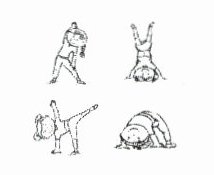
)2.Does she often ______ sports?A.plays
B.playing
C.play
答案
C
解析
题干句子是一个以"Does"开头的一般现在时一般疑问句结构,在一般现在时的一般疑问句中,当主语是第三人称单数(如she/he/it等)且谓语是实义动词时,结构为“Does + 主语 + 动词原形 + 其他?”。所以此处应使用动词原形。A选项“plays”是第三人称单数形式,B选项“playing”是动词的-ing形式,C选项“play”是动词原形,因此选C。
(
A.Sunday
B.Monday
C.Tuesday
B
)3.______ is the second day in a week.A.Sunday
B.Monday
C.Tuesday
答案
B
解析
在西方文化中,一周的第一天通常被认为是周日(Sunday),所以第二天应当是周一(Monday)。根据题目的要求,选择第二天的正确名称。
(
A.is
B.are
C.am
B
)4.John and Mike ______ helpful at home.A.is
B.are
C.am
答案
B
解析
句子的主语是John和Mike,为两个人,是复数主语,所以应该用be动词的复数形式are。is用于单数主语,am只和I搭配使用。
(

A.do
B.doing
C.to do
C
)5.I'd like ______ my homework.A.do
B.doing
C.to do
答案
C
解析
本题考查“would like”的用法。“would like”表示“想要”,常用结构为“would like to do sth.”,意为“想要做某事”,所以“I'd like”后接“to do”。
(
A.are
B.be
C.is
C
)6.There ______ lots of water in the bottle.A.are
B.be
C.is
答案
C
解析
本题考查there be句型的主谓一致。water为不可数名词,be动词应用is。
(
A.and
B.or
C.but
C
)7.I don't like carrots,______ eggplants are OK.A.and
B.or
C.but
答案
C
解析
本题可根据前后句的逻辑关系来选择合适的连词。前一句“I don't like carrots”表示“我不喜欢胡萝卜”,后一句“eggplants are OK”表示“茄子还可以”,前后句之间是转折关系。A选项“and”表示并列或顺承关系;B选项“or”表示“或者”,常用于否定句或疑问句中连接并列成分;C选项“but”表示转折关系,意为“但是”。所以此处应选“but”。
(
A./ ; the
B.the;the
C.the;/
A
)8.—Can you play ______ basketball? —No,but I can play ______ pipa.A./ ; the
B.the;the
C.the;/
答案
A
解析
在英语中,球类运动前通常不加冠词,如play basketball;而乐器前通常要加定冠词the,如play the pipa。根据这一规则,第一个空应不填冠词,第二个空应填定冠词the。因此,选项A“/ ; the”是正确的。
(
A.sandwiches
B.egg
C.tomatos
A
)9.They have some ______ for lunch today.A.sandwiches
B.egg
C.tomatos
答案
A
解析
本题可根据可数名词复数形式的规则来逐一分析选项。some 表示“一些”,后接可数名词复数或不可数名词。选项 A,sandwich 的复数形式是 sandwiches,以 ch 结尾的名词变复数时,通常加 es,sandwiches 是正确的复数形式,可用于 some 之后。选项 B,egg 是可数名词单数形式,some 后接可数名词时应用复数形式,所以该选项错误。选项 C,tomato 的复数形式是 tomatoes,以 o 结尾的名词,有生命的(如 tomato)加 es 变复数,所以 tomatos 的拼写错误。
(
A.眼见为实
B.熟能生巧
C.不能以貌取人
B
)10.What is the Chinese meaning of "Practice makes perfect"?A.眼见为实
B.熟能生巧
C.不能以貌取人
答案
B
解析
"Practice makes perfect"是五年级上册英语中常见的谚语,其对应中文意思为“熟能生巧”。A选项“眼见为实”对应的英文是"Seeing is believing";C选项“不能以貌取人”对应的英文是"You can't judge a book by its cover"。
四、Read and choose. 读句子,选择相应的图片。
(
(
(
(
(
A. B. C. D. E.

(
C
)1. There aren't any toys in the box.(
A
)2. Onions are my favourite vegetables.(
E
)3. Let's sing a birthday song together.(
B
)4. Miss Lin will be our new art teacher.(
D
)5. I have a reading class with my friends.A. B. C. D. E.
答案
1. C
2. A
3. E
4. B
5. D
2. A
3. E
4. B
5. D
解析
1. 句子“There aren't any toys in the box.”表示盒子里没有玩具,与图片C(空盒子)匹配。
2. 句子“Onions are my favourite vegetables.”表示洋葱是我最喜欢的蔬菜,与图片A(洋葱)匹配。
3. 句子“Let's sing a birthday song together.”表示让我们一起唱生日歌,与图片E(生日场景)匹配。
4. 句子“Miss Lin will be our new art teacher.”表示林老师将是我们的新美术老师,与图片B(老师拿着画笔)匹配。
5. 句子“I have a reading class with my friends.”表示我和朋友们一起上阅读课,与图片D(孩子们在阅读)匹配。
2. 句子“Onions are my favourite vegetables.”表示洋葱是我最喜欢的蔬菜,与图片A(洋葱)匹配。
3. 句子“Let's sing a birthday song together.”表示让我们一起唱生日歌,与图片E(生日场景)匹配。
4. 句子“Miss Lin will be our new art teacher.”表示林老师将是我们的新美术老师,与图片B(老师拿着画笔)匹配。
5. 句子“I have a reading class with my friends.”表示我和朋友们一起上阅读课,与图片D(孩子们在阅读)匹配。
五、Read and write. 读一读,按要求完成句子。
1. is lake many the there a house and near trees (.)(连词成句)
2. —What would you like to
—I'd like some

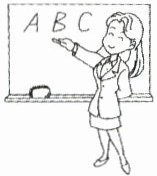
3. —What's your
—She's
4. —Do you often play the pipa on the weekend? —

5. —What do you have on
—I have maths,
]

1. is lake many the there a house and near trees (.)(连词成句)
There is a house and many trees near the lake.
2. —What would you like to
drink
?—I'd like some
tea
.3. —What's your
English
teacher like?—She's
young
and kind.4. —Do you often play the pipa on the weekend? —
No
,I don't
.5. —What do you have on
Monday
?—I have maths,
Chinese
and art.]
答案
1. There is a house and many trees near the lake.
2. drink; tea
3. English; young
4. No; don't
5. Monday; Chinese
2. drink; tea
3. English; young
4. No; don't
5. Monday; Chinese
解析
1. 考查there be句型及连词成句。there be句型结构为There is/are+主语+地点状语,is后接单数主语,"a house"为单数,"many trees"为复数,就近原则用is,地点状语"near the lake"放句末。
2. 图1为茶壶茶杯,"would like to do"后接动词,想喝东西用"drink",回答"some"后接不可数名词"tea"。
3. 图2黑板有ABC,为英语老师"English teacher",描述老师特征用形容词"young"(符合五年级常见词汇)。
4. 图3为弹吉他,问句问弹琵琶,作否定回答,"Do"开头的疑问句否定回答为"No, I don't"。
5. 图4显示“星期一”,"on Mondays"表每周一,课程有“语文”"Chinese"。
2. 图1为茶壶茶杯,"would like to do"后接动词,想喝东西用"drink",回答"some"后接不可数名词"tea"。
3. 图2黑板有ABC,为英语老师"English teacher",描述老师特征用形容词"young"(符合五年级常见词汇)。
4. 图3为弹吉他,问句问弹琵琶,作否定回答,"Do"开头的疑问句否定回答为"No, I don't"。
5. 图4显示“星期一”,"on Mondays"表每周一,课程有“语文”"Chinese"。
