

 登录
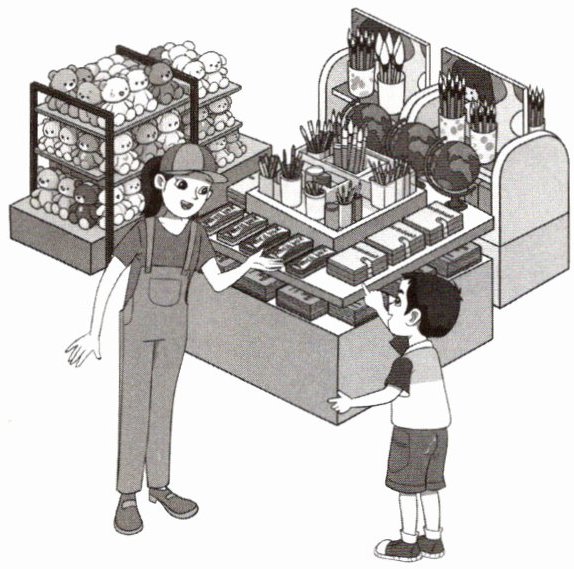
■ C. Read and choose. 读一读,选择合适的句子完成对话。
 Good morning! Can I help you?
 Good morning! 1.
 We have dolls for 100 yuan and plush ( 长毛绒 ) animals for 150 yuan.
 Sorry. 2.
 How about a small box of markers?
 Great! 3. How much is it?
 4.
 I will take one.
 5. Your sister will like it.
Thank you!
a. I want to buy a gift for my sister.
b. 15 yuan.
c. They are too expensive for me.
d. My sister likes drawing pictures.
e. Expensive things are not always better.
Good morning! Can I help you? Good morning! 1. We have dolls for 100 yuan and plush ( 长毛绒 ) animals for 150 yuan. Sorry. 2. How about a small box of markers? Great! 3. How much is it? 4. I will take one. 5. Your sister will like it.Thank you!
a. I want to buy a gift for my sister.
b. 15 yuan.
c. They are too expensive for me.
d. My sister likes drawing pictures.
e. Expensive things are not always better.
答案
1. a 2. c 3. d 4. b 5. e
解析
这是购物场景的补全对话题,结合上下文逻辑逐一匹配选项:
1. 第一空是顾客回应店员的服务询问,说明到店的来意,对应a选项,表达自己想给妹妹买礼物的需求。
2. 第二空顾客对店员推荐的百元以上的玩偶、毛绒玩具表达歉意,说明这类商品不符合自己的预算,对应c选项,说明这些商品对自己来说太贵了。
3. 第三空顾客对店员推荐的马克笔表示满意,解释马克笔适合妹妹的原因,对应d选项,说明妹妹喜欢画画,马克笔很适配需求。
4. 第四空是店员回应顾客的价格询问,对应b选项,直接报出马克笔的售价15元。
5. 第五空在顾客决定购买后,店员补充观点,衔接后文“你妹妹会喜欢它”的表述,对应e选项,表达贵的东西不一定就更好的观点,符合对话逻辑。
1. 第一空是顾客回应店员的服务询问,说明到店的来意,对应a选项,表达自己想给妹妹买礼物的需求。
2. 第二空顾客对店员推荐的百元以上的玩偶、毛绒玩具表达歉意,说明这类商品不符合自己的预算,对应c选项,说明这些商品对自己来说太贵了。
3. 第三空顾客对店员推荐的马克笔表示满意,解释马克笔适合妹妹的原因,对应d选项,说明妹妹喜欢画画,马克笔很适配需求。
4. 第四空是店员回应顾客的价格询问,对应b选项,直接报出马克笔的售价15元。
5. 第五空在顾客决定购买后,店员补充观点,衔接后文“你妹妹会喜欢它”的表述,对应e选项,表达贵的东西不一定就更好的观点,符合对话逻辑。
■ D. Read and tick. 读一读,根据本单元内容勾出正确的答语。
1. How does Jenny earn her pocket money?
She does chores every week.
She makes cookies to sell.
2. Why does Li Ming want to buy a gift for Li Meng?
Because Li Meng's birthday is coming up.
Because Li Meng is going on a trip.
3. How did Jack feel when he saw the money in the envelope?
He felt sad.
He felt surprised.
4. What does "Money doesn't grow on trees." mean?
We can earn money easily.
It's difficult to make money.
5. How can we be wise with money?
We should think carefully and spend money on the things we need.
We should buy everything we like.
答案
1. 勾选:She does chores every week.
2. 勾选:Because Li Meng's birthday is coming up.
3. 勾选:He felt surprised.
4. 勾选:It's difficult to make money.
5. 勾选:We should think carefully and spend money on the things we need.
2. 勾选:Because Li Meng's birthday is coming up.
3. 勾选:He felt surprised.
4. 勾选:It's difficult to make money.
5. 勾选:We should think carefully and spend money on the things we need.
解析
本题结合冀教版六年级上册《Pocket money》单元的课文内容和对应常识判断:
1. 单元内容里Jenny赚取零花钱的方式是每周做家务,因此选择第一个选项。
2. 李明想要给李萌买礼物的原因是李萌的生日即将到来,因此选择第一个选项。
3. Jack看到信封里的钱时的感受是惊讶,因此选择第二个选项。
4. 谚语“Money doesn't grow on trees.”的含义是钱来之不易,赚钱是很困难的,因此选择第二个选项。
5. 理性支配金钱的正确做法是谨慎考量,把钱花在自身实际需要的物品上,而非买下所有自己喜欢的东西,因此选择第一个选项。
1. 单元内容里Jenny赚取零花钱的方式是每周做家务,因此选择第一个选项。
2. 李明想要给李萌买礼物的原因是李萌的生日即将到来,因此选择第一个选项。
3. Jack看到信封里的钱时的感受是惊讶,因此选择第二个选项。
4. 谚语“Money doesn't grow on trees.”的含义是钱来之不易,赚钱是很困难的,因此选择第二个选项。
5. 理性支配金钱的正确做法是谨慎考量,把钱花在自身实际需要的物品上,而非买下所有自己喜欢的东西,因此选择第一个选项。
