

 登录
知识建构
主题:自我认识与悦纳,自我价值探索,自我挑战与提升
子主题 | 梳理与解析 | 运用与建构
--- | --- | ---
Introduction and acceptance of myself | Useful words and expressions:
suppose; feel like; instead of; although;
difference; I have got...; I can...; I like...about
myself. | She walked to work
(代替)taking the
bus this morning.
| Key words and expressions:
1. feel like,意为“感觉像”,后面可以接名
词、代词或从句。还可表示“想要做某事”,
后面接动词的-ing形式,即feel like doing
sth.,用来表达一种主观的意愿或冲动,想
要去做某事,相当于want to do sth.或
would like to do sth.。
2. “I have already...”是现在完成时的常用表
达结构,现在完成时表示过去发生的动作
对现在造成的影响或结果,或者过去开始
的动作一直持续到现在。“already”意为
“已经”,通常放在助动词“have/has”之后、
过去分词之前。 | He
(想要)going for a walk.
I already
(see)the film. I don’t want to
see it again.
Exploration of self-value | Useful words and expressions:
in search of; value; friendship; basic; realise | They went into the forest
(寻找)rare plants.
Finally we
(想出)a better way
to work out the problem.
It is the of friendship
that makes our school life
truly .(value)
| Key words and expressions:
1. come up with“提出;想出;拿出”,后面通
常接表示主意、计划、答案、办法等抽象事
物的名词。come up with an idea意为“想
出一个主意”。
2. value作名词,意为“价值,重要性”;作动
词,意为“重视,珍视”。valuable作形容词,
意为“有价值的,有用的”。
续表
主题:自我认识与悦纳,自我价值探索,自我挑战与提升
子主题 | 梳理与解析 | 运用与建构
Challenge and improvement of myself | Useful words and expressions:
fight one’s fear; try; succeed; doubt; stick to;
hold back; impossible; satisfy | My father sticks running in the park every morning, rain or shine.
| Key words and expressions: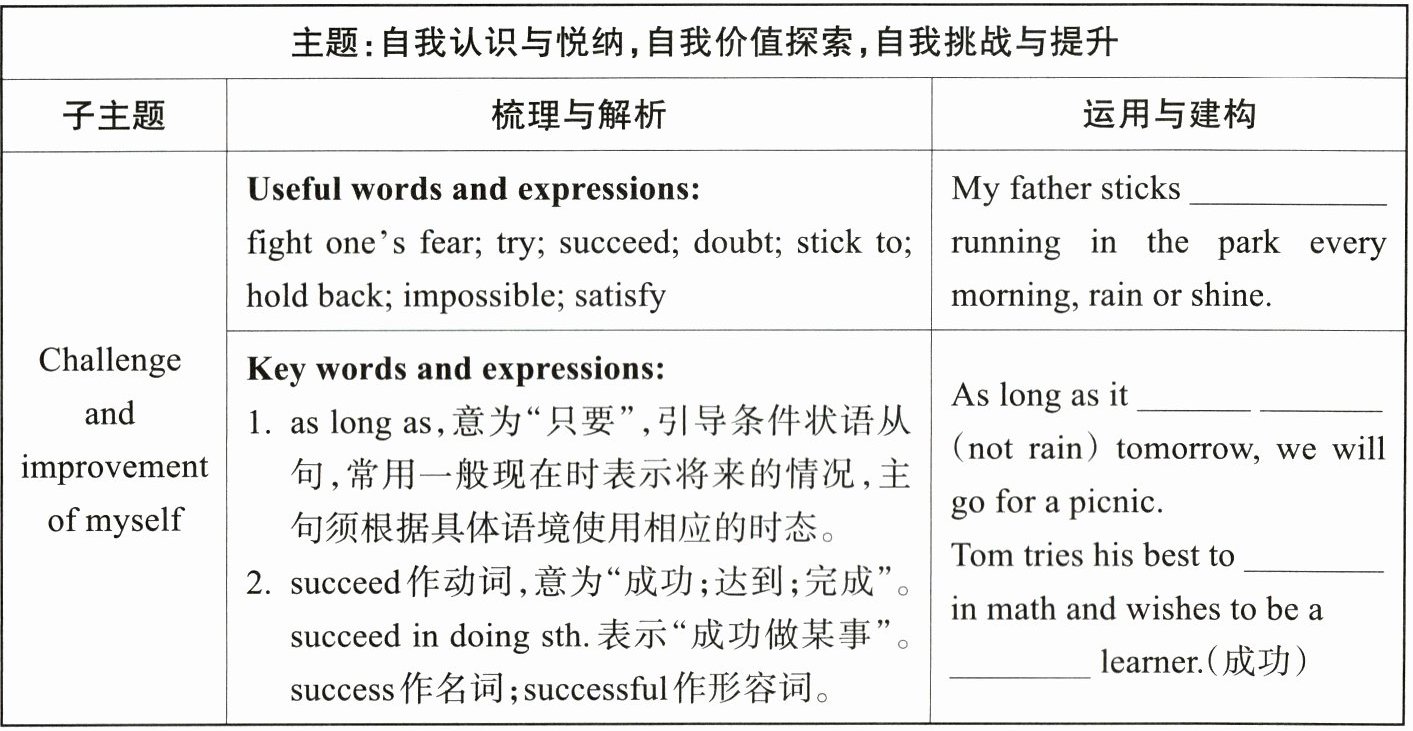
1. as long as,意为“只要”,引导条件状语从
句,常用一般现在时表示将来的情况,主
句须根据具体语境使用相应的时态。
2. succeed作动词,意为“成功;达到;完成”。
succeed in doing sth.表示“成功做某事”。
success作名词;successful作形容词。 | As long as it
(not rain)tomorrow, we will
go for a picnic.
Tom tries his best to
in math and wishes to be a
learner.(成功)
单元巩固
主题:自我认识与悦纳,自我价值探索,自我挑战与提升
子主题 | 梳理与解析 | 运用与建构
--- | --- | ---
Introduction and acceptance of myself | Useful words and expressions:
suppose; feel like; instead of; although;
difference; I have got...; I can...; I like...about
myself. | She walked to work
(代替)taking the
bus this morning.
| Key words and expressions:
1. feel like,意为“感觉像”,后面可以接名
词、代词或从句。还可表示“想要做某事”,
后面接动词的-ing形式,即feel like doing
sth.,用来表达一种主观的意愿或冲动,想
要去做某事,相当于want to do sth.或
would like to do sth.。
2. “I have already...”是现在完成时的常用表
达结构,现在完成时表示过去发生的动作
对现在造成的影响或结果,或者过去开始
的动作一直持续到现在。“already”意为
“已经”,通常放在助动词“have/has”之后、
过去分词之前。 | He
(想要)going for a walk.
I already
(see)the film. I don’t want to
see it again.
Exploration of self-value | Useful words and expressions:
in search of; value; friendship; basic; realise | They went into the forest
(寻找)rare plants.
Finally we
(想出)a better way
to work out the problem.
It is the of friendship
that makes our school life
truly .(value)
| Key words and expressions:
1. come up with“提出;想出;拿出”,后面通
常接表示主意、计划、答案、办法等抽象事
物的名词。come up with an idea意为“想
出一个主意”。
2. value作名词,意为“价值,重要性”;作动
词,意为“重视,珍视”。valuable作形容词,
意为“有价值的,有用的”。
续表
主题:自我认识与悦纳,自我价值探索,自我挑战与提升
子主题 | 梳理与解析 | 运用与建构
Challenge and improvement of myself | Useful words and expressions:
fight one’s fear; try; succeed; doubt; stick to;
hold back; impossible; satisfy | My father sticks running in the park every morning, rain or shine.
| Key words and expressions:
1. as long as,意为“只要”,引导条件状语从
句,常用一般现在时表示将来的情况,主
句须根据具体语境使用相应的时态。
2. succeed作动词,意为“成功;达到;完成”。
succeed in doing sth.表示“成功做某事”。
success作名词;successful作形容词。 | As long as it
(not rain)tomorrow, we will
go for a picnic.
Tom tries his best to
in math and wishes to be a
learner.(成功)
单元巩固
答案
instead of; feels like; have, seen; in search of; came up with; value, valuable; to; doesn't rain; succeed, successful
