

 登录
一、语篇回应(结合教材课文,根据英文要求给出适当答案)
答案
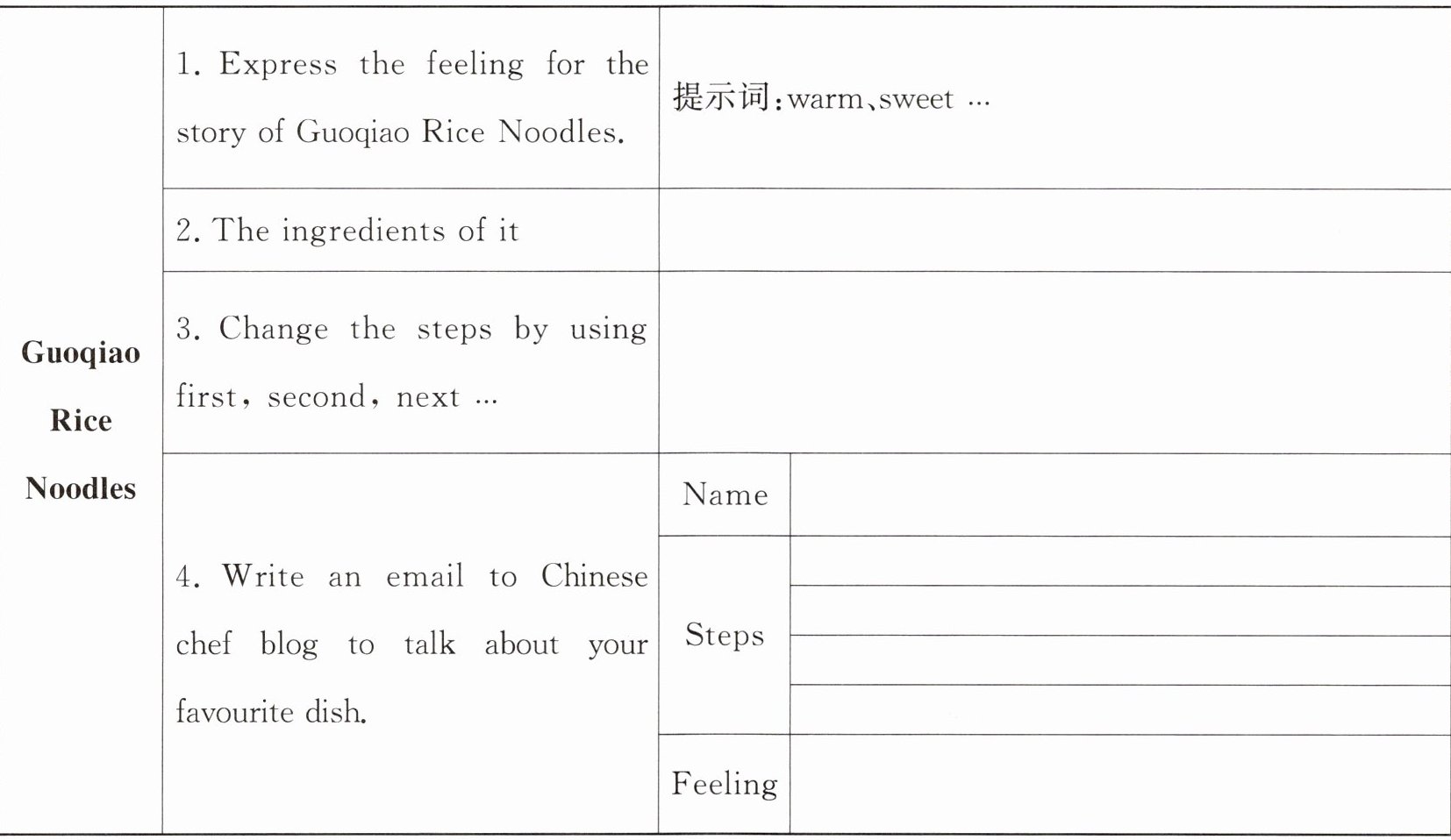
This story is full of warm and sweet affection, it shows the deep and moving love the wife had for her husband, and the delicious noodles carry the warm daily tenderness between family members.
It includes rice noodles, chicken soup, various side ingredients like sliced meat, vegetables, seasonings and so on.
First, boil the fresh and smooth rice noodles in hot water until they are fully cooked. Second, prepare the rich and fragrant hot chicken soup in a separate pot. Next, put the cooked rice noodles into the bowl, then add the pre-cooked sliced meat and fresh vegetables. After that, pour the boiling hot chicken soup over the rice noodles and side ingredients. Finally, add proper seasonings to adjust the taste, then the Guoqiao Rice Noodles are ready to serve.
Guoqiao Rice Noodles
First, boil the rice noodles in boiling water until they are soft and fully cooked. Second, heat the thick chicken soup to a boiling state. Next, put the cooked rice noodles into a serving bowl, then add sliced cooked meat, fresh green vegetables and other side dishes. After that, pour the boiling hot chicken soup into the bowl. Finally, add suitable seasonings to make the flavor just right.
Every bite of the Guoqiao Rice Noodles brings me warm and cozy feeling, the smooth noodles and rich soup make me feel the sweet warmth from traditional Chinese food culture.
情境:请你完成以下练习并收集更多信息,然后给 Tina 回一封邮件吧!
答案
Dear Tina,
I'm so happy to receive your email. You asked me about my best friend Wang Hong in your last letter, and now I'd like to tell you more about her.
Wang Hong is as outgoing as me, and we both love painting very much. She is a little more creative than me, and she always draws really wonderful pictures. She is also more hard-working at school, so she often gets better grades than me. We usually go to the art club together every Friday afternoon, and on weekends we often go to the city museum to enjoy famous paintings. Last Sunday, we went to the countryside to draw pictures of the mountains, and we had a fantastic day there.
Our school will hold an art festival next month, both Wang Hong and I will show our paintings on that festival. If you are free, would you like to come to our school and visit the painting show?
Looking forward to your reply!
Yours,
Li Hua
解析
本题是八年级上册英语的邮件写作题,写作需遵循英文邮件的标准格式,使用本单元所学的人物描述、日常活动相关表达,语句符合基础语法规则,内容贴合日常交际场景即可。参考范文设定为回应Tina此前询问你关于自己好友的相关问题,难度适配八年级上册的学习要求,没有超纲内容。
二、以读促写——读。
Chinese Dumplings:
A Delicious Symbol of Tradition
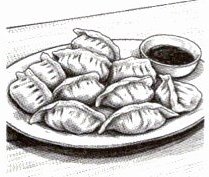
Dumplings, or jiaozi, are one of China's most loved traditional foods with a history of over 1,800 years. They were created by the "Medical Sage" Zhang Zhongjing during the Eastern Han Dynasty. At first, they were made to help people stay away from colds, with healthy herbs(药草) and other ingredients wrapped in dough skins(饺子皮). Today, dumplings are not just tasty food but also a sign of family togetherness and good luck.
Dumplings are made with thin, flexible(有弹性的) dough wrapped around different fillings. Popular choices include ground pork with cabbage, beef and onions, or shrimp and vegetables. The half-moon or ingot-like shape of dumplings looks like ancient Chinese money. So eating them during the Spring Festival is thought to bring wealth. Families often get together to make dumplings—rolling dough skins, adding fillings, and pinching small folds—sharing warm and happy moments.
There are simple ways to cook dumplings: boil, steam, or fry them. Each way gives a special taste. They are usually served with soy sauce and vinegar(醋) to make them more flavorful. A fun tradition is putting a coin in one dumpling. The lucky person who finds the coin is said to have a successful year.
Besides being delicious, dumplings carry deep cultural meaning. They connect family members of different ages, celebrate old traditions, and show hopes for a better life. Whether eaten on festivals or ordinary days, dumplings are more than just food—they are a delicious symbol of Chinese culture and family love.
任务:再读短文,补全表格。
Name:Dumplings
1. Nature: T
2. Creator:Zhang Zhongjing (Eastern Han Dynasty)
3. Original Purpose: To p
(1)Production & Flavors
(2)Popular Fillings: Pork—cabbage, beef—onion, shrimp—vegetable
(3)Cooking Methods:Boil,
(4)Cultural Symbols & Traditions
(5)Shapes:Half-moon/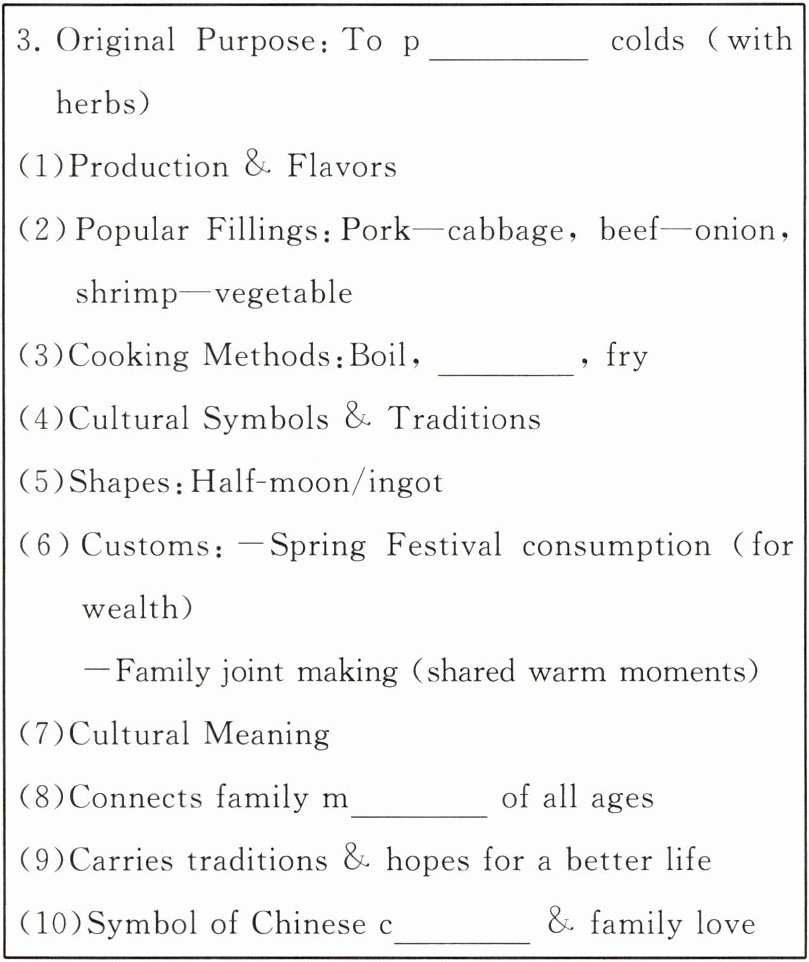
(6)Customs:—Spring Festival consumption (for wealth)
—Family joint making (shared warm moments)
(7)Cultural Meaning
(8)Connects family m
(9)Carries traditions & hopes for a better life
(10)Symbol of Chinese c
Chinese Dumplings:
A Delicious Symbol of Tradition
Dumplings, or jiaozi, are one of China's most loved traditional foods with a history of over 1,800 years. They were created by the "Medical Sage" Zhang Zhongjing during the Eastern Han Dynasty. At first, they were made to help people stay away from colds, with healthy herbs(药草) and other ingredients wrapped in dough skins(饺子皮). Today, dumplings are not just tasty food but also a sign of family togetherness and good luck.
Dumplings are made with thin, flexible(有弹性的) dough wrapped around different fillings. Popular choices include ground pork with cabbage, beef and onions, or shrimp and vegetables. The half-moon or ingot-like shape of dumplings looks like ancient Chinese money. So eating them during the Spring Festival is thought to bring wealth. Families often get together to make dumplings—rolling dough skins, adding fillings, and pinching small folds—sharing warm and happy moments.
There are simple ways to cook dumplings: boil, steam, or fry them. Each way gives a special taste. They are usually served with soy sauce and vinegar(醋) to make them more flavorful. A fun tradition is putting a coin in one dumpling. The lucky person who finds the coin is said to have a successful year.
Besides being delicious, dumplings carry deep cultural meaning. They connect family members of different ages, celebrate old traditions, and show hopes for a better life. Whether eaten on festivals or ordinary days, dumplings are more than just food—they are a delicious symbol of Chinese culture and family love.
任务:再读短文,补全表格。
Name:Dumplings
1. Nature: T
raditional
Chinese food (1800+ years of history)2. Creator:Zhang Zhongjing (Eastern Han Dynasty)
3. Original Purpose: To p
revent
colds (with herbs)(1)Production & Flavors
(2)Popular Fillings: Pork—cabbage, beef—onion, shrimp—vegetable
(3)Cooking Methods:Boil,
steam
, fry(4)Cultural Symbols & Traditions
(5)Shapes:Half-moon/
(6)Customs:—Spring Festival consumption (for wealth)
—Family joint making (shared warm moments)
(7)Cultural Meaning
(8)Connects family m
embers
of all ages(9)Carries traditions & hopes for a better life
(10)Symbol of Chinese c
ulture
& family love答案
1. Traditional
3. prevent
(3) steam
(8) members
(10) culture
