

 登录
登录
4.Tina is busy now. She
A.gave
B.gives
C.will give
C
you a call if she finishes her work.A.gave
B.gives
C.will give
答案
4.C
5.—I need this survey right now.
—Don't worry. I'll send it to you in 30 minutes.
A.How long
B.How soon
C.How often
B
can you finish it?—Don't worry. I'll send it to you in 30 minutes.
A.How long
B.How soon
C.How often
答案
5.B
二、情景交际。
根据情景提示,用得体的英语完成下列各题。
1.妈妈想让你帮忙叠衣服,她可以这样问:
2.Tom 最近学习压力很大,你建议他和老师聊聊,你可以这样说:
3.你想知道 Lucy 昨晚 9 点在做什么,可以这样问:
Lucy,
4.你想知道我们的城市有多大,可以这样问:
5.你想知道朋友是否读过 Little Women 这本书,可以这样问:
根据情景提示,用得体的英语完成下列各题。
1.妈妈想让你帮忙叠衣服,她可以这样问:
Could you help fold the clothes
?2.Tom 最近学习压力很大,你建议他和老师聊聊,你可以这样说:
Why don't you talk with/to your teacher
?3.你想知道 Lucy 昨晚 9 点在做什么,可以这样问:
Lucy,
what were you doing
at 9:00 last night?4.你想知道我们的城市有多大,可以这样问:
How big is our city
?5.你想知道朋友是否读过 Little Women 这本书,可以这样问:
Have you ever read Little Women
?答案
1.Could you help fold the clothes
2.Why don't you talk with/to your teacher
3.what were you doing
4.How big is our city
5.Have you ever read Little Women
2.Why don't you talk with/to your teacher
3.what were you doing
4.How big is our city
5.Have you ever read Little Women
三、阅读理解。
阅读下面的短文,根据短文内容,从题中所给的A、B、C、D四个选项中,选出最佳答案。
People know animals do have feelings, but they are not sure if these feelings are correctly understood. In recent years, scientists have done research about the feelings of cows, frogs and pandas. ▲ It says that humans can tell whether a chicken is happy or sad by listening to its calls.
The researchers put a bowl behind a door. Inside the bowl, sometimes, there was something chickens love to eat, such as rice or insects. Sometimes, there was nothing. When the chick-ens saw food behind the door, they seemed happy and produced fast and loud sounds, known as food calls. When there wasn't food, the chickens made low and long noises to express disappointment. The researchers recorded all these sounds and studied their waves.
Then the researchers chose 16 recordings of such chicken noises. Half were from the chickens seeing the food and half were from the chickens finding no food. The recordings were played to 194 volunteers. Sixty-nine percent of the volunteers correctly understood whether the chickens were feeling happy or not, and some of them even had no experience of taking care of chickens.
The result shows that humans have the natural ability to understand the feelings of chickens. Hopefully, this finding can bring about new technology to help with chicken-raising, a big industry in many countries. Some scientists are already working on a smart computer program that can identify chickens' feelings. This is good news for farmers who want to make the birds happier and healthier.
1. Which of the following can be put in "▲" in paragraph 1? (
A. Humans may not like animals.
B. Scientists know nothing about it.
C. Nobody knows why this happens.
D. A new study adds chickens to the list.
2. Which is most probably the sound wave of a happy call by a chicken? (
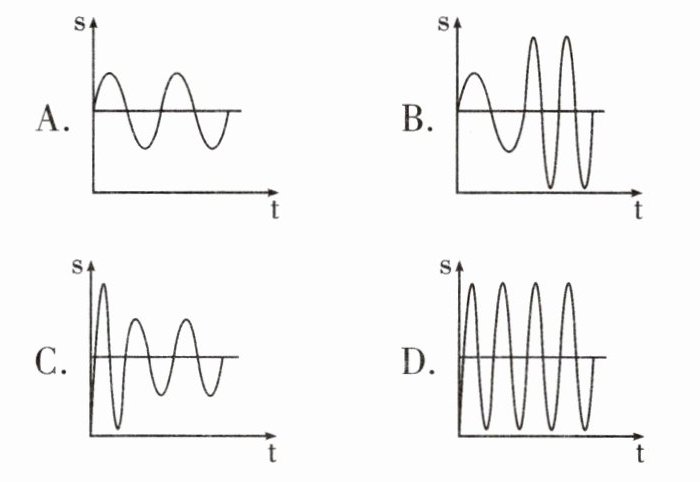
3. How did the volunteers help with the research? (
A. By listening to the chicken calls.
B. By finding food for the chickens.
C. By taking care of the chickens.
D. By making the chickens happy.
4. What does the underlined word "identify" mean in paragraph 4? (
A. Control.
B. Hide.
C. Recognize.
D. Hurt.
5. What is the best title for the text? (
A. Smart Farmers, Healthy Farmers
B. Happy Chickens, Sad Chickens
C. Farmers' Best Choice
D. Chickens' Food Calls
阅读下面的短文,根据短文内容,从题中所给的A、B、C、D四个选项中,选出最佳答案。
People know animals do have feelings, but they are not sure if these feelings are correctly understood. In recent years, scientists have done research about the feelings of cows, frogs and pandas. ▲ It says that humans can tell whether a chicken is happy or sad by listening to its calls.
The researchers put a bowl behind a door. Inside the bowl, sometimes, there was something chickens love to eat, such as rice or insects. Sometimes, there was nothing. When the chick-ens saw food behind the door, they seemed happy and produced fast and loud sounds, known as food calls. When there wasn't food, the chickens made low and long noises to express disappointment. The researchers recorded all these sounds and studied their waves.
Then the researchers chose 16 recordings of such chicken noises. Half were from the chickens seeing the food and half were from the chickens finding no food. The recordings were played to 194 volunteers. Sixty-nine percent of the volunteers correctly understood whether the chickens were feeling happy or not, and some of them even had no experience of taking care of chickens.
The result shows that humans have the natural ability to understand the feelings of chickens. Hopefully, this finding can bring about new technology to help with chicken-raising, a big industry in many countries. Some scientists are already working on a smart computer program that can identify chickens' feelings. This is good news for farmers who want to make the birds happier and healthier.
1. Which of the following can be put in "▲" in paragraph 1? (
D
)A. Humans may not like animals.
B. Scientists know nothing about it.
C. Nobody knows why this happens.
D. A new study adds chickens to the list.
2. Which is most probably the sound wave of a happy call by a chicken? (
D
)3. How did the volunteers help with the research? (
A
)A. By listening to the chicken calls.
B. By finding food for the chickens.
C. By taking care of the chickens.
D. By making the chickens happy.
4. What does the underlined word "identify" mean in paragraph 4? (
C
)A. Control.
B. Hide.
C. Recognize.
D. Hurt.
5. What is the best title for the text? (
B
)A. Smart Farmers, Healthy Farmers
B. Happy Chickens, Sad Chickens
C. Farmers' Best Choice
D. Chickens' Food Calls
答案
1.D 2.D 3.A 4.C 5.B
