

 登录
登录
一、补全对话。
从方框中选择合适的句子补全对话(其中有一项多余)。
A:Hi, Mike. You look worried. What's wrong?
B:Hi, Lily. I have an English test tomorrow, but I'm not ready for it.
A:Don't worry. 1.
B:I'm not sure. I just read the textbook.
A:That's not enough. 2.
B:That's a good idea. But I'm also poor at writing.
A:3.
B:OK, I'll try that. 4.
A:Yes. If you don't understand anything, ask the teacher after class.
B:I will. 5.
A:You're welcome. I believe you can do well in the test.
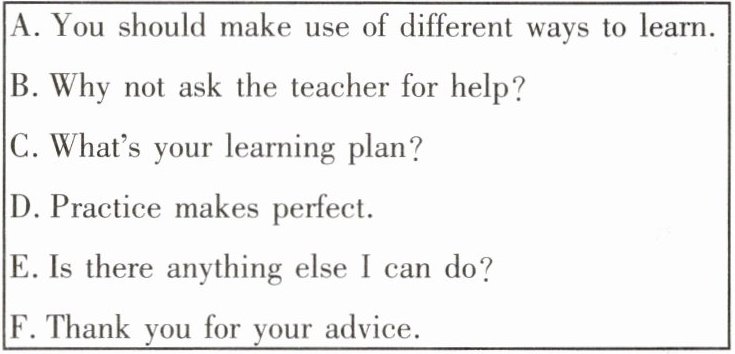
从方框中选择合适的句子补全对话(其中有一项多余)。
A:Hi, Mike. You look worried. What's wrong?
B:Hi, Lily. I have an English test tomorrow, but I'm not ready for it.
A:Don't worry. 1.
C
B:I'm not sure. I just read the textbook.
A:That's not enough. 2.
A
For example, you can listen to English tapes to practice listening.B:That's a good idea. But I'm also poor at writing.
A:3.
D
You can write short diaries in English every day.B:OK, I'll try that. 4.
E
A:Yes. If you don't understand anything, ask the teacher after class.
B:I will. 5.
F
A:You're welcome. I believe you can do well in the test.
答案
1. C 2. A 3. D 4. E 5. F
二、阅读理解。
Helen Keller was born in America in 1880. When she was very young, she became very ill. After that, she could not see or hear. As a result, she also couldn't speak. For a few years, she lived in a dark and silent world. She often felt angry and hopeless.
Everything changed when her teacher, Anne Sullivan, came into her life. Anne was strict but patient. She taught Helen that everything had a name. She spelled words into Helen's hand. At first, Helen didn't understand. One day, Anne put Helen's hand under running water and spelled “W-A-T-
E-R” on her other hand. Suddenly, Helen realized the secret of language. She understood that the cool, flowing thing was called “water”. From that day, she was thirsty for knowledge.
Helen learned to read Braille(盲文) with her fingers. She learned to write and type. She even learned to speak, though it was very difficult. Later, she went to college and became the first deaf-blind person to get a university degree. She traveled around the world, wrote books, and gave speeches to encourage people with difficulties. She said, “Although the world is full of suffering, it is also full of the overcoming of it.”
Helen's story teaches us that with a strong will, patience, and the right help, we can overcome great difficulties and become lifelong learners.
根据短文内容,选择最佳答案。
(
A. She couldn't see or hear.
B. She couldn't walk.
C. She lost her family.
D. She moved to another country.
(
A. By showing her a picture of water.
B. By spelling it into her hand while letting her feel real water.
C. By writing it on paper.
D. By saying it loudly many times.
(
A. Wanting to drink water very much.
B. Having a strong desire to learn.
C. Feeling tired of studying.
D. Being good at asking questions.
(
A. She became a teacher for the deaf and blind.
B. She stayed at home and wrote diaries.
C. She traveled, wrote books, and encouraged others.
D. She invented a new language for the blind.
(
A. Learning languages is very easy.
B. People with disabilities cannot be successful.
C. With a strong will and help, we can overcome difficulties and keep learning.
D. Only teachers can change a person's life.
Helen Keller was born in America in 1880. When she was very young, she became very ill. After that, she could not see or hear. As a result, she also couldn't speak. For a few years, she lived in a dark and silent world. She often felt angry and hopeless.
Everything changed when her teacher, Anne Sullivan, came into her life. Anne was strict but patient. She taught Helen that everything had a name. She spelled words into Helen's hand. At first, Helen didn't understand. One day, Anne put Helen's hand under running water and spelled “W-A-T-
E-R” on her other hand. Suddenly, Helen realized the secret of language. She understood that the cool, flowing thing was called “water”. From that day, she was thirsty for knowledge.
Helen learned to read Braille(盲文) with her fingers. She learned to write and type. She even learned to speak, though it was very difficult. Later, she went to college and became the first deaf-blind person to get a university degree. She traveled around the world, wrote books, and gave speeches to encourage people with difficulties. She said, “Although the world is full of suffering, it is also full of the overcoming of it.”
Helen's story teaches us that with a strong will, patience, and the right help, we can overcome great difficulties and become lifelong learners.
根据短文内容,选择最佳答案。
(
A
)1. What happened to Helen Keller when she was young?A. She couldn't see or hear.
B. She couldn't walk.
C. She lost her family.
D. She moved to another country.
(
B
)2. How did Anne Sullivan teach Helen the word “water”?A. By showing her a picture of water.
B. By spelling it into her hand while letting her feel real water.
C. By writing it on paper.
D. By saying it loudly many times.
(
B
)3. What does the underlined phrase“thirsty for knowledge” mean in Paragraph 2?A. Wanting to drink water very much.
B. Having a strong desire to learn.
C. Feeling tired of studying.
D. Being good at asking questions.
(
C
)4. What did Helen Keller do after she grew up?A. She became a teacher for the deaf and blind.
B. She stayed at home and wrote diaries.
C. She traveled, wrote books, and encouraged others.
D. She invented a new language for the blind.
(
C
)5. What is the most important lesson from Helen's story?A. Learning languages is very easy.
B. People with disabilities cannot be successful.
C. With a strong will and help, we can overcome difficulties and keep learning.
D. Only teachers can change a person's life.
答案
1. A 2. B 3. B 4. C 5. C
