

 登录
登录
receive
【感知】
» person receiving the email接收电子邮件的人
» I received a letter from my friend.
我收到了朋友的来信。
» They are very glad to have the opportunity to
receive the honoured guests.
他们很高兴有机会接待贵宾。
» Why did you accept the invitation?
你为什么接受邀请?
【探究】
(1)receive 动词,意为"收到",常用短语
,意为"从某人/某处收到某物",
receive还可意为"招待;接待"。
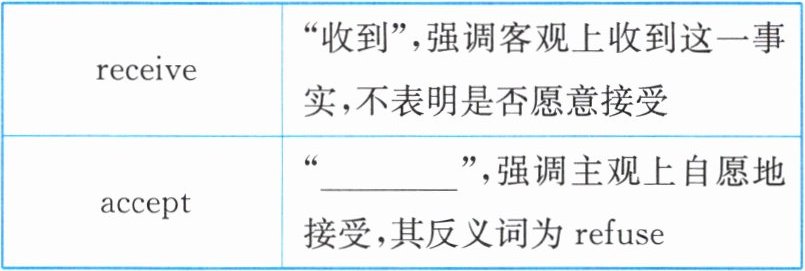
(2)receive和accept的用法辨析
【应用】
①用所给单词的适当形式填空:The children in
the mountains
from many warm-hearted people yesterday.
②单项填空:—Did you
—Yes, but I'm not sure if I should
offer.
A. receive; accept B. accept; receive
C. receive; receive D. accept; accept
【感知】
» person receiving the email接收电子邮件的人
» I received a letter from my friend.
我收到了朋友的来信。
» They are very glad to have the opportunity to
receive the honoured guests.
他们很高兴有机会接待贵宾。
» Why did you accept the invitation?
你为什么接受邀请?
【探究】
(1)receive 动词,意为"收到",常用短语
receive sth from sb/sth
,意为"从某人/某处收到某物",
receive还可意为"招待;接待"。
(2)receive和accept的用法辨析
【应用】
①用所给单词的适当形式填空:The children in
the mountains
received
new booksfrom many warm-hearted people yesterday.
②单项填空:—Did you
receive
his email?—Yes, but I'm not sure if I should
accept
hisoffer.
A. receive; accept B. accept; receive
C. receive; receive D. accept; accept
答案
【语言知识·探究】
[探究](1)receive sth from sb/sth
(2)接受
[应用]①received ②A
[探究](1)receive sth from sb/sth
(2)接受
[应用]①received ②A
解析
【分析】
本题考查易混动词receive和accept的词义辨析、常用搭配及一般过去时的动词变形。解题时需先明确:receive侧重客观上“收到”,不涉及主观意愿,常用搭配为receive sth from sb/sth;accept侧重主观上“自愿接受”,反义词为refuse。再结合题目中的时间标志、语境选择正确形式或答案。
【解析】
【探究】
(1) 表示“从某人/某处收到某物”的receive常用短语为receive sth from sb/sth。
(2) accept的中文含义是“接受”,强调主观自愿接受。
【应用】
① 句中时间状语为yesterday,需用一般过去时,receive的过去式为received,故填received。
② 第一空表示“收到邮件”,是客观动作,用receive;第二空表示“接受提议”,是主观动作,用accept,因此选A选项。
【答案】
【探究】(1) receive sth from sb/sth;(2) 接受
【应用】① received;② A
【知识点】
动词词义辨析;动词短语;一般过去时
【点评】
本题围绕易混动词receive和accept展开,涵盖词义、搭配及时态应用,是英语基础考点的典型考查,需准确区分两个动词的核心差异。
【难度系数】
0.5
本题考查易混动词receive和accept的词义辨析、常用搭配及一般过去时的动词变形。解题时需先明确:receive侧重客观上“收到”,不涉及主观意愿,常用搭配为receive sth from sb/sth;accept侧重主观上“自愿接受”,反义词为refuse。再结合题目中的时间标志、语境选择正确形式或答案。
【解析】
【探究】
(1) 表示“从某人/某处收到某物”的receive常用短语为receive sth from sb/sth。
(2) accept的中文含义是“接受”,强调主观自愿接受。
【应用】
① 句中时间状语为yesterday,需用一般过去时,receive的过去式为received,故填received。
② 第一空表示“收到邮件”,是客观动作,用receive;第二空表示“接受提议”,是主观动作,用accept,因此选A选项。
【答案】
【探究】(1) receive sth from sb/sth;(2) 接受
【应用】① received;② A
【知识点】
动词词义辨析;动词短语;一般过去时
【点评】
本题围绕易混动词receive和accept展开,涵盖词义、搭配及时态应用,是英语基础考点的典型考查,需准确区分两个动词的核心差异。
【难度系数】
0.5
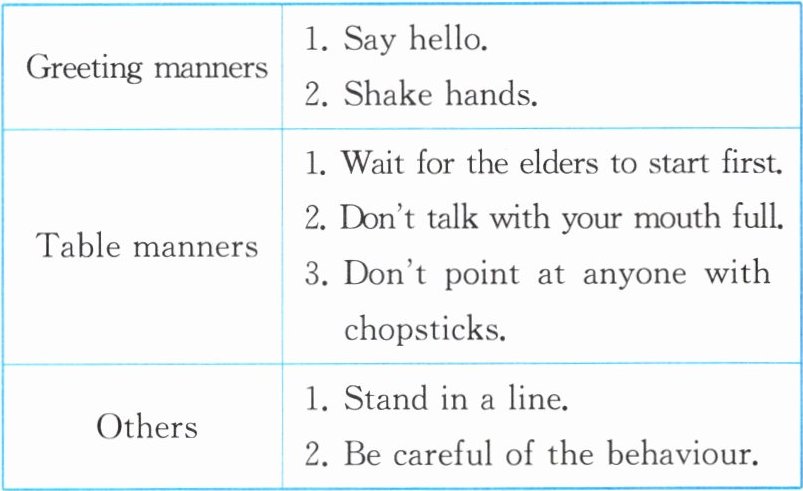
任务情境
中国以"礼仪之邦"著称于世。假如你是
李华,你的笔友杰克将要来中国旅行,给你写
信向你询问如何在中国举止得体。请你根据
下面的提示,给杰克写一封回信。
要求:
1. 词数不少于80;
2. 文中不得出现真实姓名和校名;
3. 可适当增加细节,以使条理清楚、行文连贯;
4. 标点正确,书写规范。
思路点拨
1. 人称:第一人称和第二人称
2. 时态:一般现在时
3. 结构:
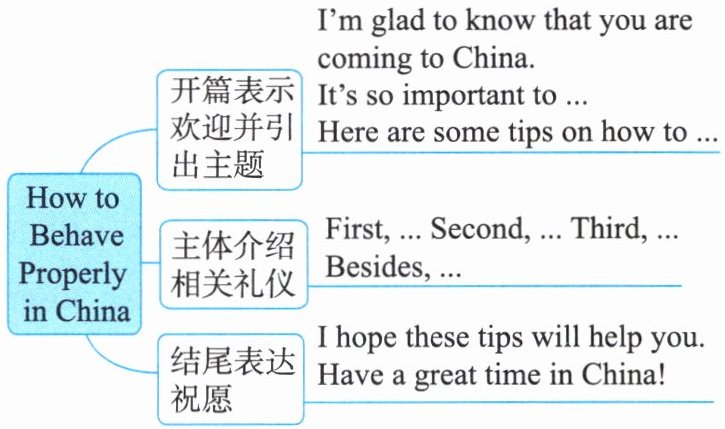
素材积累
1. 主题词块
①握手
②餐桌礼仪
③相处融洽
④坐直
⑤使不碰到;使避开
⑥公筷
⑦习惯于
⑧得到……消息
⑨帮助很大
⑩嘴里塞满了东西时说话
2. 句型仿写
①... English table manners are so confusing
that I'm a little worried.
句型:so ... that引导的结果状语从句
仿写:遵循当地的习俗是如此重要以至于你
能给人留下好印象。
②... don't bring food unless the host asks
you to.
句型:unless引导的条件状语从句
仿写:你应该等长辈们先开始吃饭,除非你
被邀请开始。
③... it's important to bring a gift when you
visit someone.
句型:when引导的时间状语从句
仿写:当你遇到某人时,用微笑和握手来问
候这个人是礼貌的。
连句成篇
中国以"礼仪之邦"著称于世。假如你是
李华,你的笔友杰克将要来中国旅行,给你写
信向你询问如何在中国举止得体。请你根据
下面的提示,给杰克写一封回信。
要求:
1. 词数不少于80;
2. 文中不得出现真实姓名和校名;
3. 可适当增加细节,以使条理清楚、行文连贯;
4. 标点正确,书写规范。
思路点拨
1. 人称:第一人称和第二人称
2. 时态:一般现在时
3. 结构:
素材积累
1. 主题词块
①握手
②餐桌礼仪
③相处融洽
④坐直
⑤使不碰到;使避开
⑥公筷
⑦习惯于
⑧得到……消息
⑨帮助很大
⑩嘴里塞满了东西时说话
2. 句型仿写
①... English table manners are so confusing
that I'm a little worried.
句型:so ... that引导的结果状语从句
仿写:遵循当地的习俗是如此重要以至于你
能给人留下好印象。
②... don't bring food unless the host asks
you to.
句型:unless引导的条件状语从句
仿写:你应该等长辈们先开始吃饭,除非你
被邀请开始。
③... it's important to bring a gift when you
visit someone.
句型:when引导的时间状语从句
仿写:当你遇到某人时,用微笑和握手来问
候这个人是礼貌的。
连句成篇
答案
【主题写作·迁移】
【素材积累】
1. 主题词块
①shake hands ②table manners
③get along ④sit up ⑤keep ... off
⑥serving chopsticks ⑦be used to
⑧hear from ⑨go a long way
⑩talk with your mouth full
2. 句型仿写
① It's so important to follow the local
customs that you can make a good
impression on people.
②You should wait for the elders to start
eating first unless you are invited to begin.
③When you meet someone, it's polite to
greet the person with a smile and a
handshake.
【连句成篇】
Dear Jack,
I'm glad to know that you are coming to
China. It's so important to follow the local
customs that you can make a good impression
on people. Here are some tips on how to
behave properly.
First, when you meet someone, it's
polite to greet the person with a smile and a
handshake. Second, at table, you should wait
for the elders to start eating first unless you
are invited to begin. Third, you shouldn't
talk with your mouth full. And don't point at
anyone with chopsticks. Besides, you should
stand in a line when you are waiting for
something. And remember to be careful of
your behaviour in public.
I hope these tips will help you. Have a
great time in China!
Yours,
Li Hua
【素材积累】
1. 主题词块
①shake hands ②table manners
③get along ④sit up ⑤keep ... off
⑥serving chopsticks ⑦be used to
⑧hear from ⑨go a long way
⑩talk with your mouth full
2. 句型仿写
① It's so important to follow the local
customs that you can make a good
impression on people.
②You should wait for the elders to start
eating first unless you are invited to begin.
③When you meet someone, it's polite to
greet the person with a smile and a
handshake.
【连句成篇】
Dear Jack,
I'm glad to know that you are coming to
China. It's so important to follow the local
customs that you can make a good impression
on people. Here are some tips on how to
behave properly.
First, when you meet someone, it's
polite to greet the person with a smile and a
handshake. Second, at table, you should wait
for the elders to start eating first unless you
are invited to begin. Third, you shouldn't
talk with your mouth full. And don't point at
anyone with chopsticks. Besides, you should
stand in a line when you are waiting for
something. And remember to be careful of
your behaviour in public.
I hope these tips will help you. Have a
great time in China!
Yours,
Li Hua
解析
【分析】
这是一道英语书信写作题,要求以李华的身份给笔友杰克回信,解答其关于在中国举止得体的疑问。解题思路如下:1. 明确书信格式:采用英文书信标准格式,包含称呼、正文、结尾敬语与署名;2. 确定人称与时态:使用第一人称(我)和第二人称(你),时态以一般现在时为主;3. 梳理写作结构:开头点明写信缘由(告知杰克来中国,强调遵循当地习俗的重要性),中间分点给出具体礼仪建议(见面问候、餐桌礼仪、公共场合礼仪等),结尾表达祝福;4. 运用给定主题词块与句型仿写,确保内容连贯、符合要求,词数达标。
【解析】
写作步骤:1. 开头:用“Dear Jack”称呼,说明写信目的,点明遵循当地习俗的重要性并引出建议;2. 中间分点:①见面礼仪:运用when引导的时间状语从句,说明见面时微笑握手问候的礼貌性;②餐桌礼仪:运用unless引导的条件状语从句,说明需等长辈先用餐,补充不嘴里含食物说话、不用筷子指人等细节;③公共场合礼仪:补充排队等候、注意公共场合行为等内容;3. 结尾:表达希望建议有帮助,祝福杰克在中国玩得开心,最后署名“Yours, Li Hua”。
【答案】
Dear Jack,
I'm glad to know that you are coming to China. It's so important to follow the local customs that you can make a good impression on people. Here are some tips on how to behave properly.
First, when you meet someone, it's polite to greet the person with a smile and a handshake. Second, at table, you should wait for the elders to start eating first unless you are invited to begin. Third, you shouldn't talk with your mouth full. And don't point at anyone with chopsticks. Besides, you should stand in a line when you are waiting for something. And remember to be careful of your behaviour in public.
I hope these tips will help you. Have a great time in China!
Yours,
Li Hua
【知识点】
英语书信写作;状语从句;常用短语搭配
【点评】
该作文符合英文书信格式,结构清晰,分点明确,灵活运用给定的主题词块与句型,内容具体实用,时态正确,词数达标,能有效解答杰克的疑问,是一篇符合要求的优秀范文。
【难度系数】
0.3
这是一道英语书信写作题,要求以李华的身份给笔友杰克回信,解答其关于在中国举止得体的疑问。解题思路如下:1. 明确书信格式:采用英文书信标准格式,包含称呼、正文、结尾敬语与署名;2. 确定人称与时态:使用第一人称(我)和第二人称(你),时态以一般现在时为主;3. 梳理写作结构:开头点明写信缘由(告知杰克来中国,强调遵循当地习俗的重要性),中间分点给出具体礼仪建议(见面问候、餐桌礼仪、公共场合礼仪等),结尾表达祝福;4. 运用给定主题词块与句型仿写,确保内容连贯、符合要求,词数达标。
【解析】
写作步骤:1. 开头:用“Dear Jack”称呼,说明写信目的,点明遵循当地习俗的重要性并引出建议;2. 中间分点:①见面礼仪:运用when引导的时间状语从句,说明见面时微笑握手问候的礼貌性;②餐桌礼仪:运用unless引导的条件状语从句,说明需等长辈先用餐,补充不嘴里含食物说话、不用筷子指人等细节;③公共场合礼仪:补充排队等候、注意公共场合行为等内容;3. 结尾:表达希望建议有帮助,祝福杰克在中国玩得开心,最后署名“Yours, Li Hua”。
【答案】
Dear Jack,
I'm glad to know that you are coming to China. It's so important to follow the local customs that you can make a good impression on people. Here are some tips on how to behave properly.
First, when you meet someone, it's polite to greet the person with a smile and a handshake. Second, at table, you should wait for the elders to start eating first unless you are invited to begin. Third, you shouldn't talk with your mouth full. And don't point at anyone with chopsticks. Besides, you should stand in a line when you are waiting for something. And remember to be careful of your behaviour in public.
I hope these tips will help you. Have a great time in China!
Yours,
Li Hua
【知识点】
英语书信写作;状语从句;常用短语搭配
【点评】
该作文符合英文书信格式,结构清晰,分点明确,灵活运用给定的主题词块与句型,内容具体实用,时态正确,词数达标,能有效解答杰克的疑问,是一篇符合要求的优秀范文。
【难度系数】
0.3
