

 登录
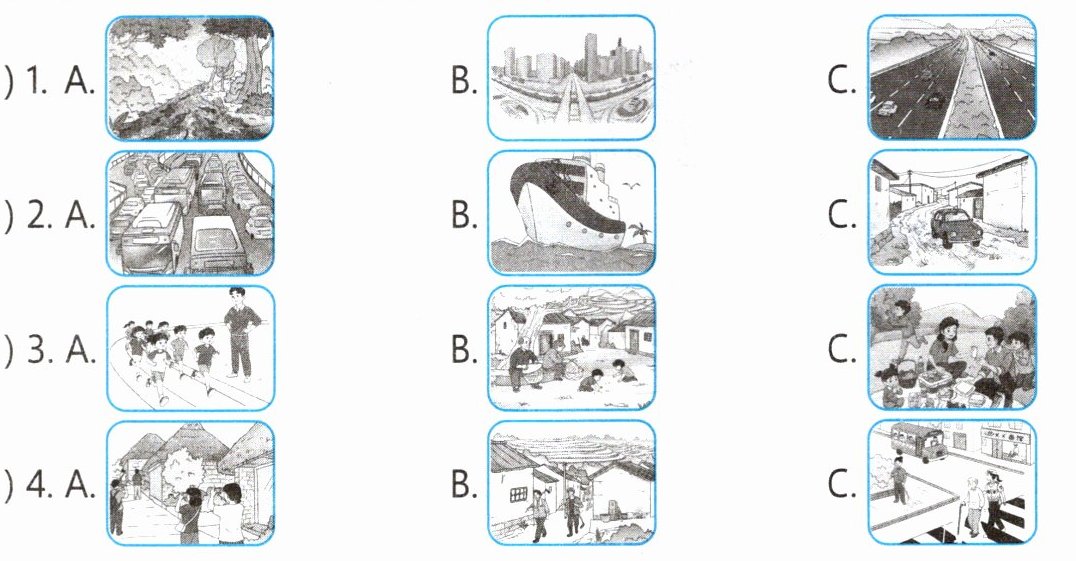
Ⅰ. Listen and choose. Xiaoli 在整理一份关于阿者科村过去的资料。听一听,选出与录音内容相符的图片,将字母序号写在括号里。
(
(
( C.
(
(
A
) 1. A. B. C.(
C
) 2. A. B. C.(
B
) 3. A. B. C.(
B
) 4. A. B. C.答案
1. A 2. C 3. B 4. B
Ⅱ. Read, choose and write. Xiaoli 正在读一篇关于“云上村”——红阳村的报道。读一读,从方框中选择适当的单词补全短文,写在四线三格上。
rivers visitors dirty beau ful cleaned mountains
Hongyang Village is in the mountains of Guizhou. In the past, it was very poor. The road was small and 1.
rivers visitors dirty beau
ful cleaned mountainsHongyang Village is in the mountains of Guizhou. In the past, it was very poor. The road was small and 1.
dirty
. There was no school, and children had to walk far to study. Life was hard for the villagers. They wanted more people to visit, so they 2. cleaned
the village up. Now everything is different. The village is tidy and clean. A new road brings many 3. visitors
every year. They come to see the clear 4. rivers
and green 5. mountains
. The villagers are happy. They say, “Our home is 6. beautiful
. We love our new life.”答案
1. dirty 2. cleaned 3. visitors 4. rivers 5. mountains 6. beautiful
解析
【分析】
先通读短文,明确短文围绕红阳村过去与现在的变化展开,理解每个空格所在句子的语义和语法需求,再结合方框给出的单词,匹配符合语境的单词,注意单词的形式变化(如过去式)。
【解析】
1. 空格前是并列结构“small and”,需填形容词描述过去的道路,结合“过去贫穷”的语境,选dirty;
2. 此处是过去的动作,村民为吸引游客打扫村庄,用clean的过去式cleaned;
3. “many”后接可数名词复数,新路带来的是游客,选visitors;
4. “clear”修饰自然景观,结合方框单词,选rivers(河流);
5. “green”修饰的自然景观,选mountains(山);
6. 描述村庄的美好状态,用形容词beautiful。
【答案】1. dirty 2. cleaned 3. visitors 4. rivers 5. mountains 6. beautiful
【知识点】英语词汇运用,语境填词,名词、形容词、动词用法
【点评】本题为选词填空题型,通过短文语境考察学生对单词词义与用法的掌握,需结合上下文逻辑匹配单词,难度适中。
【难度系数】0.5
Ⅲ. Look and write. 看一看,用there is/are 和 there was/were 写句子,描述村庄的变化。
1. In the past: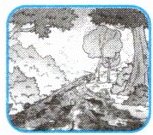
Now: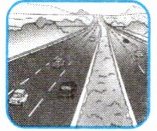
2. In the past: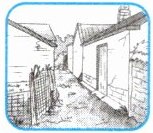
Now:
1. In the past:
There was a dirty, small road. /There was only one road.
Now:
There are clean and wide roads.
2. In the past:
There weren't any libraries. /There was no library.
Now:
There is a new library.
答案
(答案不唯一,合理即可)
1. In the past: There was a dirty, small road. /There was only one road.
Now: There are clean and wide roads.
2. In the past: There weren't any libraries. /There was no library.
Now: There is a new library.
解析
【分析】这道题要求用there be句型的一般现在时(there is/are)和一般过去时(there was/were),结合图片中村庄过去与现在的场景差异写句子。解题时需注意:①描述过去的场景用there was/were,单数名词对应was,复数名词对应were;②描述现在的场景用there is/are,遵循就近原则;③结合图片呈现的事物数量、状态变化,合理组织符合语法的句子。
【解析】第1小题:过去场景通常为仅有一条小而脏的路,用过去式,单数名词road搭配there was;现在场景为多条干净宽阔的路,用现在式,复数名词roads搭配there are。第2小题:过去场景为没有图书馆,用过去式否定,复数名词libraries搭配there weren't,或单数形式用there was no;现在场景为有一个新图书馆,用现在式,单数名词library搭配there is。
【答案】1. In the past: There was a dirty, small road. /There was only one road. Now: There are clean and wide roads. 2. In the past: There weren't any libraries. /There was no library. Now: There is a new library.
【知识点】there be句型的时态运用,描述事物变化
【点评】本题结合村庄变化的生活化场景,考查there be句型不同时态的用法,需要学生掌握there be的就近原则和时态差异,题目难度适中,答案具有开放性,鼓励学生结合实际合理表达。
【难度系数】0.6
