

 登录
登录
1 他们画了许多设计图。听句子,用数字1—5给下列图片排序。

() () () () ()
() () () () ()
答案
2 3 4 1 5 (具体答案需根据实际听到的句子内容确定,这里假设的句子顺序得出此答案,若句子顺序不同,答案也会相应改变)。
2 大明正在采访这些“设计师”。听对话,将机器人与对应的功能连线。
(1)Robot No. 1 A. It will play table tennis with people.
(2)Robot No. 2 B. It will walk the dog in the park.
(3)Robot No. 3 C. It will cook delicious food.
(4)Robot No. 4 D. It will sing Chinese songs.
(5)Robot No. 5 E. It will help students learn.
(1)Robot No. 1 A. It will play table tennis with people.
(2)Robot No. 2 B. It will walk the dog in the park.
(3)Robot No. 3 C. It will cook delicious food.
(4)Robot No. 4 D. It will sing Chinese songs.
(5)Robot No. 5 E. It will help students learn.
答案
(1) - A (2) - B (3) - C (4) - D (5) - E
3 他们设计的机器人真是功能多样。看图,仿照示例写一写。
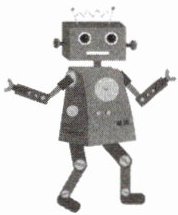
示例:(dance)The robot will dance.
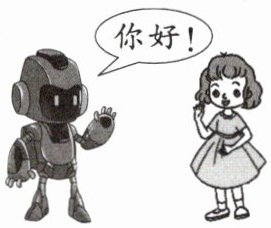
(1)(talk with people)
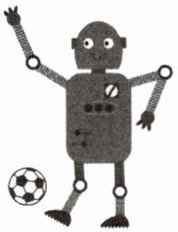
(2)(play football)
示例:(dance)The robot will dance.
(1)(talk with people)
(2)(play football)
答案
1. 观察示例可知,句子结构为“The robot will + 动词原形(短语)”。图(1)中机器人的功能是“talk with people(与人交谈)”,按照结构可写出句子。
2. 图(2)中机器人的功能是“play football(踢足球)”,同样依据上述结构来写句子。
(1) The robot will talk with people.
(2) The robot will play football.
2. 图(2)中机器人的功能是“play football(踢足球)”,同样依据上述结构来写句子。
(1) The robot will talk with people.
(2) The robot will play football.
