

 登录
C
Every English learner needs to know how to ask for something in English. There are a number of ways to do this.
If you know someone has something, you can ask for it with a polite question. If you don’t know, it’s possible to ask for something with a yes-or-no question. Be careful not to use the direct expressions. In other words, don’t say “Give me that”, but ask politely, such as “Do you have a pen I could borrow?” “Is there any juice?” or “Did you buy any bread?”
If you know or see someone has something, ask a polite question with “could”, “may” or “might”. It’s also possible to use “can” in some special situations. In the past, “can” was not used when people asked for something, but meant ability. In the UK, people mainly use “Can you lend me…?” or “Can I have…?” In the US, this is still considered informal and “May I have…?” is preferred.
It’s common to use “Could you lend/ hand/give…?” You can also use “May/Can I borrow…?” “Would/Can you lend me…?” “May I have…?” “Would you hand/give
me…?” Do not begin a sentence with “please”, but you can add “please” at the end of the sentence to be polite.
62. What can we ask if we know someone has something?
A. A direct question.
B. A no question.
C. A yes question.
D. A polite question.
63. What didn’t people say when they wanted something politely in the past?
A. Can I use your dictionary?
B. Could you lend me your bike?
C. May I try your computer now?
D. Might I take your car today?
64. Which of the following is a correct polite expression according to the passage?
A. Do you give me any milk, please?
B. Please could you lend me your ruler?
C. May I have some tea, please?
D. Please could you hand me a knife?
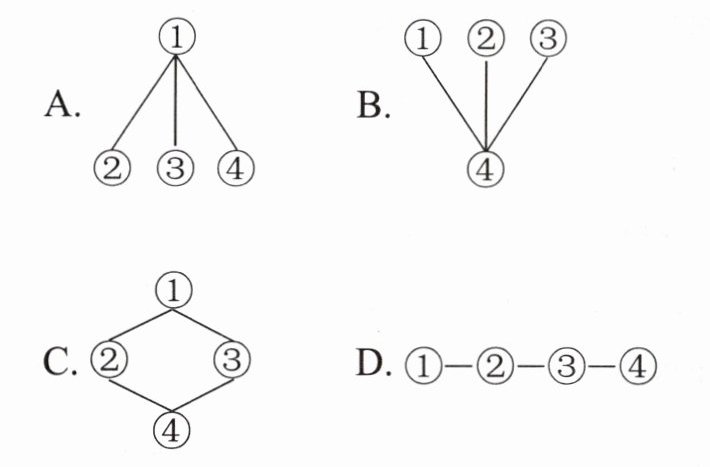
65. Which of the following best shows the structure of the passage?
D
Every English learner needs to know how to ask for something in English. There are a number of ways to do this.
If you know someone has something, you can ask for it with a polite question. If you don’t know, it’s possible to ask for something with a yes-or-no question. Be careful not to use the direct expressions. In other words, don’t say “Give me that”, but ask politely, such as “Do you have a pen I could borrow?” “Is there any juice?” or “Did you buy any bread?”
If you know or see someone has something, ask a polite question with “could”, “may” or “might”. It’s also possible to use “can” in some special situations. In the past, “can” was not used when people asked for something, but meant ability. In the UK, people mainly use “Can you lend me…?” or “Can I have…?” In the US, this is still considered informal and “May I have…?” is preferred.
It’s common to use “Could you lend/ hand/give…?” You can also use “May/Can I borrow…?” “Would/Can you lend me…?” “May I have…?” “Would you hand/give
me…?” Do not begin a sentence with “please”, but you can add “please” at the end of the sentence to be polite.
62. What can we ask if we know someone has something?
A. A direct question.
B. A no question.
C. A yes question.
D. A polite question.
63. What didn’t people say when they wanted something politely in the past?
A. Can I use your dictionary?
B. Could you lend me your bike?
C. May I try your computer now?
D. Might I take your car today?
64. Which of the following is a correct polite expression according to the passage?
A. Do you give me any milk, please?
B. Please could you lend me your ruler?
C. May I have some tea, please?
D. Please could you hand me a knife?
65. Which of the following best shows the structure of the passage?
D
答案
62. D 63. A 64. C 65. A
解析
【分析】
首先逐题梳理解题思路:
1. 第62题:定位原文第二段关键句“If you know someone has something, you can ask for it with a polite question.”,明确知道对方有某物时需用礼貌问题询问,对应选项D。
2. 第63题:定位原文第三段“In the past, “can” was not used when people asked for something, but meant ability.”,可知过去请求某物时不使用“can”,选项A用了“Can”,符合题意。
3. 第64题:定位原文最后一段“Do not begin a sentence with “please”, but you can add “please” at the end of the sentence to be polite.”,分析选项:A表达错误,B、D将please放句首不符合要求,C选项“May I have some tea, please?”符合格式。
4. 第65题:分析文章结构,第一段总述请求的方式,后续分述不同场景的礼貌表达,对应选项A的结构。
【解析】
62题:根据原文第二段内容,知道对方有某物时需用礼貌问题询问,因此选D。
63题:根据原文第三段,过去请求某物时不使用“can”(当时表能力),选项A用了“Can”,故选A。
64题:根据原文最后一段,礼貌表达不能将please放句首,可放句末,C选项符合要求,A选项表达错误,B、D不符合格式,故选C。
65题:文章为总分结构,第一段总起,后续分述,对应选项A的结构,故选A。
【答案】
62.D 63.A 64.C 65.A
【知识点】
英语阅读理解、细节理解、文章结构分析
【点评】
本题为英语阅读理解题,考查学生对文章细节信息的提取和文章结构的分析能力,整体难度适中,需学生仔细定位原文内容。
【难度系数】
0.6
