

 登录
登录
二、阅读理解(每小题2分,满分30分)
A
You can volunteer with three or four friends to do a team experiment(实验). First, you need to know a little about the water cycle. The water cycle starts when the sun heats ocean water. The sun converts, or changes, the water into water vapour(蒸气). The sun and wind cause the water vapour to rise into the air. Water vapour cools off in the atmosphere(大气层), or the air that surrounds Earth. Then it changes to drops(水滴) of water. The drops then cluster, or hold together, forming a cloud.
The water in the cloud falls as rain or snow. It may fall back into the ocean, or it may fall on land. If it falls on land, it finally works its way back to the ocean as a water overflow called runoff. As you begin your experiment, remember this amazing fact. The amount of water on Earth now is the same as it was in the past and will be in the future. About 71% of Earth's surface is water. This includes not only the water in oceans, rivers, and lakes. It also includes the water in clouds, rain, snow, and groundwater and in the icy areas at the North and South Poles.
Now make a model of the water cycle with a partner or small group. Use the instructions below:
Fill a cup about halfway with water.
Add red food colour to the water and stir.
Use the marker to show the water level.
Put the cup in the bag and seal it.
Put the bag in a sunny window.
After you finish making the water cycle model, watch carefully what happens to the water in the cup. Check the mark showing the water level. You should see that the water level becomes gradually lower. You should also begin to see small drops of water on the sides and bottom of the bag. The water is evaporating(蒸发) from the heat and then changing from the gas created by evaporating to water drops on the sides of the bag. The drops run down the sides and will begin to collect at the bottom. This is what happens when the sun heats the ocean. Water vapour rises and forms clouds. The drops running down the sides of the bag are like rain falling on Earth.
(
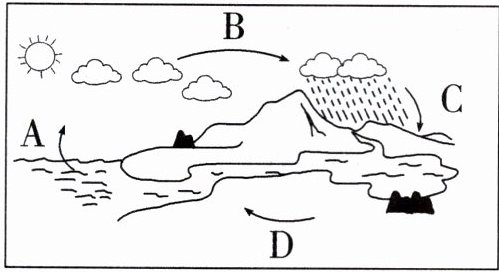
A. A
B. B
C. C
D. D
(
A. Earth's surface.
B. The water on Earth.
C. Your experiment.
D. This amazing fact.
(
A. By showing the steps in order.
B. By explaining cause and effect.
C. By comparing and contrasting.
D. By providing the examples in detail.
(
A. Successful experiments need a lot of time and hard work.
B. Simple experiments can also help understand science well.
C. Students do the experiment in order to show their team spirit.
D. Students know the amount of water on Earth from the experiment.
(
A. A storybook.
B. A book review.
C. A science magazine.
D. A tourist guide.
A
You can volunteer with three or four friends to do a team experiment(实验). First, you need to know a little about the water cycle. The water cycle starts when the sun heats ocean water. The sun converts, or changes, the water into water vapour(蒸气). The sun and wind cause the water vapour to rise into the air. Water vapour cools off in the atmosphere(大气层), or the air that surrounds Earth. Then it changes to drops(水滴) of water. The drops then cluster, or hold together, forming a cloud.
The water in the cloud falls as rain or snow. It may fall back into the ocean, or it may fall on land. If it falls on land, it finally works its way back to the ocean as a water overflow called runoff. As you begin your experiment, remember this amazing fact. The amount of water on Earth now is the same as it was in the past and will be in the future. About 71% of Earth's surface is water. This includes not only the water in oceans, rivers, and lakes. It also includes the water in clouds, rain, snow, and groundwater and in the icy areas at the North and South Poles.
Now make a model of the water cycle with a partner or small group. Use the instructions below:
Fill a cup about halfway with water.
Add red food colour to the water and stir.
Use the marker to show the water level.
Put the cup in the bag and seal it.
Put the bag in a sunny window.
After you finish making the water cycle model, watch carefully what happens to the water in the cup. Check the mark showing the water level. You should see that the water level becomes gradually lower. You should also begin to see small drops of water on the sides and bottom of the bag. The water is evaporating(蒸发) from the heat and then changing from the gas created by evaporating to water drops on the sides of the bag. The drops run down the sides and will begin to collect at the bottom. This is what happens when the sun heats the ocean. Water vapour rises and forms clouds. The drops running down the sides of the bag are like rain falling on Earth.
(
D
)16. In which part does "runoff" appear in the picture?A. A
B. B
C. C
D. D
(
B
)17. What does the underlined word "This" in Paragraph 2 mean?A. Earth's surface.
B. The water on Earth.
C. Your experiment.
D. This amazing fact.
(
A
)18. How does the writer introduce the way of making the water cycle model?A. By showing the steps in order.
B. By explaining cause and effect.
C. By comparing and contrasting.
D. By providing the examples in detail.
(
B
)19. What can we learn from the experiment?A. Successful experiments need a lot of time and hard work.
B. Simple experiments can also help understand science well.
C. Students do the experiment in order to show their team spirit.
D. Students know the amount of water on Earth from the experiment.
(
C
)20. From which is the passage most probably taken?A. A storybook.
B. A book review.
C. A science magazine.
D. A tourist guide.
答案
【文章大意】本文是一篇说明文,主要介绍了水循环的科普知识,并提供了详细的实验步骤。
16. D 图示理解题。根据“If it falls on land, it finally works its way back to the ocean as a water overflow called runoff.”可知,如果它落在陆地上,它最终会以一种叫作径流的水溢出的方式返回海洋。所以“runoff”指的是雨水落到陆地上后最终流回海洋的过程。在图示中,D 所示的箭头表示地表径流(即从陆地流回海洋)。故选 D。
17. B 代词指代题。根据“The amount of water on Earth now is the same as it was in the past and will be in the future. About 71% of Earth's surface is water. This includes not only the water in oceans, rivers, and lakes.”可知,现在地球上的水量与过去一样,未来也将如此。大约 71%的地球表面是水。这不仅包括海洋、河流和湖泊中的水。此处 This 指的是“地球上的水”。故选 B。
18. A 写作手法题。文中用“·”分条罗列了做实验的步骤,按照顺序一步步介绍如何制作一个水循环模型。故选 A。
19. B 推理判断题。通过这个简单的“杯子+塑料袋”实验就能观察到蒸发、凝结和降水等水循环现象,说明简单的实验也能帮助我们更好地理解科学。故选 B。
20. C 文章出处题。本文主要介绍了水循环的科普知识,并提供了详细的实验步骤,最可能出自科普类的科学杂志。故选 C。
16. D 图示理解题。根据“If it falls on land, it finally works its way back to the ocean as a water overflow called runoff.”可知,如果它落在陆地上,它最终会以一种叫作径流的水溢出的方式返回海洋。所以“runoff”指的是雨水落到陆地上后最终流回海洋的过程。在图示中,D 所示的箭头表示地表径流(即从陆地流回海洋)。故选 D。
17. B 代词指代题。根据“The amount of water on Earth now is the same as it was in the past and will be in the future. About 71% of Earth's surface is water. This includes not only the water in oceans, rivers, and lakes.”可知,现在地球上的水量与过去一样,未来也将如此。大约 71%的地球表面是水。这不仅包括海洋、河流和湖泊中的水。此处 This 指的是“地球上的水”。故选 B。
18. A 写作手法题。文中用“·”分条罗列了做实验的步骤,按照顺序一步步介绍如何制作一个水循环模型。故选 A。
19. B 推理判断题。通过这个简单的“杯子+塑料袋”实验就能观察到蒸发、凝结和降水等水循环现象,说明简单的实验也能帮助我们更好地理解科学。故选 B。
20. C 文章出处题。本文主要介绍了水循环的科普知识,并提供了详细的实验步骤,最可能出自科普类的科学杂志。故选 C。
解析
【分析】
本题是一篇关于水循环的科普类阅读理解,解题时需先通读全文,掌握水循环的原理和实验步骤,再针对不同题型逐一分析:
1. 第16题是图示理解题,需先在文中找到“runoff”的定义,再对应图示找到匹配的环节;
2. 第17题是代词指代题,要根据前文内容,找到代词所指代的核心对象;
3. 第18题是写作手法题,需观察文中介绍实验的方式,判断其呈现逻辑;
4. 第19题是推理判断题,要结合实验的内容和目的,推理实验带来的启示;
5. 第20题是文章出处题,需根据文章的科普属性和内容,判断其可能的来源。
【解析】
1. 第16题:
根据文章第二段“If it falls on land, it finally works its way back to the ocean as a water overflow called runoff.”可知,runoff是雨水落到陆地后最终流回海洋的径流,对应图示中D环节(从陆地流回海洋),故选D。
2. 第17题:
根据前文“The amount of water on Earth now is the same as it was in the past and will be in the future. About 71% of Earth's surface is water. This includes not only the water in oceans, rivers, and lakes.”可知,前文核心介绍的是地球上的水,所以“This”指代“地球上的水”,故选B。
3. 第18题:
文中用分条罗列的方式,按顺序介绍了制作水循环模型的步骤,属于按顺序呈现步骤的写作手法,故选A。
4. 第19题:
这个实验用简单的材料(杯子、塑料袋等)就模拟出了水循环的过程,让我们直观理解了水循环的原理,说明简单的实验也能帮助我们很好地理解科学知识,故选B。
5. 第20题:
本文主要介绍水循环的科普知识,还附带了科学实验步骤,属于科普类内容,最可能出自科学杂志,故选C。
【答案】
16. D;17. B;18. A;19. B;20. C
【知识点】
水循环科普知识、阅读理解题型解法、文章出处判断
【点评】
本文是科普类阅读理解文本,结合水循环知识与动手实验,考查了图示理解、代词指代、写作手法、推理判断、文章出处等多种阅读题型,既要求学生掌握文本细节,也需要结合科学常识进行判断,有助于提升学生的科普阅读能力与知识应用能力。
【难度系数】
0.7
本题是一篇关于水循环的科普类阅读理解,解题时需先通读全文,掌握水循环的原理和实验步骤,再针对不同题型逐一分析:
1. 第16题是图示理解题,需先在文中找到“runoff”的定义,再对应图示找到匹配的环节;
2. 第17题是代词指代题,要根据前文内容,找到代词所指代的核心对象;
3. 第18题是写作手法题,需观察文中介绍实验的方式,判断其呈现逻辑;
4. 第19题是推理判断题,要结合实验的内容和目的,推理实验带来的启示;
5. 第20题是文章出处题,需根据文章的科普属性和内容,判断其可能的来源。
【解析】
1. 第16题:
根据文章第二段“If it falls on land, it finally works its way back to the ocean as a water overflow called runoff.”可知,runoff是雨水落到陆地后最终流回海洋的径流,对应图示中D环节(从陆地流回海洋),故选D。
2. 第17题:
根据前文“The amount of water on Earth now is the same as it was in the past and will be in the future. About 71% of Earth's surface is water. This includes not only the water in oceans, rivers, and lakes.”可知,前文核心介绍的是地球上的水,所以“This”指代“地球上的水”,故选B。
3. 第18题:
文中用分条罗列的方式,按顺序介绍了制作水循环模型的步骤,属于按顺序呈现步骤的写作手法,故选A。
4. 第19题:
这个实验用简单的材料(杯子、塑料袋等)就模拟出了水循环的过程,让我们直观理解了水循环的原理,说明简单的实验也能帮助我们很好地理解科学知识,故选B。
5. 第20题:
本文主要介绍水循环的科普知识,还附带了科学实验步骤,属于科普类内容,最可能出自科学杂志,故选C。
【答案】
16. D;17. B;18. A;19. B;20. C
【知识点】
水循环科普知识、阅读理解题型解法、文章出处判断
【点评】
本文是科普类阅读理解文本,结合水循环知识与动手实验,考查了图示理解、代词指代、写作手法、推理判断、文章出处等多种阅读题型,既要求学生掌握文本细节,也需要结合科学常识进行判断,有助于提升学生的科普阅读能力与知识应用能力。
【难度系数】
0.7
