

 登录
登录
Ⅳ. (2026·靖江靖城期中)阅读还原(有两项多余)
There are some things that we don't often think about, like walking,
视频学重难
because there really is no need to. There are other things we don't often think about, like learning, but we should.
1 However, many of us have no real idea what the best way to learn is. So a group of scientists in the USA interviewed some excellent students to find some answers. 2
Almost all students re-read when they are trying to learn new information. But if you read something again right after you finish learning it, there is almost no use. 3
Self-testing is one of the best ways of remembering new things. 4 You can just answer questions and see the answers at the back of a book, or you can ask and answer questions with a friend.
Many students underline(标记) things when they are reading something for the first time or when they don't really know if it is important or not. But this doesn't help much with learning.
5 It is much better to try and learn less at one time and study it a few days later.
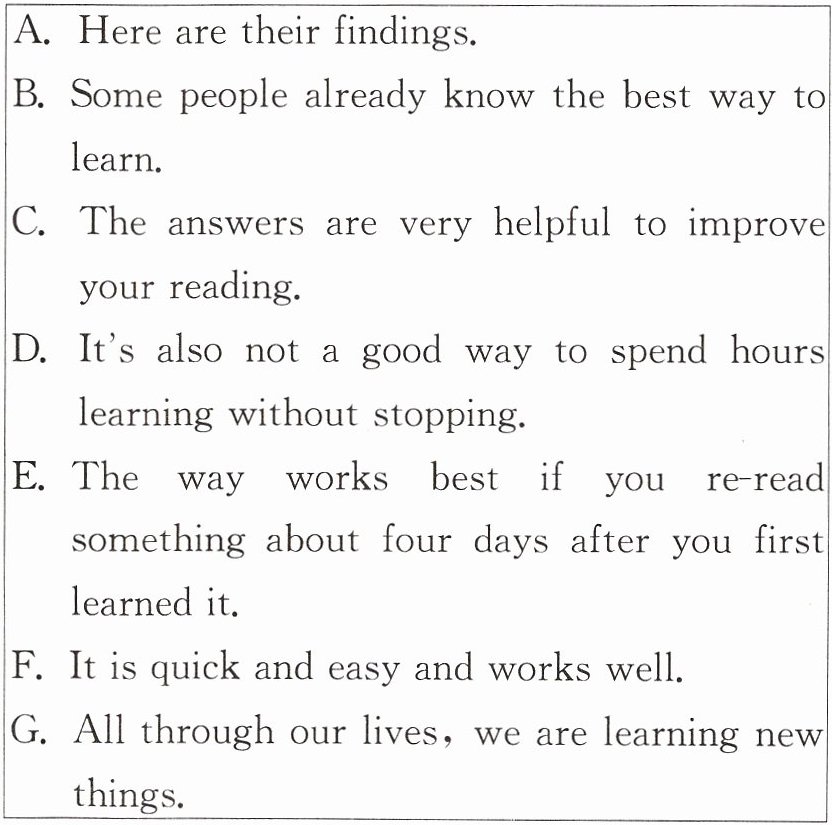
A. Here are their findings.
B. Some people already know the best way to learn.
C. The answers are very helpful to improve your reading.
D. It's also not a good way to spend hours learning without stopping.
E. The way works best if you re-read something about four days after you first learned it.
F. It is quick and easy and works well.
G. All through our lives, we are learning new things.
1.
4.
There are some things that we don't often think about, like walking,
视频学重难
because there really is no need to. There are other things we don't often think about, like learning, but we should.
1 However, many of us have no real idea what the best way to learn is. So a group of scientists in the USA interviewed some excellent students to find some answers. 2
Almost all students re-read when they are trying to learn new information. But if you read something again right after you finish learning it, there is almost no use. 3
Self-testing is one of the best ways of remembering new things. 4 You can just answer questions and see the answers at the back of a book, or you can ask and answer questions with a friend.
Many students underline(标记) things when they are reading something for the first time or when they don't really know if it is important or not. But this doesn't help much with learning.
5 It is much better to try and learn less at one time and study it a few days later.
A. Here are their findings.
B. Some people already know the best way to learn.
C. The answers are very helpful to improve your reading.
D. It's also not a good way to spend hours learning without stopping.
E. The way works best if you re-read something about four days after you first learned it.
F. It is quick and easy and works well.
G. All through our lives, we are learning new things.
1.
G
2. A
3. E
4.
F
5. D
答案
[文章大意]本文主要介绍了科学家们通过采访优秀学生,发现的一些有效的学习方法。
1~5 G A E F D
1~5 G A E F D
解析
【分析】
这是一篇七选五阅读还原题,解题时首先要通读全文,明确文章主旨是介绍科学家调研得出的高效学习方法,再逐空分析前后文的逻辑关联,结合话题一致性、指代呼应、承上启下的衔接关系匹配选项:
1. 第1空后句转折指出“很多人并不清楚最佳学习方式是什么”,空格处需要铺垫和“学习是伴随我们全程的行为”相关的背景内容,顺承引出后文的转折逻辑。
2. 第2空前句提到科学家采访优秀学生寻找答案,后文开始逐条介绍调研得到的结论,空格处需要起到承上启下的作用,引出后续的调研结果。
3. 第3空前句指出“刚学完立刻重读几乎没有作用”,空格处需要承接“重读”这个话题,给出正确的重读方式的相关表述。
4. 第4空前句点明“自我测试是记忆新知识的最好方法之一”,后句列举了自我测试的两种简单操作方式,空格处需要对自我测试的特点做补充说明,保证话题连贯。
5. 第5空后句指出“一次少学一点、间隔几天再复习效果会好得多”,空格处需要引出反面的错误学习方式,和后句的正确做法形成对比。
最后排除和全文话题不匹配的B、C两个多余选项即可得到答案。
【解析】
1. 空格后句转折说明很多人不知道最佳学习方法,G选项“我们一生都在学习新事物”铺垫了学习是贯穿人生的普遍行为,和后句逻辑衔接自然,故选G。
2. 前文提到科学家采访优秀学生寻找学习方法的答案,后文开始介绍具体的调研结论,A选项“这是他们的发现”完美承上启下,引出下文内容,故选A。
3. 前文提到学完立刻重读几乎没用,E选项“如果你在第一次学习后四天左右重读内容,这个方法效果最好”承接“重读”的话题,给出了正确的重读时机,符合逻辑,故选E。
4. 前文介绍自我测试是很好的记忆方法,后文列举了自我测试的简单操作方式,F选项“它快捷简单,效果很好”中的it指代前文的self-testing,对自我测试的优势做补充说明,衔接通顺,故选F。
5. 后文指出一次少学一点、间隔复习效果更好,D选项“连续花好几个小时不停学习也不是好方法”先点明错误的学习行为,和后句的正确做法形成对比,逻辑连贯,故选D。
【答案】
1. G 2. A 3. E 4. F 5. D
【知识点】
语篇逻辑衔接,阅读还原解题
【点评】
本题属于典型的初中英语阅读还原题型,重点考察学生对上下文话题呼应、指代关系、承上启下逻辑的判断能力,干扰选项和文章主题关联度低,只要学生能精准定位每空前后的核心话题,就能轻松匹配到正确选项,整体难度适中。
【难度系数】
0.7
这是一篇七选五阅读还原题,解题时首先要通读全文,明确文章主旨是介绍科学家调研得出的高效学习方法,再逐空分析前后文的逻辑关联,结合话题一致性、指代呼应、承上启下的衔接关系匹配选项:
1. 第1空后句转折指出“很多人并不清楚最佳学习方式是什么”,空格处需要铺垫和“学习是伴随我们全程的行为”相关的背景内容,顺承引出后文的转折逻辑。
2. 第2空前句提到科学家采访优秀学生寻找答案,后文开始逐条介绍调研得到的结论,空格处需要起到承上启下的作用,引出后续的调研结果。
3. 第3空前句指出“刚学完立刻重读几乎没有作用”,空格处需要承接“重读”这个话题,给出正确的重读方式的相关表述。
4. 第4空前句点明“自我测试是记忆新知识的最好方法之一”,后句列举了自我测试的两种简单操作方式,空格处需要对自我测试的特点做补充说明,保证话题连贯。
5. 第5空后句指出“一次少学一点、间隔几天再复习效果会好得多”,空格处需要引出反面的错误学习方式,和后句的正确做法形成对比。
最后排除和全文话题不匹配的B、C两个多余选项即可得到答案。
【解析】
1. 空格后句转折说明很多人不知道最佳学习方法,G选项“我们一生都在学习新事物”铺垫了学习是贯穿人生的普遍行为,和后句逻辑衔接自然,故选G。
2. 前文提到科学家采访优秀学生寻找学习方法的答案,后文开始介绍具体的调研结论,A选项“这是他们的发现”完美承上启下,引出下文内容,故选A。
3. 前文提到学完立刻重读几乎没用,E选项“如果你在第一次学习后四天左右重读内容,这个方法效果最好”承接“重读”的话题,给出了正确的重读时机,符合逻辑,故选E。
4. 前文介绍自我测试是很好的记忆方法,后文列举了自我测试的简单操作方式,F选项“它快捷简单,效果很好”中的it指代前文的self-testing,对自我测试的优势做补充说明,衔接通顺,故选F。
5. 后文指出一次少学一点、间隔复习效果更好,D选项“连续花好几个小时不停学习也不是好方法”先点明错误的学习行为,和后句的正确做法形成对比,逻辑连贯,故选D。
【答案】
1. G 2. A 3. E 4. F 5. D
【知识点】
语篇逻辑衔接,阅读还原解题
【点评】
本题属于典型的初中英语阅读还原题型,重点考察学生对上下文话题呼应、指代关系、承上启下逻辑的判断能力,干扰选项和文章主题关联度低,只要学生能精准定位每空前后的核心话题,就能轻松匹配到正确选项,整体难度适中。
【难度系数】
0.7
