

 登录
登录
2 Read the online conversation between Li Na, a travel consultant, and Mike, a 28-year-old Briton. 阅读旅行社顾问李娜与28岁的英国人迈克之间的网上对话。
Li Na: How can I help you?
Mike: Hi! I want a trip with strong Chinese culture. Any recommendations?
Li Na: Dunhuang is perfect for that. It was the heart of the Silk Road — where East met West and cultures shaped each other. Shall I plan a personal itinerary for you?
Mike: Yes! I want to feel its cultural soul, not just take photos.
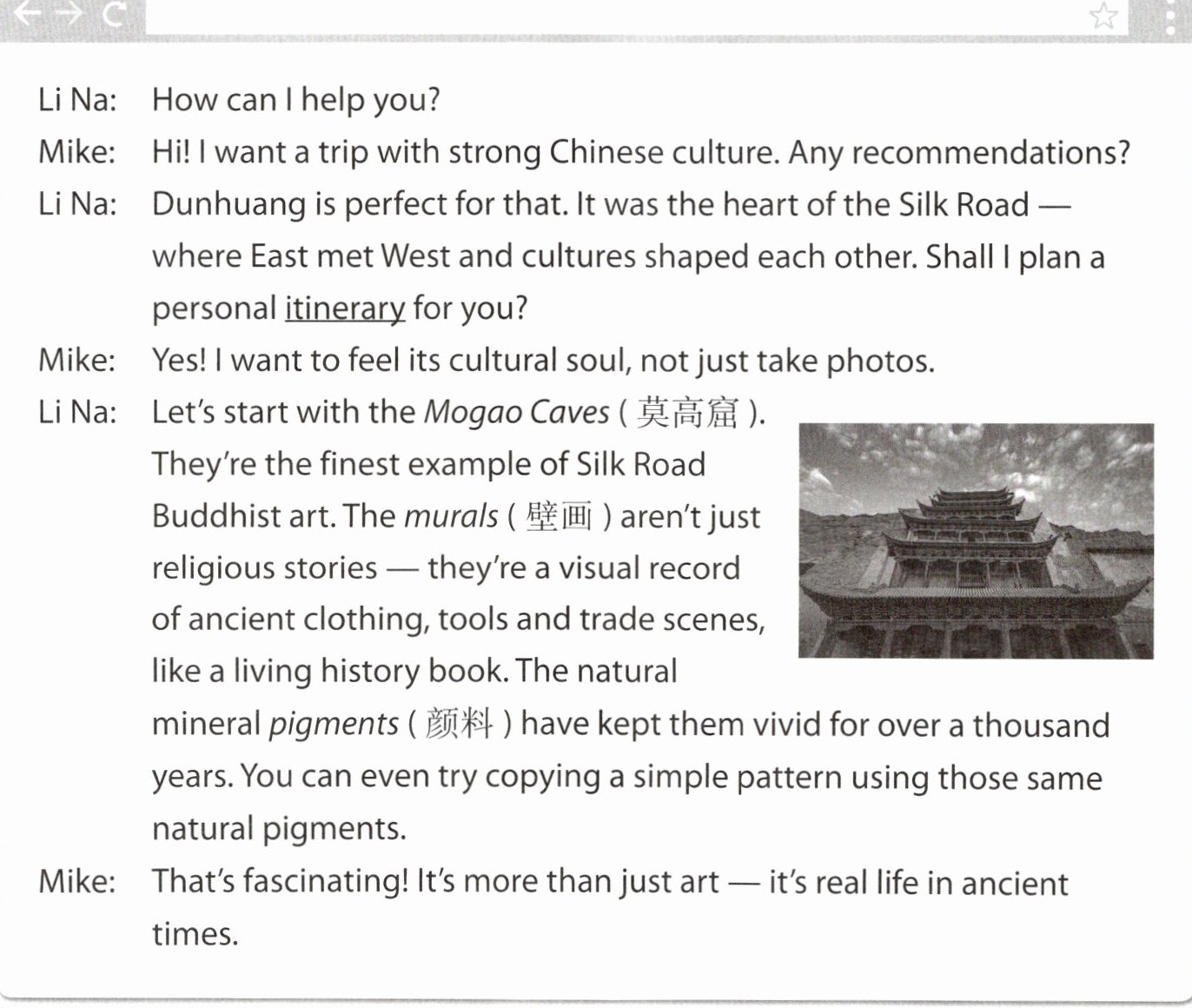
Li Na: Let’s start with the Mogao Caves (莫高窟). They’re the finest example of Silk Road Buddhist art. The murals (壁画)aren’t just religious stories — they’re a visual record of ancient clothing, tools and trade scenes, like a living history book. The natural mineral pigments (颜料) have kept them vivid for over a thousand years. You can even try copying a simple pattern using those same natural pigments.
Mike: That’s fascinating! It’s more than just art — it’s real life in ancient times.
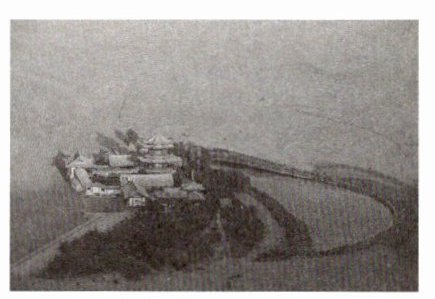
Li Na: Exactly. After that, you can visit the Crescent Moon Spring (月牙泉). Locals protected it for centuries, as a symbol of perseverance in the desert and a peaceful resting place for tired Silk Road traders. You can take a leisurely walk around it and enjoy a clear spring in the middle of the vast desert.
Mike: Wow! Any chance to connect with local culture?
Li Na: Sure. I can arrange a visit to a local artist’s studio — for three generations, his family has painted Flying Fairies with techniques from the Tang dynasty. You can practise painting a little part.
Mike: Brilliant! How long is the trip? My accommodation budget is around £80–£120 a night. I prefer local guesthouses near food spots.
Li Na: It will take four to five days, and I know a suitable family guesthouse. Do you have any food allergies?
Mike: None at all! I’m ready to try all local flavours.
Li Na: Then don’t miss the lamb noodles for just £2.5 — a true taste of the Silk Road. On your last day, you can explore the local market and make a small Silk Road style souvenir. I’ll email the itinerary today — feel free to suggest any changes.
Mike: Thank you so much!
2-1 Match the underlined words or expression from the conversation with their definitions according to the context. 根据上下文,将对话中划线的单词或表达与其释义配对。
(1) itinerary • A. a place to live or stay
(2) perseverance • B. a detailed plan or route of a journey
(3) accommodation • C. the quality of never giving up
(4) food allergies • D. your body getting sick from some foods
2-2 Complete Mike’s travel vlog script with no more than two words for each blank. 完成迈克的旅行视频脚本,每空格最多两词。
Hi, everyone! This is my Dunhuang vlog. Today I’ll share my amazing Silk Road culture trip.
First, I visited the Mogao Caves. The murals are more than art — they show us (1)
Then I went to the Crescent Moon Spring. It’s not only beautiful, but also a sign of (3)
The most special part was visiting a local artist’s studio. I learned to paint (4)
On the last day, I tried tasty local noodles and made a special (6)
2-3 Answer the questions. 回答问题。
(1) What kind of traveller is Mike?
(2) What makes Dunhuang special for a cultural trip?
(3) Why is this trip not a common sightseeing tour?
Li Na: How can I help you?
Mike: Hi! I want a trip with strong Chinese culture. Any recommendations?
Li Na: Dunhuang is perfect for that. It was the heart of the Silk Road — where East met West and cultures shaped each other. Shall I plan a personal itinerary for you?
Mike: Yes! I want to feel its cultural soul, not just take photos.
Li Na: Let’s start with the Mogao Caves (莫高窟). They’re the finest example of Silk Road Buddhist art. The murals (壁画)aren’t just religious stories — they’re a visual record of ancient clothing, tools and trade scenes, like a living history book. The natural mineral pigments (颜料) have kept them vivid for over a thousand years. You can even try copying a simple pattern using those same natural pigments.
Mike: That’s fascinating! It’s more than just art — it’s real life in ancient times.
Li Na: Exactly. After that, you can visit the Crescent Moon Spring (月牙泉). Locals protected it for centuries, as a symbol of perseverance in the desert and a peaceful resting place for tired Silk Road traders. You can take a leisurely walk around it and enjoy a clear spring in the middle of the vast desert.
Mike: Wow! Any chance to connect with local culture?
Li Na: Sure. I can arrange a visit to a local artist’s studio — for three generations, his family has painted Flying Fairies with techniques from the Tang dynasty. You can practise painting a little part.
Mike: Brilliant! How long is the trip? My accommodation budget is around £80–£120 a night. I prefer local guesthouses near food spots.
Li Na: It will take four to five days, and I know a suitable family guesthouse. Do you have any food allergies?
Mike: None at all! I’m ready to try all local flavours.
Li Na: Then don’t miss the lamb noodles for just £2.5 — a true taste of the Silk Road. On your last day, you can explore the local market and make a small Silk Road style souvenir. I’ll email the itinerary today — feel free to suggest any changes.
Mike: Thank you so much!
2-1 Match the underlined words or expression from the conversation with their definitions according to the context. 根据上下文,将对话中划线的单词或表达与其释义配对。
(1) itinerary • A. a place to live or stay
(2) perseverance • B. a detailed plan or route of a journey
(3) accommodation • C. the quality of never giving up
(4) food allergies • D. your body getting sick from some foods
2-2 Complete Mike’s travel vlog script with no more than two words for each blank. 完成迈克的旅行视频脚本,每空格最多两词。
Hi, everyone! This is my Dunhuang vlog. Today I’ll share my amazing Silk Road culture trip.
First, I visited the Mogao Caves. The murals are more than art — they show us (1)
real life
in ancient times. I even tried to copy a (2) simple pattern
with special natural pigments.Then I went to the Crescent Moon Spring. It’s not only beautiful, but also a sign of (3)
perseverance
in the desert.The most special part was visiting a local artist’s studio. I learned to paint (4)
Flying Fairies
. The family has kept the (5) techniques
for three generations.On the last day, I tried tasty local noodles and made a special (6)
souvenir
. This is not just sightseeing. I really feel the (7) soul/spirit
of Chinese culture.2-3 Answer the questions. 回答问题。
(1) What kind of traveller is Mike?
He is a culture lover./He is a traveller who loves Chinese culture.
(2) What makes Dunhuang special for a cultural trip?
It has amazing murals, special ancient painting techniques
and wonderful Silk Road culture.
(3) Why is this trip not a common sightseeing tour?
Because Mike can not only visit beautiful places, but also deeply experience
traditional Chinese culture by doing many special activities.
答案
2-1
(1) B (2) C (3) A (4) D
2-2
(1) real life (2) simple pattern (3) perseverance (4) Flying Fairies (5) techniques (6) souvenir (7) soul/spirit
2-3
(Answers may vary.)
(1) He is a culture lover./He is a traveller who loves Chinese culture.
(2) It has amazing murals, special ancient painting techniques and wonderful Silk Road culture.
(3) Because Mike can not only visit beautiful places, but also deeply experience traditional Chinese culture by doing many special activities.
(1) B (2) C (3) A (4) D
2-2
(1) real life (2) simple pattern (3) perseverance (4) Flying Fairies (5) techniques (6) souvenir (7) soul/spirit
2-3
(Answers may vary.)
(1) He is a culture lover./He is a traveller who loves Chinese culture.
(2) It has amazing murals, special ancient painting techniques and wonderful Silk Road culture.
(3) Because Mike can not only visit beautiful places, but also deeply experience traditional Chinese culture by doing many special activities.
解析
【分析】
1. 2-1题:需结合对话中划线词汇的语境,理解词汇含义后匹配对应释义,重点关注词汇在对话中的使用场景(如itinerary与旅行计划相关,accommodation与住宿相关)。
2. 2-2题:需定位对话原文,提取对应内容,注意每空最多两词,需准确匹配原文表述(如莫高窟壁画对应古代真实生活,天然颜料对应简单图案)。
3. 2-3题:需从对话中提取关键信息,组织成符合要求的回答,需紧扣问题(如Mike的旅行需求是文化体验,敦煌的特色是丝绸之路文化等)。
【解析】
2-1:根据对话语境匹配:
(1) itinerary:Li Na提到要规划个人旅行计划,对应B(详细的旅行计划或路线);
(2) perseverance:对话中称月牙泉是沙漠里坚持的象征,对应C(永不放弃的品质);
(3) accommodation:Mike提及住宿预算,对应A(居住或停留的地方);
(4) food allergies:Li Na询问是否对食物过敏,对应D(身体对某些食物不适)。
2-2:定位原文提取内容,每空不超两词:
(1) 莫高窟壁画展示古代真实生活,填real life;
(2) 尝试用天然颜料画简单图案,填simple pattern;
(3) 月牙泉是沙漠里坚持的象征,填perseverance;
(4) 学习绘制飞天,填Flying Fairies;
(5) 家族传承唐代绘画技艺,填techniques;
(6) 制作丝绸之路风格纪念品,填souvenir;
(7) 感受中国文化的灵魂,填soul/spirit。
2-3:从对话提取关键信息组织回答:
(1) Mike想要有中国文化的旅行,是文化爱好者;
(2) 敦煌是丝绸之路核心,拥有莫高窟壁画、传统绘画技艺等特色;
(3) 旅行包含深度文化体验活动,并非单纯观光。
【答案】
2-1
(1) B (2) C (3) A (4) D
2-2
(1) real life (2) simple pattern (3) perseverance (4) Flying Fairies (5) techniques (6) souvenir (7) soul/spirit
2-3
(1) He is a culture lover./He is a traveller who loves Chinese culture.
(2) It has amazing murals, special ancient painting techniques and wonderful Silk Road culture.
(3) Because Mike can not only visit beautiful places, but also deeply experience traditional Chinese culture by doing many special activities.
【知识点】
词义猜测、阅读理解细节查找、信息匹配
【点评】
本题以敦煌旅行的英语对话为载体,涵盖词义匹配、信息填空、问答三类题型,考查学生语境理解、信息提取及语言组织能力,难度适中,适合中等英语水平学生巩固相关技能。
【难度系数】
0.6
1. 2-1题:需结合对话中划线词汇的语境,理解词汇含义后匹配对应释义,重点关注词汇在对话中的使用场景(如itinerary与旅行计划相关,accommodation与住宿相关)。
2. 2-2题:需定位对话原文,提取对应内容,注意每空最多两词,需准确匹配原文表述(如莫高窟壁画对应古代真实生活,天然颜料对应简单图案)。
3. 2-3题:需从对话中提取关键信息,组织成符合要求的回答,需紧扣问题(如Mike的旅行需求是文化体验,敦煌的特色是丝绸之路文化等)。
【解析】
2-1:根据对话语境匹配:
(1) itinerary:Li Na提到要规划个人旅行计划,对应B(详细的旅行计划或路线);
(2) perseverance:对话中称月牙泉是沙漠里坚持的象征,对应C(永不放弃的品质);
(3) accommodation:Mike提及住宿预算,对应A(居住或停留的地方);
(4) food allergies:Li Na询问是否对食物过敏,对应D(身体对某些食物不适)。
2-2:定位原文提取内容,每空不超两词:
(1) 莫高窟壁画展示古代真实生活,填real life;
(2) 尝试用天然颜料画简单图案,填simple pattern;
(3) 月牙泉是沙漠里坚持的象征,填perseverance;
(4) 学习绘制飞天,填Flying Fairies;
(5) 家族传承唐代绘画技艺,填techniques;
(6) 制作丝绸之路风格纪念品,填souvenir;
(7) 感受中国文化的灵魂,填soul/spirit。
2-3:从对话提取关键信息组织回答:
(1) Mike想要有中国文化的旅行,是文化爱好者;
(2) 敦煌是丝绸之路核心,拥有莫高窟壁画、传统绘画技艺等特色;
(3) 旅行包含深度文化体验活动,并非单纯观光。
【答案】
2-1
(1) B (2) C (3) A (4) D
2-2
(1) real life (2) simple pattern (3) perseverance (4) Flying Fairies (5) techniques (6) souvenir (7) soul/spirit
2-3
(1) He is a culture lover./He is a traveller who loves Chinese culture.
(2) It has amazing murals, special ancient painting techniques and wonderful Silk Road culture.
(3) Because Mike can not only visit beautiful places, but also deeply experience traditional Chinese culture by doing many special activities.
【知识点】
词义猜测、阅读理解细节查找、信息匹配
【点评】
本题以敦煌旅行的英语对话为载体,涵盖词义匹配、信息填空、问答三类题型,考查学生语境理解、信息提取及语言组织能力,难度适中,适合中等英语水平学生巩固相关技能。
【难度系数】
0.6
