

 登录
Managing money well
A Plan for Tim’s Pocket Money
Read & answer: How does Tim plan to use his pocket money?
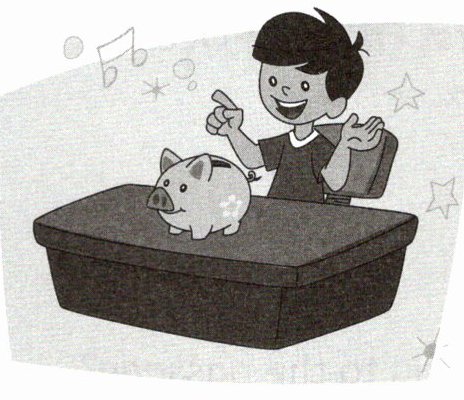
Tim has one hundred yuan in his piggy bank. Today he wants to be a smart spender.
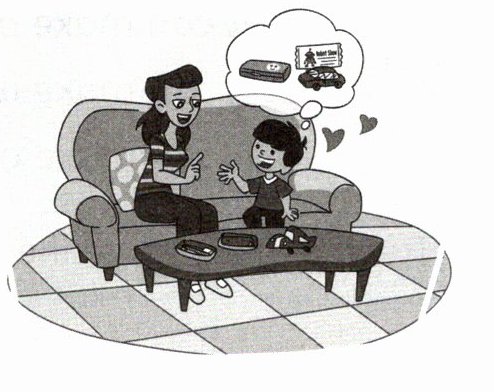
“Mum, I’m going to buy a lot of things this month!” Tim says.
“Really? What are you going to buy?” Mum asks.
Tim thinks for a moment. His pencil case is broken, so he needs a new one. He also wants a new toy car. And there is a robot show next Sunday—he wants to go!
“A pencil case is fifteen yuan. The toy car is fifty yuan. The robot show ticket is forty yuan,” Tim says.
“That’s one hundred and five yuan,” says Mum. “But you only have one hundred yuan. What can you do?”
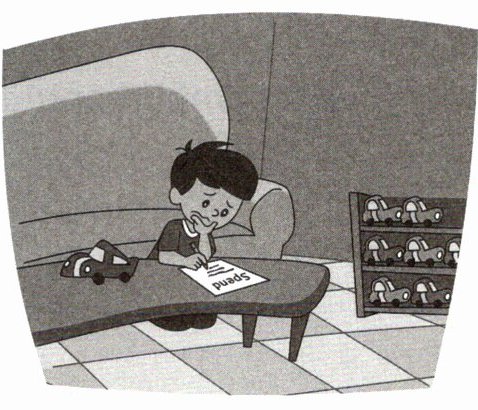
Tim thinks again. The pencil case is something he really needs. The robot show only happens once. But he already has many toy cars at home.
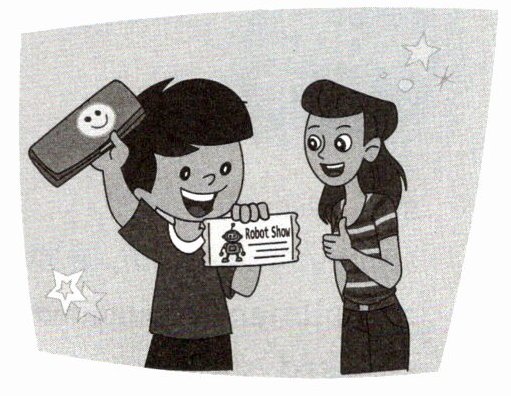
“I’ll buy the pencil case first. Then I’ll go to the robot show. I can wait for a sale to buy the toy car,” Tim says.
“Good idea! That’s a smart spending plan!” Mum smiles.
Ⅰ. Read and choose. 读一读,选出正确的答案。
(
A. 50 yuan.
B. 100 yuan.
C. 105 yuan.
(
A. wants
B. needs
C. saves
(
A. doesn’t have enough money for everything
B. already has many toy cars
C. both A and B

(
A. Buy everything at once.
B. Buy what he needs first and wait for a sale.
C. Save all his money and buy nothing.
Ⅱ. Read and fill in the blanks. 读一读,选择正确的单词或短语填空。
sale spending plan pocket money wait needs
1. Tim has one hundred yuan of
2. Before we go shopping, we should make a
3. A pencil case is something Tim really
4. The toy car is too expensive, so Tim is going to
5. If something is on
A Plan for Tim’s Pocket Money
Read & answer: How does Tim plan to use his pocket money?
Tim has one hundred yuan in his piggy bank. Today he wants to be a smart spender.
“Mum, I’m going to buy a lot of things this month!” Tim says.
“Really? What are you going to buy?” Mum asks.
Tim thinks for a moment. His pencil case is broken, so he needs a new one. He also wants a new toy car. And there is a robot show next Sunday—he wants to go!
“A pencil case is fifteen yuan. The toy car is fifty yuan. The robot show ticket is forty yuan,” Tim says.
“That’s one hundred and five yuan,” says Mum. “But you only have one hundred yuan. What can you do?”
Tim thinks again. The pencil case is something he really needs. The robot show only happens once. But he already has many toy cars at home.
“I’ll buy the pencil case first. Then I’ll go to the robot show. I can wait for a sale to buy the toy car,” Tim says.
“Good idea! That’s a smart spending plan!” Mum smiles.
Ⅰ. Read and choose. 读一读,选出正确的答案。
(
B
) 1. How much money does Tim have in his piggy bank?A. 50 yuan.
B. 100 yuan.
C. 105 yuan.
(
B
) 2. Tim’s pencil case is broken, so he a new one.A. wants
B. needs
C. saves
(
C
) 3. —Why doesn’t Tim buy the toy car now? —Because he .A. doesn’t have enough money for everything
B. already has many toy cars
C. both A and B
(
B
) 4. What is Tim’s smart plan?A. Buy everything at once.
B. Buy what he needs first and wait for a sale.
C. Save all his money and buy nothing.
Ⅱ. Read and fill in the blanks. 读一读,选择正确的单词或短语填空。
sale spending plan pocket money wait needs
1. Tim has one hundred yuan of
pocket money
in his piggy bank.2. Before we go shopping, we should make a
spending plan
.3. A pencil case is something Tim really
needs
.4. The toy car is too expensive, so Tim is going to
wait
for a sale.5. If something is on
sale
, it is cheaper than before.答案
1. B 2. B 3. C 4. B
1. pocket money 2. spending plan 3. needs 4. wait 5. sale
解析
【分析】
这是一篇围绕Tim零花钱规划展开的英语阅读理解题,分为选择题和填空题两部分。解题时需先通读全文,把握Tim的零花钱数量、需求及消费计划,再针对每道小题回到原文定位关键信息,结合语境分析选项或匹配词汇。选择题需精准对应原文细节,选词填空需结合语境和词汇含义完成。
【解析】
Ⅰ. 选择题解析:
1. 原文开头明确表述“Tim has one hundred yuan in his piggy bank”,对应选项B。
2. 原文提到“His pencil case is broken, so he needs a new one”,对应选项B。
3. 原文中Tim的总需求花费为105元(超过他的100元零花钱),且“he already has many toy cars at home”,两个原因都成立,对应选项C。
4. Tim的计划是“先买需要的铅笔盒、去机器人展,等促销再买玩具车”,对应选项B。
Ⅱ. 填空题解析:
1. 短文主题是Tim的零花钱计划,结合语境填pocket money。
2. 购物前需制定消费计划,填spending plan。
3. 原文提到“something he really needs”,填needs。
4. 原文明确说“wait for a sale”,填wait。
5. “on sale”是固定搭配,意为“促销”,填sale。
【答案】
1. B 2. B 3. C 4. B
1. pocket money 2. spending plan 3. needs 4. wait 5. sale
【知识点】
阅读理解细节理解、英语词汇运用、固定搭配
【点评】
本题结合生活中零花钱规划的主题,考查学生的英语阅读细节提取能力和词汇运用能力,贴近实际生活,能引导学生树立合理消费的意识,题目难度适中。
【难度系数】
0.7
