

 登录
2. (2025·安徽中考改编) Every time I felt down, my best friend would say softly to me, “Everything
A.is
B.was
C.will be
D.shall be
C
fine.”A.is
B.was
C.will be
D.shall be
答案
2.C
解析
【分析】本题考查动词时态的运用,解题时需先明确语境的时间指向:句中朋友安慰“我”时表达的是对未来的积极期许,需选择表将来的时态;再逐一分析选项的时态及适用情况,排除不符合的选项即可得出答案。
【解析】根据语境,朋友的话语是对未来的积极预期,需使用一般将来时。A项is为一般现在时,表当前状态,不符合语境;B项was为一般过去时,表过去的状态,不符合;C项will be为一般将来时,可用于各类主语后表将来,符合语境;D项shall be通常仅用于第一人称(I/we)的将来,此处主语为everything,用法不当,排除。因此选C。
【答案】C
【知识点】一般将来时、动词时态辨析
【点评】本题结合日常交际场景考查时态,需准确把握语境的时间逻辑,区分不同时态的用法及shall的特殊适用情况,属于基础时态考查题。
【难度系数】0.5
3. After this exam, you
A.have
B.have had
C.had
D.will have
D
a wonderful holiday next month. Take it easy!A.have
B.have had
C.had
D.will have
答案
3.D
解析
【分析】首先观察句子中的时间状语“next month”(下个月),这是一般将来时的典型时间标志,需确定句子时态为一般将来时,再结合各选项的时态用法分析,选出符合要求的答案。
【解析】句中时间状语“next month”表明动作发生在将来,需使用一般将来时,其结构为“will + 动词原形”。选项A为一般现在时,B为现在完成时,C为一般过去时,均不符合将来时态要求;选项D“will have”符合一般将来时结构,故选D。
【答案】D
【知识点】一般将来时
【点评】本题考查一般将来时的用法,解题关键是识别时间状语“next month”以确定正确时态,属于基础时态考查题。
【难度系数】0.7
4. (2025·湖南中考改编) I will keep on learning Chinese. I
A.might be
B.was
C.may be
D.will be
D
a lifelong (终生的) learner.A.might be
B.was
C.may be
D.will be
答案
4.D
解析
【分析】首先观察句子语境,前半句使用一般将来时结构“will keep on”,表达将来持续的动作,后半句需呼应前文的将来时态,表达“我将会成为终生学习者”,因此要选择符合将来时态的选项。
【解析】逐一分析选项:A选项might be、C选项may be均为情态动词表推测的结构,时态不符;B选项was是一般过去时,与前文将来时态不呼应;D选项will be是一般将来时,与前文的将来时态(will keep on)呼应,符合语境。
【答案】D
【知识点】一般将来时、时态呼应
【点评】本题考查英语时态的运用,需结合上下文语境判断时态,属于基础时态类题目,难度适中。
【难度系数】0.6
5. (2025·云南中考改编) We
A.will take action
B.take action
C.would take action
D.took action
A
to stop water pollution near the lake tomorrow.A.will take action
B.take action
C.would take action
D.took action
答案
5.A
解析
【分析】首先定位题干中的时间状语“tomorrow”(明天),它是一般将来时的典型标志,需据此判断句子时态,再逐一分析选项的时态匹配度,选出符合要求的答案。
【解析】句中时间状语“tomorrow”表明动作发生在将来,需用一般将来时。选项A“will take action”是一般将来时结构;选项B“take action”为一般现在时,用于经常性动作;选项C“would take action”是过去将来时,对应过去语境中的将来动作;选项D“took action”是一般过去时,用于过去发生的动作。因此正确答案为A。
【答案】A
【知识点】一般将来时;动词短语
【点评】本题考查一般将来时的基础应用,核心是识别时间状语确定时态,属于中考基础题型,难度较低。
【难度系数】0.2
二、用括号中所给单词的适当形式填空
1. His father
2. They
3. I think we
4. There
5. We should play a part in
6. Maybe students
1. His father
won’t go
(not go) to that factory next week. He will work at home on the computer.2. They
will build
(build) a new road in this part of the city next year.3. I think we
shall/will have
(have) a more beautiful world in the future.4. There
will be/is going to be
(be) a talk on science in our school tomorrow afternoon.5. We should play a part in
saving
(save) the earth.6. Maybe students
won’t ride
(not ride) their bikes to school in 10 years.答案
1. won’t go
2. will build
3. shall/will have
4. will be/is going to be
5. saving
6. won’t ride
解析
【分析】首先观察每个句子的时间标志或固定搭配,判断所需的语法结构:1-4、6题有明确的将来时间状语(next week、next year、in the future、tomorrow afternoon、in 10 years),需用一般将来时;第5题考查固定短语的搭配规则,介词后接动名词。据此确定单词的适当形式。
【解析】1. 由时间状语next week可知用一般将来时,否定形式为will not go,缩写为won’t go;2. 由时间状语next year可知用一般将来时,结构为will+动词原形,故填will build;3. 由时间状语in the future可知用一般将来时,主语为we,可用will或shall加动词原形have,故填shall/will have;4. 由时间状语tomorrow afternoon可知是there be句型的一般将来时,结构为there will be或there is going to be,故填will be/is going to be;5. 固定搭配play a part in doing sth(参与做某事),in是介词,后接动名词,故将save变为saving;6. 由时间状语in 10 years可知用一般将来时的否定形式,will not ride缩写为won’t ride。
【答案】1. won’t go;2. will build;3. shall/will have;4. will be/is going to be;5. saving;6. won’t ride
【知识点】一般将来时、固定搭配、there be句型
【点评】本题考查初中英语基础语法,涵盖一般将来时的运用、固定短语搭配及there be句型的将来时,是学生需掌握的核心基础知识点,难度适中。
【难度系数】0.5
三、根据汉语意思完成句子
1. ——明天下午我们去图书馆学习,好吗?
——当然,我乐意去。
—
—Sure,
2. ——未来的城市会有更多的高科技公园吗?
——是的,会有。
—
—Yes,
3. 下个月他们会在学校举办科学展览吗?
4. 你打算在北京待多久?
5. 未来我们的教室是什么样的呢?
1. ——明天下午我们去图书馆学习,好吗?
——当然,我乐意去。
—
Shall
we study
in the library tomorrow afternoon?—Sure,
I’d love to
.2. ——未来的城市会有更多的高科技公园吗?
——是的,会有。
—
Will
there be
more high-tech parks in cities in the future
?—Yes,
there will
.3. 下个月他们会在学校举办科学展览吗?
Will
they hold
a science fair at school next month
?4. 你打算在北京待多久?
How long
will you stay
in Beijing?5. 未来我们的教室是什么样的呢?
What will
our classrooms be
like
in the future?答案
1. Shall; study; I’d love to
2. Will; be; in the future; there will
3. Will; hold; next month
4. How long; stay
5. What will; be like
解析
【分析】
本题为根据汉语意思完成英语句子的基础题型,需结合常用交际句型、时态及固定搭配解题:
1. 第一句是提建议的常用表达,“我们做某事好吗?”用Shall we +动词原形,“学习”对应study;回应“我乐意去”为I’d love to。
2. 第二句考查there be句型的一般将来时,一般疑问句结构为Will there be...?“未来”对应in the future,肯定回答用there will。
3. 第三句是一般将来时的一般疑问句,结构为Will +主语+动词原形+其他,“举办(展览)”对应hold,“下个月”对应next month。
4. 第四句询问时长,用疑问词How long,“待”对应stay,结构为How long + will +主语+ stay...?
5. 第五句询问“某物是什么样的”,用固定句型What will +主语+ be like,对应未来的语境。
【解析】
1. 提建议句型Shall we do sth.,故填Shall;“学习”对应study;回应“我乐意去”为I’d love to。
2. there be一般将来时的一般疑问句用Will there be,“未来”对应in the future,肯定回答用there will。
3. 一般将来时一般疑问句以Will开头,“举办(展览)”对应hold,“下个月”对应next month。
4. 询问时长用疑问词How long,“待”对应stay。
5. 询问“某物是什么样的”用固定句型What will...be like。
【答案】
1. Shall; study; I’d love to
2. Will; be; in the future; there will
3. Will; hold; next month
4. How long; stay
5. What will; be like
【知识点】
提建议句型;there be一般将来时;固定搭配be like
【点评】
本题聚焦初中英语基础知识点,涵盖交际用语、时态运用及固定短语,是巩固英语基础的典型题型,难度适中。
【难度系数】
0.6
四、短文填空
be, drive, call, China, more, save,
snack, take, they, use
Look! Here comes a cute bus. It looks like a panda. It can carry 22 people and is about 12 meters long. A 1.
The Smart Panda Bus 2.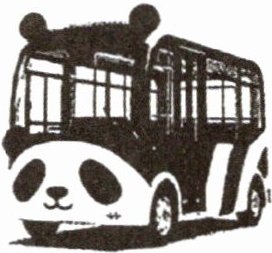
Don't worry! It's very safe. When you get on the bus, the bus will read your fingerprint(指纹) and know who you 4.
People in some cities, such as Changzhou, Jinan and Deyang, are 9.
be, drive, call, China, more, save,
snack, take, they, use
Look! Here comes a cute bus. It looks like a panda. It can carry 22 people and is about 12 meters long. A 1.
Chinese
company(公司) made it. People call it Smart Panda Bus.The Smart Panda Bus 2.
uses
AI technology. It can do many things. The bus can drive itself. It doesn't need a 3. driver
. Don't worry! It's very safe. When you get on the bus, the bus will read your fingerprint(指纹) and know who you 4.
are
. There are also some robots on the bus. You can talk to 5. them
and ask them for help. If there is a thief(小偷) on the bus, the bus will 6. call
the police. On the bus, there is a vending machine(自动售货机). You can buy some 7. snacks
and drinks on the bus. This is helpful for you to 8. save
much time.People in some cities, such as Changzhou, Jinan and Deyang, are 9.
taking
the bus. Do you want to take the bus? The bus will be put into use in 10. more
and more cities in China. I think soon you can take the bus in your city.答案
1. Chinese 2. uses 3. driver 4. are
5. them 6. call 7. snacks 8. save
9. taking 10. more
解析
【分析】首先通读全文,明确文章介绍智能熊猫巴士的核心内容,再结合每个空格的上下文语境,从给定的10个词汇中筛选合适的词,同时根据语法规则(如词性转换、动词时态、名词单复数、代词形式等)调整词汇的正确形式,确保填入后语句通顺、符合逻辑。
【解析】1. 此处修饰名词company,需用形容词,China的形容词形式为Chinese,故填Chinese;2. 句子为一般现在时,主语The Smart Panda Bus是第三人称单数,谓语动词需用第三人称单数形式,use的三单形式为uses,故填uses;3. 前文提到巴士能自动驾驶,说明不需要司机,drive的名词形式driver表示“司机”,故填driver;4. 主语为you,be动词对应are,故填are;5. 介词to后需接人称代词宾格,they的宾格是them,故填them;6. 固定搭配call the police表示“报警”,will后接动词原形,故填call;7. 此处与drinks并列,需用可数名词复数,snack的复数为snacks,故填snacks;8. 固定搭配save time表示“节省时间”,不定式符号to后接动词原形,故填save;9. 句子为现在进行时,结构为“be+现在分词”,take的现在分词是taking,故填taking;10. 固定搭配more and more表示“越来越多”,故填more。
【答案】1. Chinese 2. uses 3. driver 4. are 5. them 6. call 7. snacks 8. save 9. taking 10. more
【知识点】词汇运用、动词时态、代词用法
【点评】本题以新型智能交通工具为话题,将词汇考查融入语境,既考查学生对词汇的掌握,也检验其结合语法知识和上下文的综合语言运用能力,贴近生活实际。
【难度系数】0.5
